
Food
Spanish Food, Decoded: The Menu Words to Know and How to Order a Table That Works

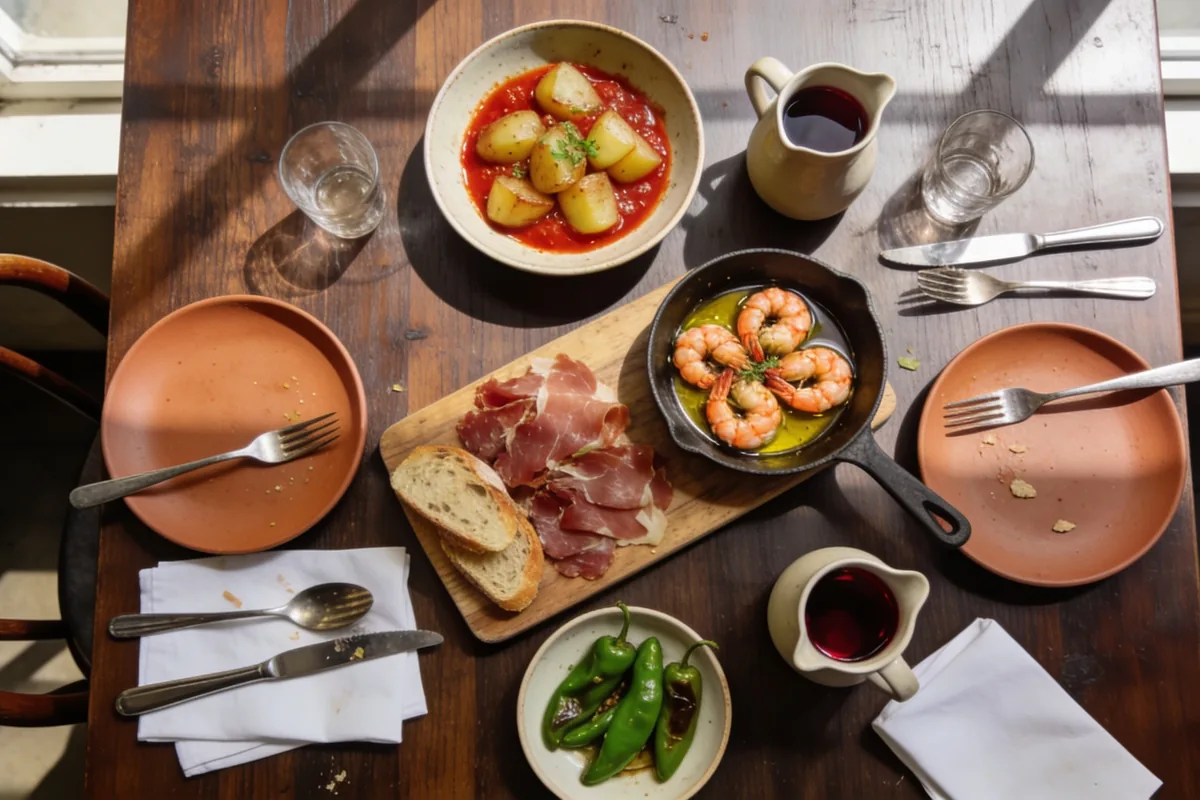
- Five words do most of the work on a Spanish menu: tapas, pintxos, raciones, paella, sangria. Learn those and the rest is detail.
- Two to three plates per person for a meal, three to four if the plates are the whole dinner and nobody wants a main. Fewer again if a paella is on the table.
- Drink dry and cold with the fried and seafood plates, lighter red with anything grilled, and a jug if the table is big.
- If someone at the table has an allergy, ask before you order, about the specific dish, and ask again about the fryer and the bread.
Ordering Spanish food should not feel like an exam, and it mostly does not need to be. The menus here are written for people who already know the rules, which is why one word trips everyone up. In Spain, tapas is a bar snack you eat standing up, moving between bars. In Australia, it is dinner, ordered across a table and shared. Accept that the format has changed, and the ordering maths fall into place.
Tapas, pintxos, raciones: three words, three sizes
Start with the three words that decide how much food arrives. Tapas are the small plates, ordered in numbers and shared. A pintxo is the northern bar bite, small and often served on bread with a skewer through it. A racion is the plate-sized portion, the one to order when a table wants a proper serve of something rather than a taste of it.
The trap is the word itself. In Spain, a tapa traditionally arrives with a drink, and the eating is a rolling, standing, bar-hopping thing. In Australia, tapas means a sit-down shared dinner, and little of it is free. That changes the maths completely: you are not grazing between bars, you are building one meal, so use the counts in the next section rather than a Spanish holiday memory. And a racion is often enough for two people as part of a spread, which is why the counts below are for the table rather than for the dish.
If you want the story behind the word, the site’s the history of tapas, and why it is more than a snack tells it properly. This piece is about what to do with the menu tonight.
The ordering maths for a table
Here is the working rule. Allow two to three tapas per person for a meal, and three to four when the plates are the whole dinner. If a paella is on the table, order down from there, because the rice is doing the heavy lifting.
Almost everyone under-orders first, then fills the gap late with bread and fried things, which is the most expensive way to eat. Order in two waves instead: four or five plates to start, then more once you see the sizes. The table eats at the speed of the kitchen, and nothing goes cold while somebody does arithmetic. When the second wave comes, order the same way: a grilled plate, a green, something fried, something cold. The rule does not change, only the number.
Then balance the table. The classic failure is eight plates of potatoes. Build each round with something from each family: something with bread, something fried, something grilled, something cold, something green. A round of jamon, boquerones, croquetas and pimientos reads like a spread. Four plates of patatas bravas does not. If the table cannot agree, let the hungriest two pick the first wave and everyone else pick from the second.
And order for the table, not for yourselves. A group of six sharing everything eats better than six people ordering their own favourites. This is also where a set menu earns its place: a Spanish restaurant that takes group bookings can size the spread and pace the plates for the whole group, which leaves everyone free to eat.
The classic dishes, decoded
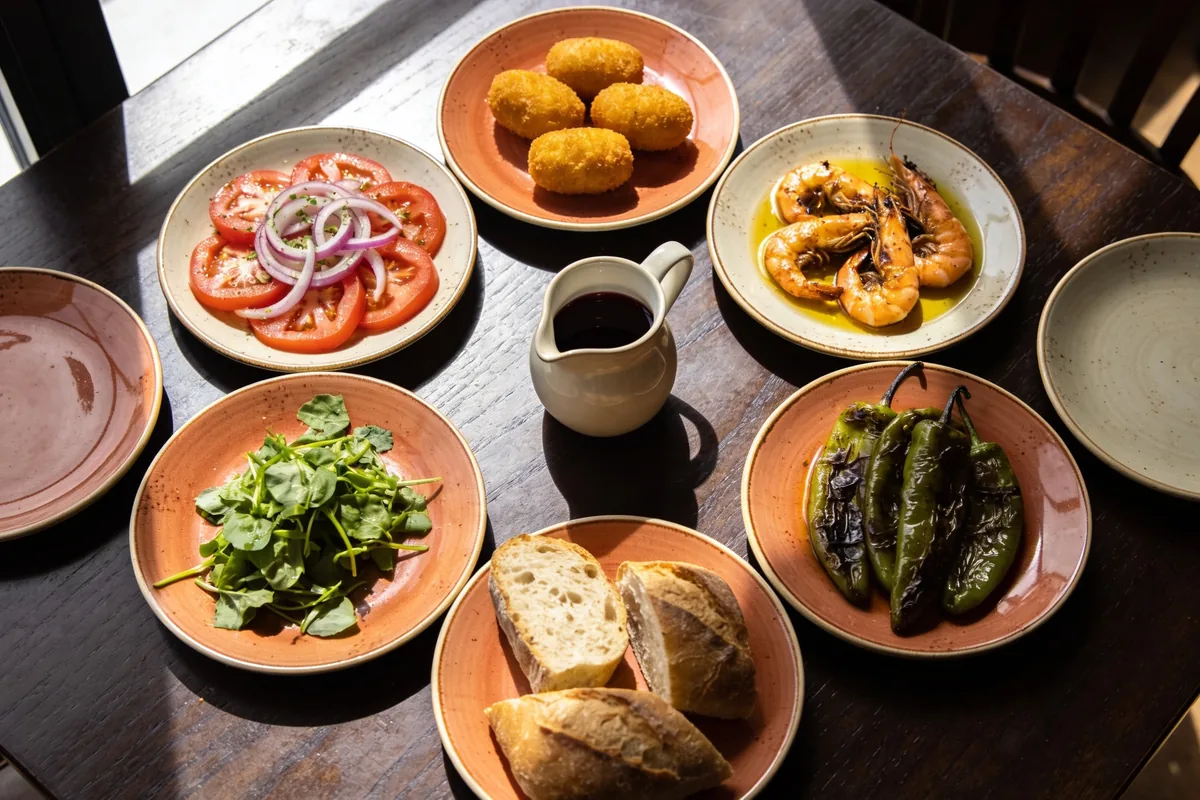
One line each, so the menu stops being a guessing game.
Patatas bravas: fried potatoes with a smoky, slightly spicy sauce. The safe order, and the first plate to disappear.
Croquetas: crumbed and fried, creamy inside. Rich, and they fill you faster than they look.
Gambas al ajillo: prawns in olive oil, garlic and chilli, usually served in a small pan. Rich, with a kick.
Tortilla española: a thick omelette of potato and egg, served in wedges and often at room temperature. Filling, and mild enough for the whole table.
Pimientos de padron: small green peppers blistered in oil and salted. Most are mild, the odd one is hot, and that is the game.
Jamon: cured ham, sliced thin and served with bread. Salty and rich, and gone before the plates land.
Chorizo: cured pork sausage with smoked paprika. Rich, and best in small amounts next to something sharp.
Boquerones: anchovies cured in vinegar, usually with olive oil, garlic and parsley. Sharp and light, and the palate reset of the set.
Pulpo: octopus, usually boiled then grilled, with paprika, olive oil and potato. Meaty and rich, and rarely cooked well at home.
Paella: rice cooked in a wide pan and served from it. A dish for the table rather than a plate, which is the next section.
Churros: fried dough, cinnamon sugar, thick chocolate. The finish. Order them earlier than you think you need to.
Paella is a dish for a table, not a plate
Paella is rice, cooked in a wide shallow pan with saffron and whatever the kitchen does well. What separates a real one from a rice dish is what happens at the base: cooked properly, the rice forms a thin, toasty layer at the bottom of the pan, and that layer is the best part. It has a name, socarrat, and a pale, unmarked base is the sign of a pan that went out too early.
It is also the dish people most often order wrong. It is made for two or more, it takes time, and it should go on when you sit down, not when the table is nearly finished. Order it late and you will wait, or worse, you will have filled up on croquetas and be defeated by rice. Order it first, let it anchor the meal, and order fewer tapas around it. And ask about the wait when you order it: a paella is cooked to order, so the question is not whether it takes time but whether the table planned for it.
Sharing a big dish from the middle is not a foreign habit at an Australian table, and the site’s guide to iconic Australian foods has more of that story. Here, it simply means ordering the paella the way it was designed: for the table, early.
What to drink with it
Borrow the Spanish aperitif habit. Dry sherry or vermouth before the food, both cold, both better than a cocktail arriving with the plates.
With the food, keep it simple. Cava or a dry white with the fried and seafood plates, because the acidity cuts through the oil. A lighter red with chorizo and anything grilled, served cool. Sangria as a jug for a group, not a solo glass: it is a shared drink for a shared meal, and it is at its best when the table is big. If the jug is ordered, order it for the middle rather than for individual glasses. The same logic works on a local wine list. Something crisp for the fryer, something light for the grill, something fortified and cold to start.
If you want to know why the sharp, fatty and salty rotation works, the site’s the science of flavour: what makes food delicious and satisfying explains why the order of the plates matters as much as the plates.
Before you order: the allergy question
A restaurant plate in Australia carries no ingredient list, and a shared menu makes that harder: the dish going around the table may have been cooked in the same oil as the one you are avoiding. Ask, and ask early.
The information is there to be had. Under the food standards, allergen information for unpackaged food, which is most restaurant meals, has to be provided when you ask, and a business must not mislead you about what is in the food. Ask about the specific dish rather than the general question, because the answer depends on the sauce, the stock and the fryer. Ask about the fryer and the bread basket too, since both are shared across the whole menu. For a group, ask when you book rather than when the plates arrive: it gives the kitchen time to plan, and it saves a lot of explaining at the table. If the answers are vague, take that as information. A kitchen that knows its menu can answer a question about a dish; one that cannot is a risk not worth taking on a shared table.
How to get the table right the first time
- Order in two waves: four or five plates, then more once you see the sizes.
- Keep one cold plate, one green, one fried and one grilled in every round.
- Order the paella when you sit, not when the table is nearly done.
- Book for groups, and tell the venue about allergies and dietary needs when you book.
- Leave room for churros. The table that over-orders croquetas is the table that misses dessert.
That is the whole method: tapas is dinner here, the table shares everything, and the only thing worth memorising is the maths. Everything else is just ordering well. And for a table of eight or more, the set menu is almost always the right call: the kitchen plans the spread, paces the plates and sorts the allergies in one conversation before the night starts.
Sources consulted: Food Standards Australia New Zealand food allergen portal; Food Standards Code Standard 1.2.1; spain.info gastronomy pages.


