
Eco Friendly
Rechargeable vs Single-Use Batteries: Do They Save Money, and How Do You Recycle Them?

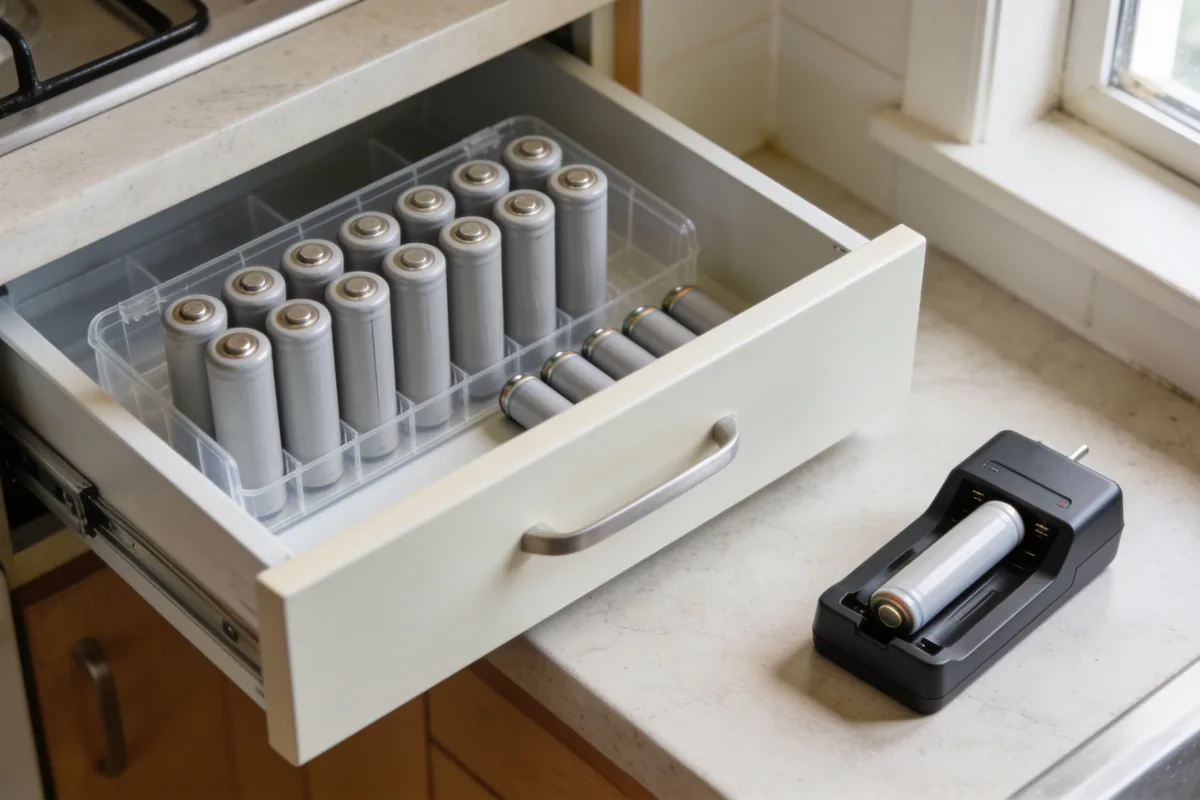
The short version
- Rechargeables pay off in high-drain devices. Toys, controllers, torches and wireless gadgets drain batteries fast enough that recharging hundreds of times beats buying single-use.
- Single-use is fine in low-drain spots. Clocks, remotes and smoke alarms use so little power that a cheap alkaline battery can outlast the device, and a rechargeable never pays back there.
- Never bin either type. Household batteries, rechargeable and single-use alike, go to a battery drop-off, not the kerbside bin, because they can start fires in rubbish and recycling.
Most Australian homes have a drawer of batteries and two unanswered questions: which type to buy, and what to do with the old ones. Both decisions usually get made on a guess. Here is the honest answer to each.
The honest money question
The marketing around “eco” batteries makes this sound complicated. It is not. Rechargeable batteries cost more up front and can be recharged hundreds of times. Single-use batteries cost less per pack and are thrown away when they die. So the real question is not “are rechargeables cheaper?” It is “in which devices do they actually pay back?”
That is the whole comparison in one sentence, and the rest of this post is just working out the answer device by device. No price figures are needed, because the prices change and the principle does not. The principle is simple: a rechargeable only saves money if the device drains it fast enough, and often enough, for the hundreds of recharges to add up. It is a lifetime-cost question, not a shelf-price question, and the only honest way to answer it is to look at how a given device actually uses power.
There is a second benefit that is not about money. Every rechargeable pair you own is a set of single-use batteries that never needs to be bought, used and thrown away. Over the life of the battery that adds up to far less waste sitting in your drawer waiting for a drop-off trip, which is the part of the “eco” label that is genuinely true rather than marketing. The same honest two-way call runs through this site’s comparison of glass versus plastic bottles, which asks the same kind of question about a different everyday choice.
Where rechargeables win
Rechargeables earn their keep in high-drain devices. The list is easy to recognise: toys, game controllers, wireless computer mice and keyboards, torches, kids’ gadgets. These drain a battery in weeks, sometimes days, which means the hundreds of recharges a rechargeable offers get used quickly.
Think about a game controller that chews through a set of single-use batteries every couple of weeks. Across a year that is a steady stream of packs bought, opened and binned. One or two rechargeable pairs, rotated through a charger, cover the same stretch for the cost of the batteries and the electricity to charge them. In this class of device the maths is not close. Rechargeables win.
The charger is a small one-time cost, and it pays for itself the same way the batteries do, through repetition. If a household owns any high-drain devices at all, a charger and a couple of rechargeable pairs is one of the easiest money-saving swaps available.
A simple system makes it painless. Keep two pairs for the devices that matter most, one in the device and one charged and ready, and get into the habit of putting the flat pair on the charger the moment it comes out. That removes the one real annoyance with rechargeables, which is reaching for a device and finding the batteries flat. With a spare pair charged, the swap takes ten seconds and the device is never out of action.
Where single-use is fine
Single-use batteries are not the villain. They are the right tool in low-drain devices: wall clocks, remote controls, smoke alarms. These use so little power that a single-use battery can last a year or more, and in that situation the rechargeable’s advantage never arrives. You would be waiting years for the recharges to add up, and the device would probably be retired first.
There is one honest caveat that makes single-use even more sensible in these spots. Rechargeable batteries lose a little charge while sitting unused, which matters in a device that is only used for a few seconds a day. The common pre-charged type holds its charge much better in storage, which fixes most of the problem, but if a battery is going to sit in a clock for eighteen months, a cheap single-use is still the sensible choice.
So the split is not about being green or being cheap. It is about matching the battery to the job. Put a rechargeable where the device works hard, and a single-use where the device barely works at all.
A household rarely has to choose between the two types. Most homes end up with some of each, which is exactly right. The mistake is buying all of one type and forcing it into every device. A drawer with a couple of rechargeable pairs for the things the kids use, and a multipack of single-use for the clocks and remotes, is not a failure of commitment. It is the correct answer.
If you are still unsure which way a device falls, ask one question: how often do I reach for it? A thing you pick up every day and drain is high drain. A thing you check once a week or less, like a clock or a thermostat, is low drain, and a single-use battery will probably outlast your interest in it. That question settles more cases than any product label.
The one-line buying rule
Buy rechargeables for the things you use and charge often. Buy single-use for the things that sit there for a year. Stop overthinking the rest. That one sentence settles the buying decision for almost every household, and the exceptions are rare enough that you will know them when you meet them.
Why batteries never go in the bin
Now the disposal half, and it is non-negotiable. Household batteries do not go in the kerbside recycling bin, and they do not go in the rubbish. Both bins are wrong, and the reason is safety, not fussiness.
Batteries in a rubbish truck or a recycling facility get crushed and damaged. A damaged battery can short-circuit and start a fire, and battery fires in rubbish trucks and waste facilities are a real and recurring problem. That is why collection points exist. The drop-off habit is not a favour to the planet done in your spare time. It is the way to stop a small metal cylinder from becoming a fire risk in a truck full of paper.
Batteries also hide in more places than the drawer, which is why the habit has to be a household one. They sit in the smoke alarm on the ceiling, the remote on the coffee table, the toys in the playroom, the electric toothbrush in the bathroom and the torch in the car. When any of those dies, the old battery is heading for the same container, and the container is heading for the same drop-off. That is the whole system, and it takes about as much effort as taking out the rubbish.
How to recycle them in Australia
The good news is that dropping batteries off is easy, and the network is broad. In Australia, household batteries, both rechargeable and single-use, are collected through the national household battery stewardship scheme, whose collection points sit in a range of everyday places such as participating retailers and libraries. Many council drop-off facilities take them too.
The rule of thumb is simple: collect your dead batteries in a container at home, and take them to the nearest drop-off when the container is full. A shoebox or a lidded container in a cupboard works well, and keeping the lid on stops loose batteries rolling around and touching metal objects, which is the kind of accidental contact that can cause a short. Check your local drop-off for what it accepts, because arrangements are administered locally and can vary, and that check takes thirty seconds online. Some points also ask for certain batteries to be prepared in a particular way, such as taping the terminals or keeping them in their original packaging, so read the advice for your local point and follow it.
Car batteries are a separate category. They are recycled through auto shops and scrap-metal facilities rather than household drop-off points, and they are almost always accepted where you buy the replacement. A swollen or damaged lithium battery deserves extra care: handle it gently, do not bin it, and follow the advice of your drop-off point, which will tell you the safe way to hand it in.
The drawer, sorted
Rechargeables save money in the devices you actually drain. Single-use is fine in the ones you do not. Neither goes in the bin. Set up one drop-off habit, a container in a cupboard and a trip to the collection point when it fills, and the drawer stops being a guessing game. Once the habit is in place it becomes a non-event: dead battery goes in the box, the box fills up, and a couple of times a year the box goes to the collection point on the way past. The wider lesson is the same one that runs through this site’s guide to going plastic free at home: the swaps that stick are the easy ones, and this one is easy.
Sources: B-cycle, Australia’s household battery stewardship scheme, what to recycle and where · Australian state and territory environment agencies, household battery disposal guidance · CHOICE Australia, rechargeable vs single-use batteries