Business
Traffic Management Plans, Explained: Who Writes Them and Why Roadworks Look the Way They Do

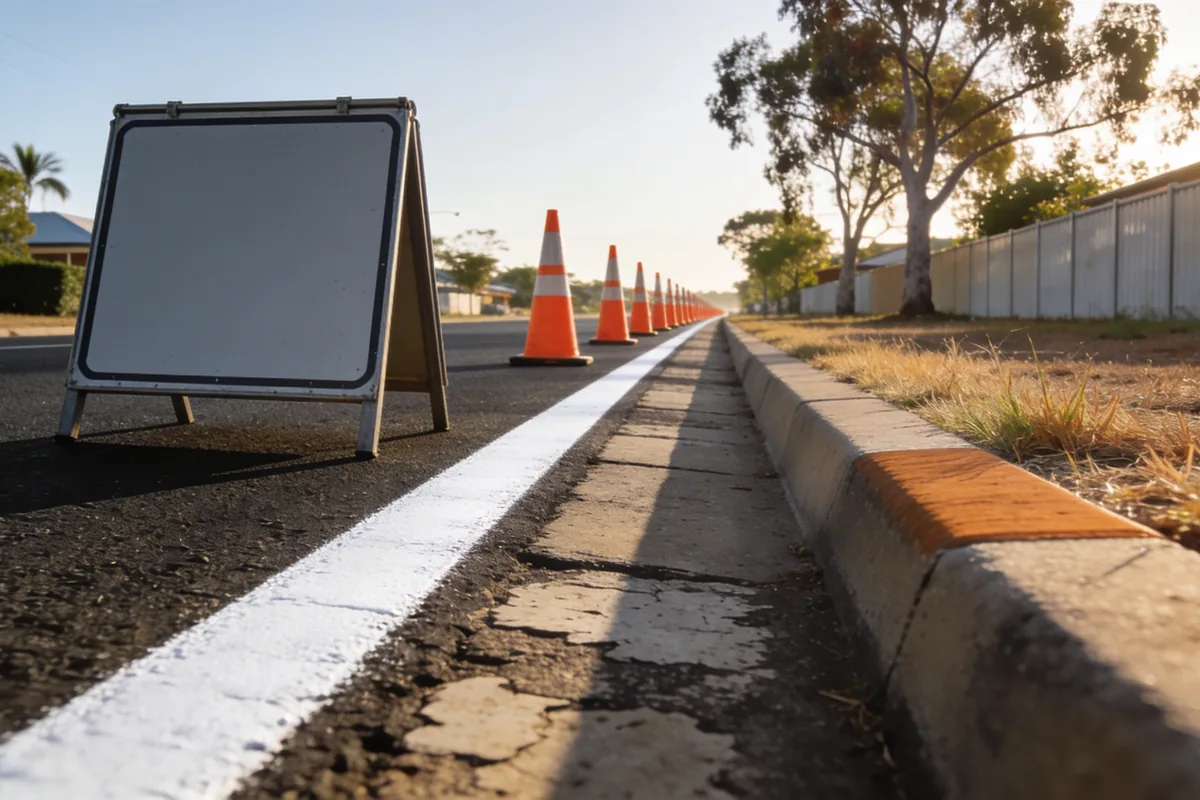
- A traffic management plan sets out how a worksite on or beside a public road will manage the risk of vehicles, machinery and people meeting one another.
- The plan and the drawing are two different documents. The traffic guidance scheme is the drawing that shows where every sign, cone and controller actually goes.
- The driver is a hazard the site is managing. That is not an insult. It is why the signs exist, and why a reduced limit can be legitimate when nobody appears to be working.
- The two complaints everyone carries are the empty zone at night and the sign left behind. Both have answers, and one is a failure rather than a conspiracy.
- A roadworks is a workplace placed in the middle of a public road. Everything about how it looks follows from that.
Every roadworks a driver meets is the visible edge of a document most drivers will never read. The signs, the cones, the taper, the limit and the controller holding the stop paddle all come from a traffic management plan drawn up before the first truck arrived. The plan exists because putting a worksite on a public road puts two things in the same space that do not share it well: people at work, and people driving past. This article explains what is in that document, and then answers the driver’s version of the question, which is the part almost nobody writes down.
A workplace in the middle of a road
Everything about a roadworks makes more sense once you accept one fact: everyone inside it is at work. The person on the stop paddle and the operator in the excavator are doing a job in the middle of other people’s commute, and the site carries two obligations in tension: to protect the people working, and to keep the public moving. That tension is why a plan exists at all, and the arrangement is the negotiation between the two, written down before the work starts.
Safe Work Australia’s framing is simple. A traffic management plan outlines how the risks arising from traffic will be managed, and the responsibility sits with the person conducting the business or undertaking, working to what is reasonably practicable. The plan does not have to be perfect, only proportionate to the risk, which is why the same job can look different on a suburban street and on a highway shoulder.
One reframe is worth stating plainly, because it can sound like an accusation and is not. The driver is a hazard the site is managing. Vehicles are the thing most likely to hurt someone inside a roadworks, and every sign, cone and controller is there because of them. The site is trying to predict you, and to be survivable when the prediction is wrong.
What is actually in one
Stripped back, a traffic management plan is four parts, in the order the thinking runs.
The first is the risk assessment: what could go wrong where vehicles, machinery and people meet. That covers the public as well as the crew, and rare cases like a truck reversing across a footpath as much as the everyday ones.
The second is the layout: where the barriers, walkways and signs go, and why each one sits where it does. This is the part a driver experiences directly, and it is where line marking and signage stop looking like decoration and turn out to be the mechanism.
The third is the traffic guidance scheme. Australian practice separates the written plan from this drawing, and the distinction is the most useful thing a business reader can take away. The written plan says what the risks are; the drawing shows where every device and person stands, and it is the one that can be checked against what turns up on the day. If you are commissioning work on or beside a road, ask for the drawing.
The fourth is the review: what should happen when the site changes shape, when something nearly goes wrong, or when the job runs long. It is the part that fails most quietly, and stale signs linger because of it. The planning that runs alongside a project has its own trades; the site’s the role of a surveyor in construction projects: from planning to completion covers the one that fixes the positions everything else is built from.
One structural point sits under all four. The order of controls in Australian practice runs eliminate first, then substitute, then isolate and engineer, then administrative. Closing a road or moving the work off it is considered before cones are placed on it, because a control that removes the hazard beats one that manages it. Drivers benefit from that order every time.
The two audiences, and what each one needs
For the reader who may need a plan: one is required when works sit on or beside a public road, when plant moves near pedestrians, or when an event closes a street. The plan is prepared by someone competent to do it, and access to the road itself is arranged with the road authority, which is a state or territory body. One question sorts a provider better than any brochure: can I see the drawing, and who signed it off? For works that come before anything is built, the site’s how to prep your site for a smooth concrete pour covers a different kind of site preparation.
For the driver: none of the above changes what you do. Read the signs, take the limit as information about the road rather than the workforce, and treat the controller’s paddle as the instruction that outranks everything else on the street.
Why the 40 zone is still there at 3am
The complaint is familiar: a long stretch of reduced limit, nothing visibly happening, the middle of the night. Why is it still there?
The first answer is that the limit is a property of the site, not of the shift. The risk it manages usually lives in the road surface: a changed alignment, a narrowed lane, a shoulder that is no longer where it was. Those conditions do not clock off when the crew does, and a loose gravel shoulder does not stop being one because nobody is standing beside it.
The second answer is the one most people never think of, and it comes up under almost every Australian roadworks complaint: loose material. A lower limit reduces what gets thrown up by tyres and what ends up somewhere it should not be, and it gives a driver more time to react to a surface that has changed without warning. The limit is doing protective work around the clock.
The third answer is less flattering. Signs are set when a site is created and removed by somebody else at the end, and when that handover fails, a sign outlives its job. An abandoned sign is a failure rather than a conspiracy, and it corrodes trust in every sign after it.
Which leads to the honest concession. A limit left up after the work is done and the surface repaired is a cost the public pays for somebody else’s process, and being annoyed about it is reasonable. The fix is better site closure, and it is the part of this industry that deserves the criticism it gets.
What you can and cannot see from the driver’s seat
Much of a roadworks layout is invisible at speed. Four examples.
The taper is the run of cones that walks a lane closed. Its length follows from the speed of the traffic it has to slow, which is why it can look absurdly long on a quiet road. It is built for the drivers who are not looking.
The sign face is angled at the driver rather than at the road, which is why a portable sign can be hard to read until you are almost level with it. From the passenger seat it looks careless; from the driver’s seat it is aimed at you.
The controller is the third. A traffic controller holds legal authority over the public road while their sign is displayed. When a controller holds a stop sign and a green light glows beyond it, the paddle still applies, and treating it as a courtesy misses the point.
The water cart and the dust are the fourth. On unsealed or freshly worked sections, the water keeps the dust down and settles the surface, and the cart is a slow vehicle doing a job. The dust is part of the reason the limit sits where it does.
Line marking, which is the part you read without reading
Line marking is the quietest part of the system and the one drivers use most. A marked line is a sentence, and the network is covered in them.
A solid line says do not cross, with the strength of the instruction varying by context; a broken one says you may. An edge line holds you on the road and a centre line separates directions, and the colours carry rules of their own. The same colour can mean different things in different places, which is why visitors get caught out and locals stop seeing the markings at all.
Then there is the car park, which runs on a different brief. Road markings are read at speed by somebody with a destination; car park markings are read at walking pace by a person pushing a trolley with a child beside them. That changes the design: the space has to fit a door opening, the arrows have to work for a reversing car, and the crossings go where people actually walk rather than where they should.
One line on durability. A marking has to survive traffic, weather and time, and the material follows from where the marking is going rather than from a price list. A paint that performs on a suburban street may be the wrong answer for a container yard and the right one for a car park, and getting that wrong is not a cosmetic problem. That work, from the line on a suburban edge to the layout of a remote single-lane section, is what a Darwin civil contractor working in line marking and traffic management across the Northern Territory does, and it is the part of a roadworks a driver reads without noticing.

What to do the next time you meet a roadworks
- Read the signs rather than the cones. The signs carry the instruction; the cones only hold its shape.
- Assume the limit is about the surface, not the workforce. It often is, and the assumption costs you nothing when it is not.
- Slow down before the taper, not inside it. Stopping distances at speed are longer than they feel.
- Never pass a controller’s sign. It carries authority, and the person holding it is standing metres from moving traffic because the alternative was worse.
- If you are queued beside plant that is turning, keep the gap open.
- If something is plainly wrong, a sign left standing after the job, a light out, a lane closed with no works anywhere, report it to the road authority rather than to the internet.
Everything on that site is there because somebody had to plan for you not to hit anyone, including them.
Sources consulted: Safe Work Australia traffic management guidance.