Automotive
European Car Servicing in Melbourne: When the Specialist Is Worth the Extra Cost

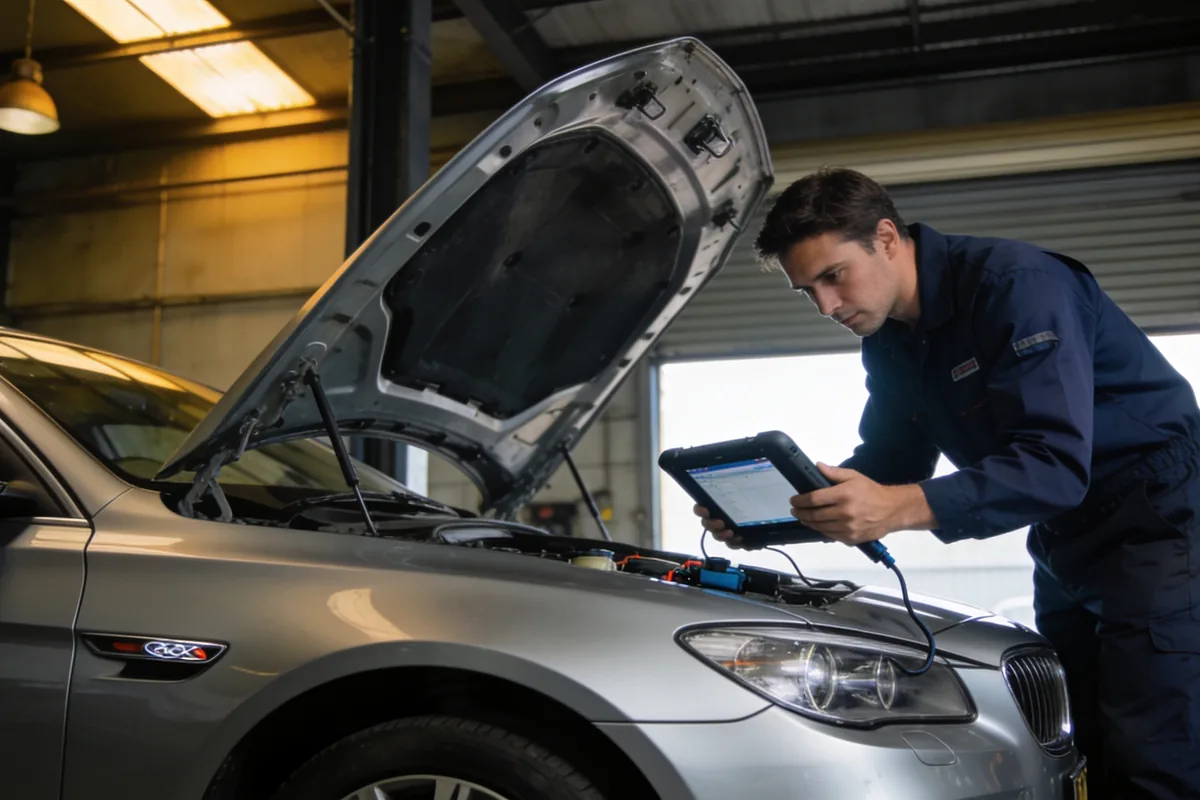
The little amber engine light came on somewhere around the Bolte Bridge, and it stayed on all the way down to the workshop in the back streets of Brunswick. The mechanic there was honest, which made it worse. He plugged in a scanner, watched the screen for a while and shrugged.
“It’s running fine,” he said. “I can do the oil, the brakes, the tyres. That’s not your problem. This thing talks in a language I only half speak, and for that you probably want someone who grew up with it.”
He was right. And that conversation, more than any brochure, is the real answer to when a European specialist earns their rate in Melbourne.
What a European car actually is
A modern European car is not harder to drive than anything else. It is harder to diagnose, because so much of it is software wearing a metal body. The engine management, the gearbox, the suspension and even the brakes report to a central computer, and the computer expects to be spoken to with the right tools and the right codes.
That is the gap a specialist fills. A good one has the diagnostic equipment for your make, the training on its common faults and the experience of having seen the same failure on the same model a dozen times before. A general mechanic can be excellent and still be reading the manual for the first time on your car.
Where a general mechanic is fine
None of this means every European car needs a specialist for every job. A lot of routine work is generic. Oil, brakes, batteries and tyres are the same jobs on a German car as on a Japanese one. A competent local workshop can handle those at a lower labour rate, and for a car that is older and out of warranty, that is often the sensible place to start.
The problem comes when a routine job stops being routine. The dashboard lights up with something the scanner cannot identify. The suspension makes a noise that the parts catalogue does not explain. The gearbox starts hunting between gears. That is the moment a cheaper labour rate stops looking cheap.
Where the specialist earns their rate
The specialist earns the money on the work you cannot see. Brand-specific diagnostics, because a fault code on one make means something different on another. Software updates and module coding that a general scan tool cannot perform. Correct specification parts, because the difference between a genuine part and a close substitute can show up months later in a sensor reading or a warning light.
Some jobs are specialist territory by nature. Complex automatic and dual-clutch gearboxes, air suspension, adaptive dampers, hybrid systems and the electronics that tie them together all reward someone who has done the job before. A specialist is also worth it while a car is under a manufacturer’s warranty or a service plan, because keeping the schedule and the records protects the cover you have already paid for.
The parts question
Parts are where a lot of the cost difference lives, and where owners get confused. A workshop that quotes a price with non-genuine parts may be cheaper on the day and more expensive over two years if the part does not perform the way the car expects. That is not an argument for always buying the badge. It is an argument for asking what is in the quote, and for using a workshop that can explain why a part is right for your car rather than simply the cheapest that fits.
How to vet any workshop in Melbourne
You do not need to be an enthusiast to ask the right questions. Ask which diagnostic equipment they use and whether it covers your make, and whether the technician has trained on it. Ask for a quote broken into parts and labour, and whether the parts are genuine or equivalent. Ask what they would do if a fault came back after the repair, because a workshop that stands behind its work answers that differently from one that hopes you never call.
None of those questions is technical. They are the same questions you would ask any tradesperson, and a good workshop is happy to answer them. Watch for the one that gets defensive, because defensiveness usually means the answer would not help them.
The relief of the right call
The German car in the Brunswick story went to a specialist who knew the fault before the bonnet was open. He had seen the same sensor fail on the same model, quoted a genuine part, did the job in a morning and handed the keys back with the amber light gone. It cost more than the general quote would have. It also cost less than two more visits, a misdiagnosed part and a second opinion would have, which is where the conversation should have ended all along.
For a Volkswagen owner the dealership-versus-independent decision is specific enough to deserve its own answer, since it turns on warranty, capped-price servicing and resale history. For everyone else driving a European car in Melbourne, the rule is simpler. Use a general workshop for the routine work, find a specialist you trust for the complicated stuff, and ask the questions before the dashboard starts answering them for you.









You must be logged in to post a comment Login