Food
Use-By vs Best-Before: The Australian Labels Everyone Reads Wrong

The short version
- Use-by is the safety date. Never eat food past its use-by date, even if it looks and smells fine, and shops cannot legally sell it after that date either.
- Best-before is the quality date. It is safe to eat after best-before if it has been stored properly. The taste, texture and colour may just be past their best.
- The label tells you which is which. One is a hard stop, the other is a gentle guide, and mixing them up is how good food ends up in the bin.
Most household food waste is edible food thrown out because a best-before date was treated as a use-by date. Fix that one confusion and you waste less, spend less and still never risk anyone’s health.
The two dates, in plain terms
Australia runs on one food labelling standard, and it applies in every state and territory. Under the Food Standards Code, the two dates are not two versions of the same warning. They are different instructions doing different jobs.
Use-by is the date after which the food must not be eaten. The food may be unsafe after that date, even if it looks and smells perfectly fine. It applies to highly perishable foods, for example some dairy, meat and ready-to-eat products. The law treats it as a line in the sand, and it is illegal for a shop to sell food past its use-by date.
Best-before is about quality, not safety. The food is at its best before that date. After it, the food is still safe to eat, provided it has been stored the way the label says, though the flavour, texture and colour may drop off.
One date protects you. The other date protects the manufacturer’s reputation. They are not interchangeable.
Some foods carry neither date. Fresh fruit and vegetables sold loose, for example, do not have to show a use-by or best-before mark, because you can judge their condition for yourself. The dates exist on packaged food precisely because the packaging stops you from seeing, smelling and touching what is inside before you buy it.
Why use-by is the hard line
The reason use-by is so strict is not food-industry caution. It is biology. For perishable food, harmful bacteria can grow to unsafe levels before the food looks or smells bad. By the time something smells off, the problem is already well advanced. The date is the only reliable cue you get.
That is why the law makes it a stop, not a suggestion. A shop cannot sell past it, and a shopper should not eat past it, because neither the eye nor the nose can be trusted to spot the danger in time.
This is the part that makes the “never ignore use-by” rule feel rational instead of paranoid. It is not about being fussy. It is about the fact that your senses are too slow to catch the risk.
The rule does not change depending on where you live. Because the labelling standard is national, a use-by date means the same thing in Queensland as it does in Western Australia, and it applies to imported food sold here as much as to food made locally. One country, one rule, which is why the habit is worth learning once and trusting everywhere.
What best-before actually means
Best-before is a quality promise, and quality fades while safety holds. Food past its best-before that has been stored as the label says, and looks, smells and tastes normal, is safe to eat. What you lose is the crispness, the colour, the snap. What you do not lose is the safety.
People over-worry in the same places every time: pantry staples, bread, sauces and eggs. Eggs are the classic. Keep them refrigerated, and the best-before on the carton is about quality, not safety. A cracked egg or one that smells off is a different story entirely, but a fresh egg past its best-before date is usually fine.
The phrase “stored correctly” is doing real work in that test. If the label says keep refrigerated and the packet has sat in the pantry for a week, the best-before date no longer tells you anything. The date and the storage are a pair. Break one and the other stops meaning much.
Why does quality fade while safety holds? Because the things that make food taste good, the volatile compounds and textures that carry flavour, are fragile, while the food itself stays sound. The science of why food stops tasting its best is worth a read in its own right, and our piece on the science of flavour explains what is actually happening as food loses its edge.
One warning before you rely on your senses. Judging food by appearance and smell is fine for quality and useless for safety, which is the exact trap this article is trying to get you out of. It is the same lesson as judging a burger by how it looks before you bite, which our guide to telling a great burger from a good one makes clear: the outside tells you less than you think.
The foods people get wrong
Run through your fridge and pantry and the pattern is consistent. These are general rules, not promises, and the label wording always decides.
Dairy is split. Fresh milk and some yoghurts carry a use-by date, because they spoil fast and the bacteria can grow quickly. Longer-life products, such as UHT milk and some hard cheeses, carry best-before instead. When in doubt, read the label and treat use-by as the hard line.
Meat and poultry are use-by, full stop. Raw meat is exactly the perishable food the use-by date exists for, and it is not worth testing. Freezing changes the picture, but the label rules still apply once it thaws.
Bread and baked goods are best-before. Stale bread is a quality problem, not a safety one. It makes better toast, not a sick household.
Sauces and condiments are usually best-before, but the opened jar changes the deal. Once opened, many labels say “refrigerate after opening”, and that instruction matters as much as the date. An opened sauce is governed by how you store it, not by the date printed at the factory.
Pantry items and cereals are best-before. Rice, pasta, flour, oats and breakfast cereal all outlive their best-before comfortably if they are kept dry and sealed. Weevils are a storage problem, not a date problem.
Fresh fruit and vegetables are the exception to the whole system. Sold loose, they carry no date at all, because you can see and feel their condition for yourself. A soft tomato is not a food-safety event. It is a tomato past its best, and it will tell you so long before it becomes anything worse.
The honest rule underneath all of it: the exact wording on the label decides, and the storage instructions count as much as the date.
When you are standing in the kitchen with a packet in your hand, the whole decision reduces to one question: does the label say use-by or best-before? If it says use-by, the date wins, no negotiation. If it says best-before, your eyes and your nose get a vote, provided the food was stored the way the label asked.
The other labels that confuse
Two more labels cause most of the head-scratching, and neither is for you.
“Display until” is a shop-keeping tool. It tells the retailer how long to keep the product on the shelf before rotating stock. It has nothing to do with whether the food is safe for you to eat, and the household can ignore it entirely.
“Baked on” or “baked today” is a freshness claim, not a safety date. It tells you when the bread came out of the oven. It is not a use-by date in disguise, and it does not mean the bread is unsafe the next day.
Learn to tell these apart and half the confusion in the bread aisle disappears.
Storing so the date means something
A date is only as good as the storage behind it. Best-before on a jar of pasta sauce means nothing if the jar has been sitting open on the bench for a month. Use-by on milk means nothing if the carton has spent the morning in a warm car.
The habits that make dates trustworthy are dull and effective. Keep the fridge at the right temperature, not just cold but properly cold. Put opened food in airtight containers instead of leaving it half-sealed in the original packet. Do not leave perishables sitting on the bench while you do something else. And treat “once opened, refrigerate” as part of the instruction, not a suggestion.
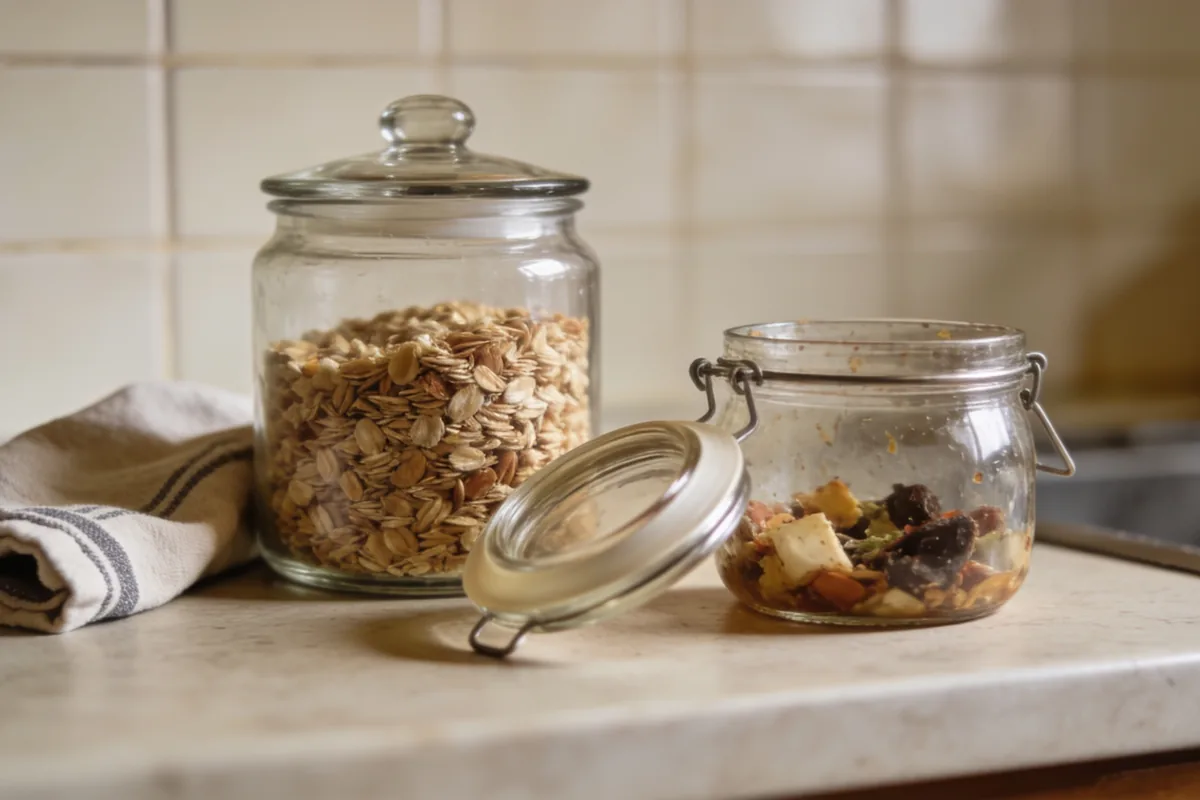
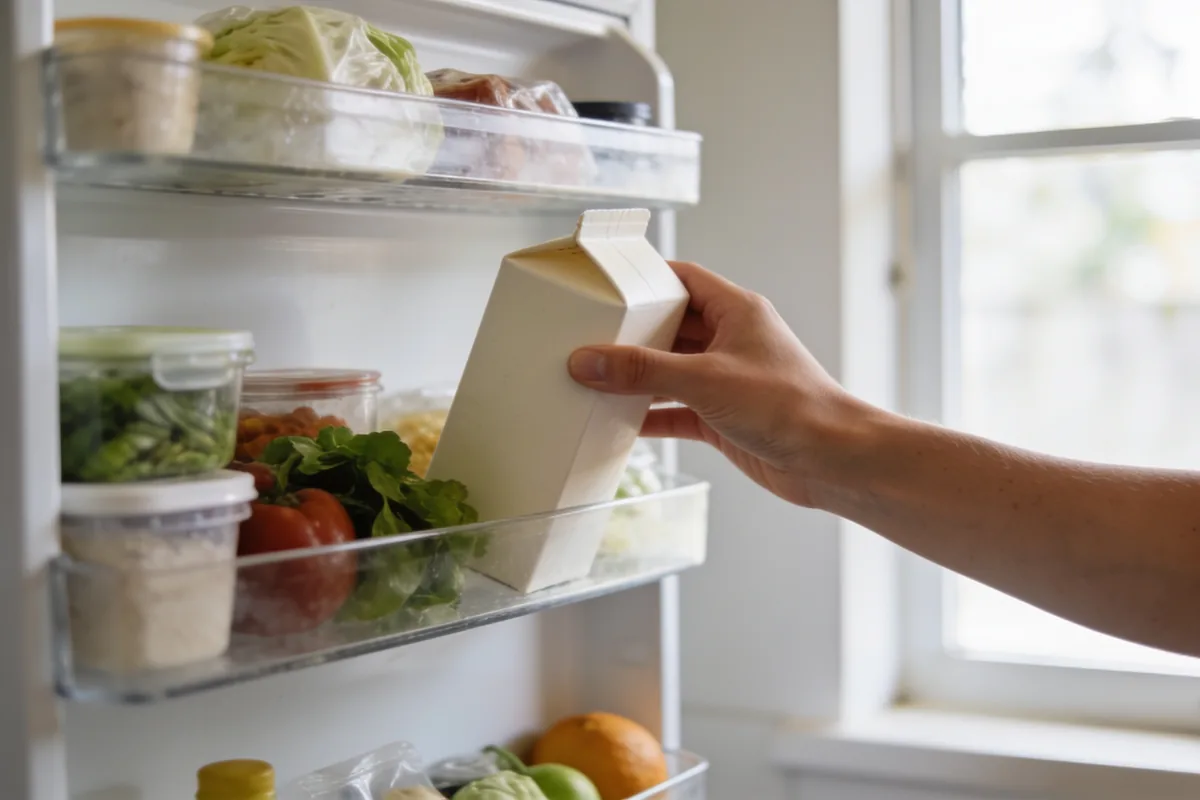
The two places food lives each have their own rules. The fridge keeps perishables cold enough that bacteria stay slow, and it only works if it is not left open and not jammed so full that the cold air cannot move around. The cupboard keeps dry goods sealed against air and pests. Get both right and the date on the packet becomes a promise you can actually rely on.
Get the storage right and the date on the label becomes a reliable guide instead of a guess. Get it wrong and the date is fiction.
Cutting waste without risking safety
The point of all this is not to tell you to eat everything past its date. It is to stop you throwing out the food that was never unsafe in the first place.
Buy what you will actually use. Store it properly once you have it. Eat the best-before foods first, before they slip past their quality peak. And treat use-by as non-negotiable, because that is the one date where the risk is real.
A good share of the fix happens at the shop, not the kitchen. Buy the amount you will use in the next few days instead of the bulk pack that will sit at the back of the fridge. Plan a rough idea of the week’s meals before you shop. Food that never sits around does not need a date to tell you it is still good.
Do not frame this as “eat everything past its date”. Frame it as “stop throwing out the food that was never dangerous”. Most of what households toss is not spoiled. It is merely past its best, which is a different thing entirely.
Bottom line
One date is a hard stop. The other is a quality cue. Use-by protects you from food that may have turned dangerous without telling you. Best-before tells you when the food is at its peak, not when it becomes unsafe.
Read them right and you save money, cut waste and never gamble with anyone’s health. That is the whole game, and it is easier than the fridge makes it look.
Sources: Food Standards Australia New Zealand (FSANZ), date marking on Australian food labels · NSW Food Authority and state food-safety agencies, date marking explained · CHOICE Australia, food waste and date labels