
Hospitality
Restaurant Deep Cleaning: The 10 Areas That Need More Than a Daily Wipe-Down

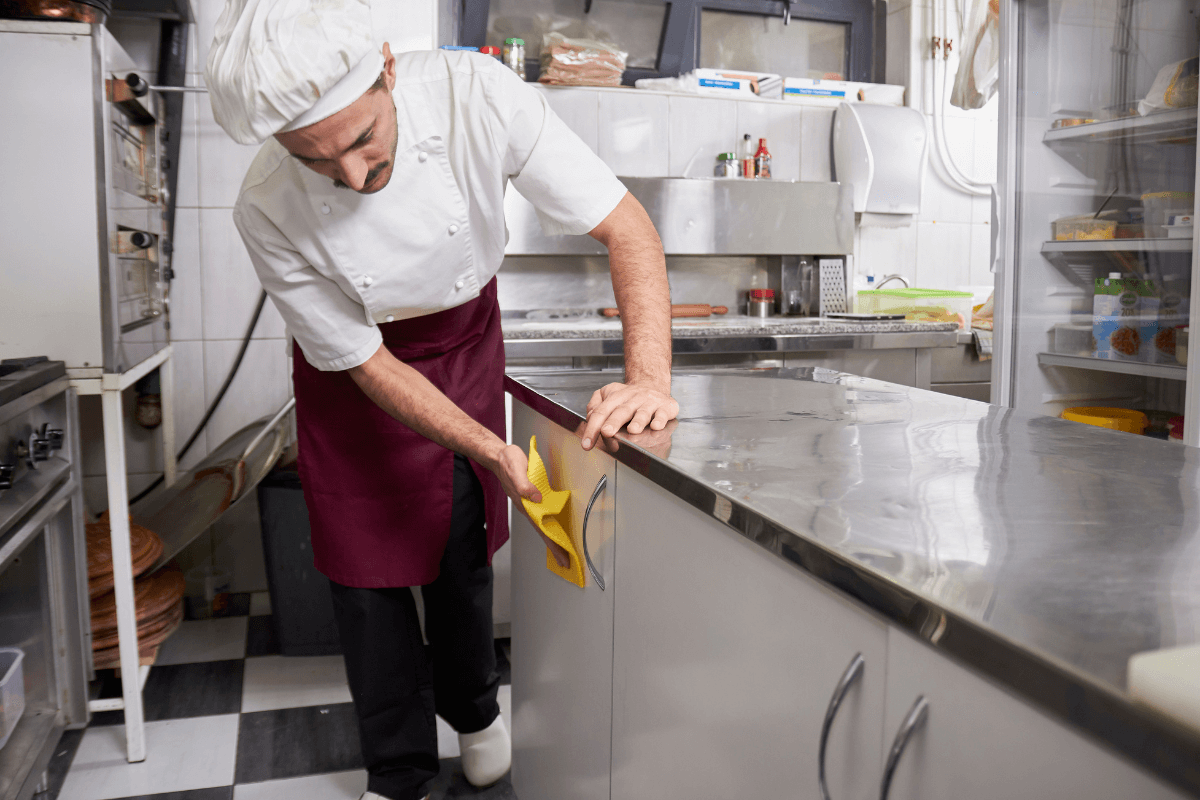
If you run a cafe or restaurant, the daily wipe-down is not the problem. It is the places that daily wipe-down never reaches that decide how clean your kitchen really is. Most of them only get attention when something smells, drips or fails an inspection, and by then the job is bigger than it needed to be. This is the deep clean list: the ten areas where grease, grime and bacteria build up quietly, why each one matters, and how often it genuinely needs you.
1. Exhaust canopy and ductwork
Cooking vapour condenses into a grease film on the canopy and inside the duct, and that film is a recognised fire risk in a commercial kitchen. Wipe the filters out regularly, and have the duct system professionally cleaned on a schedule that matches how much frying you do. A kitchen running a fryer all day needs it far more often than a cafe serving coffee and toast.
2. Floors behind and under equipment
The visible floor gets mopped every night. The strip behind the cooking line and under benches collects grease, food scraps and moisture that never sees the mop. That residue feeds bacteria and turns grout dark and slippery. Pull the equipment out on a roster and scrub those zones properly, and have floors stripped and resealed before the surface breaks down.
3. Grease traps
Grease traps catch cooking oil and food solids before they reach the drain. When they fill up they stop working: drains start to smell, run slowly and can back up into the kitchen. Have traps pumped and cleaned on an interval that matches how much fat your cooking produces. If you can smell the trap from the floor, you are already late.
4. Cooking equipment
Ovens, grills and fryers build up carbonised grease that the nightly wipe-down barely touches. The buildup affects fire risk and the way food cooks, and fryer oil needs filtering and changing on a cycle that matches your volume. Put a deep strip-down of the cooking equipment on the roster, monthly or bi-monthly for most kitchens and more often in a busy one.
5. Coolroom and fridge door seals
The rubber seals around coolroom and fridge doors are one of the most missed spots in a kitchen. A torn or dirty seal lets cold air out, so the compressor works harder, the power bill climbs and stored food can sit outside its safe temperature. Wipe the seals weekly, check them for tears and replace any that no longer seal properly.
6. Walls and ceilings
Steam and splatter lay a fine grease film on walls and ceilings, and after a week you stop seeing it. Over time it discolours surfaces and can support mould in humid corners. Wash tiled walls on a schedule rather than waiting until they look bad, and include ceiling panels in the periodic clean.
7. Restrooms
The customer restroom gets a daily toilet and basin clean, but it needs a deeper pass as well. Fixtures, grout, cubicle doors and the space behind taps and basins all collect what the daily clean misses. Customers judge your hygiene from the restroom, so treat it as a food safety surface even though it is not in the kitchen.
8. Storage and shelving
Dry store shelving gathers dust, spill residue and the occasional forgotten packet, which is how pantry pests get a foothold. Empty and wipe the shelves on a roster, clear out expired or damaged stock and keep food off the floor. If you see webbing, droppings or gnaw marks, deal with it before it spreads.
9. Waste areas and bins
Smells and pests start where the rubbish sits. Even with daily removal, residue clings to bin lids and the floor around them, and that attracts flies, cockroaches and rodents. Wash the bins on a schedule, keep lids closed and keep the waste area clean and dry. It is the least glamorous task on this list and one of the most important.
10. High-touch points and dining furniture
Door handles, light switches, POS screens, menus, salt and pepper shakers and chair backs are touched constantly and wiped rarely. These are the surfaces that pass germs between customers and staff. Put them on a daily or every-service clean, not just the weekly deep clean.
Who does what
Some of this is team work and some is not, and the line is clearer than owners expect. If the task is about regular attention, such as wiping seals, washing bins, cleaning filters and scrubbing behind equipment, it belongs on a roster your team can run. If it needs heavy equipment, chemical handling or working at height, such as duct cleaning, stripping and resealing floors, or high-level walls and ceilings, it is a job for a professional with the right gear and insurance. When a contractor quotes, ask what is included and what they will certify. A real deep clean leaves a paper trail you can show your local council’s environmental health officer.
The deep clean as a habit
Deep cleaning is not one dramatic day before an inspection. It is the collection of quiet jobs that keep the daily wipe-down honest: the duct, the trap, the seals and the bit of floor behind the fryer. Work through the ten on a rolling roster, keep the records, and the deep clean becomes part of how the place runs rather than a panic you keep putting off.
What all of it protects is the food that leaves the kitchen, and customers can tell when a place is looked after. The same attention to detail runs through our guide to telling a great burger from a good one before you bite.






You must be logged in to post a comment Login