Healthcare
5 Signs Your Medical or Dental Clinic Needs Professional Cleaning

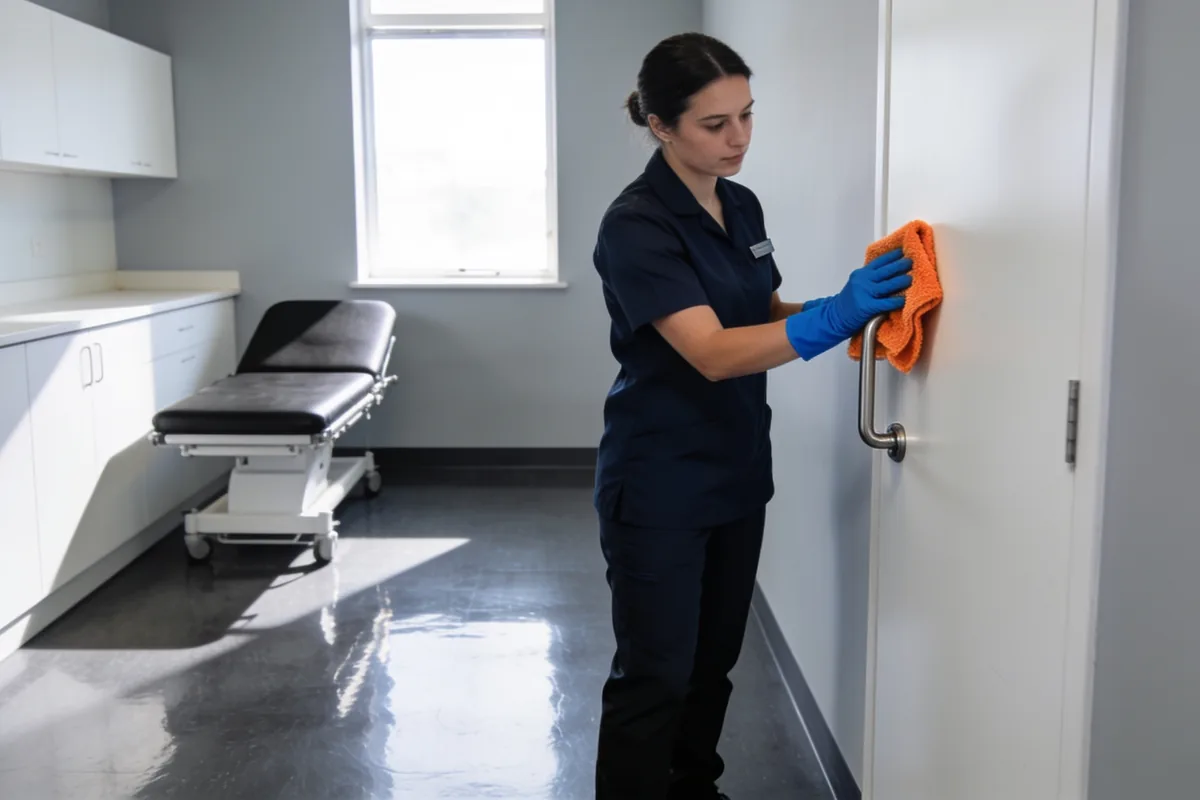
If you run a GP practice, a dental clinic or allied-health rooms, cleaning is one of those subjects nobody raises until it becomes a problem. It is not glamorous and it does not produce a billable hour, but in a clinical setting the standard of cleaning is part of patient safety. The good news is that the signs are usually there well before an issue is visible. Here are the five to watch for, and what to do about each.
1. Your “clinical clean” relies on household products
You can tell a lot from the cupboard under the sink. If the team is wiping down treatment surfaces with a domestic multi-purpose spray and a single cloth that gets reused around the room, the process is wrong even when the surfaces look clean. Clinical cleaning means a detergent or disinfectant that suits the surface, mixed and applied at the right strength and left for the right contact time, with cloths that are single-use or properly laundered between rooms. That is not a luxury. It is what infection control guidance assumes is happening.
2. High-touch points are cleaned less often than they are touched
Door handles, light switches, tap handles, bench tops, EFTPOS terminals, waiting-room chairs and the toys or magazines small patients handle. These are touched constantly and wiped rarely, and in a clinic they matter more than in an ordinary workplace because some of the people in the room are unwell or have reduced immunity. If your cleaning roster does not name these surfaces, they are probably being missed.
3. You cannot remember when the hard-to-reach areas were last done
The daily clean does the visible work: floors, basins and the surfaces people see. Behind equipment, under chairs, around the bases of walls, vents, skirting boards and the staff room rarely get the same attention. These are the areas where dust and grime build up quietly, and they are exactly what a professional clean with the right equipment is for. If you would struggle to name the last time they were done, that is your answer.
4. An audit is coming and you are not confident
The RACGP standards for general practices and the Australian Dental Association’s infection control guidance carry real expectations about the practice environment. When an accreditation visit or an infection-control audit is on the calendar, every practice manager asks themselves whether the environment would stand up. If your honest answer is a wince, do not wait for the audit to find out. Bring the cleaning up to standard first, and keep the records to prove it.
5. Your clinical staff are doing the cleaning
There is a difference between the wipe-down a nurse or receptionist does between patients and the deep professional clean a clinical space needs. When a clinic grows and no professional cleaner grows with it, the cleaning gradually becomes the clinical team’s job, and they are already stretched. That is how cleaning starts to slip, because patient care rightly comes first. It is also the point where a professional cleaner stops being an expense and becomes a sensible part of running the practice.
What to look for in a clinical cleaner
Domestic cleaning experience is not the same as clinical cleaning, so the questions matter more than the hourly rate. Look for a cleaner who works to a written schedule, uses products suitable for a clinical environment, can show that staff are trained in infection control principles, and leaves a log you can pull out at audit time. Ask what training the staff have and what they will document. A vague answer is a reason to keep looking.
Cleaning touches every patient
You do not need a visible mess before you act. If your products are domestic, your high-touch points are unnamed, your deep-clean history is a blank, an audit is making you nervous, or your nurses are doubling as cleaners, any one of those is enough to start the conversation. Cleaning is not the most interesting part of running a clinic. It is one of the few parts that touches every patient who walks through the door.
Sources: RACGP (racgp.org.au) · National Health and Medical Research Council (nhmrc.gov.au) · Australian Dental Association (ada.org.au) · Australian Government Department of Health and Aged Care (health.gov.au) · your state or territory health department