Healthcare
Exercise Physiology or Physiotherapy? How to Know Which One You Need

- Physiotherapy diagnoses and treats movement problems. Exercise physiology treats health conditions with exercise as the medicine. Both are university-qualified allied health professions.
- Both prescribe movement, which is exactly why the two get confused.
- The funding pathways differ in ways that matter to your wallet, and that is the part most people cannot find explained.
- A new injury usually points one way. A long-term condition, or capacity you are trying to rebuild, often points the other.
- If you are unsure, ask the clinic. A practice that offers both should tell you honestly which one suits.
The referral mentions exercise physiology, your GP said physio, and the search results explain the difference between the professions as though you already knew it. If you are somewhere in that fog, you are far from the only one. These are two professions whose work overlaps in the middle and differs at the edges, and the question you actually need answered is not what is the difference in theory. It is which one to book for what you have. That question has a plainer answer than the internet makes it look.
What each profession actually does
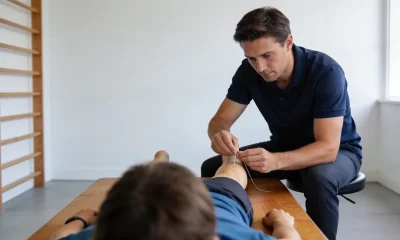
Physiotherapy is the profession most people have met. A physiotherapist assesses and diagnoses movement problems, treats them with hands-on work, and prescribes exercise to keep the improvement going. The toolkit includes manual therapy, joint mobilisation, dry needling, acute injury management and rehabilitation after surgery, and the work is often about a specific problem in a specific place: the knee that gave way, the shoulder that pinched, the back that seized.
Exercise physiology takes a different starting point. An exercise physiologist uses exercise clinically, as the treatment itself, to manage or improve a health condition or a long-term functional problem. The work sits with chronic conditions, persistent pain, the strength and capacity someone is trying to rebuild after illness or injury, and the long game of staying independent. It is usually a longer relationship than most people expect, because capacity builds slowly and stays with you. Where physiotherapy often works towards a defined endpoint, exercise physiology often works to a horizon: the condition is managed across years, and the program changes as the person’s capacity does.
The overlap between the two is real, and it is deliberate. Both professions prescribe movement, both work with rehabilitation, and plenty of people move between them as their situation changes. The site’s how much exercise does your heart need? what the guidelines say about gentle vs intense is a useful companion here, because it draws the line between general fitness guidance and the clinical use of exercise, which is where the difference between the two professions lives.
The training, and the letters after the name
Both professions sit inside allied health, and both are university qualified. What differs is the training route and the professional body behind the title, and those are the source of the letters you see after a practitioner’s name.
For you as a patient, the practical upshot is simple. The titles are not interchangeable, and it is fair to ask what the person treating you is qualified to do. If you like checking credentials before you book, ask the clinic which professional body the practitioner is registered or accredited with, and look them up. A good clinic will answer that without blinking, because the question is a reasonable one and the answer is a source of pride rather than a problem.
What a first appointment looks like
The two first appointments have different shapes, and knowing them helps you prepare.
With physiotherapy, expect a history and a physical assessment, and hands-on treatment in the first session if treatment is appropriate that day. You will usually leave with a home program from day one, even if it is short. The pace is set by the problem, and early appointments can be frequent.
With exercise physiology, expect a longer assessment. The practitioner takes a health and capacity history, including your conditions, your medications and any restrictions a professional has put around your activity. Then come baseline measures, so that progress can be seen rather than guessed, and a program built around the results. The honest expectation for the first few sessions is that they are about building the habit and learning the movements, not about a quick fix. That is not a slow start; it is the method.
Two things are worth saying plainly. Neither profession is a massage, and an appointment with either should include questions about what you want to get back to doing. It helps to bring what you know about yourself: what you have tried before, what hurt, what you are taking, and what you are hoping to return to. That last one is the goal the program gets built around, and it is worth saying out loud in the first session rather than the tenth. The site’s best at-home exercises recommended by exercise physiologists shows what the work between appointments looks like, if you want to see the shape of a program before you begin one.
Which one for which problem
This is the practical heart of it, so here is the short version, scenario by scenario.
A new injury or sudden pain: physiotherapy first. This is the profession for assessment and diagnosis, and for hands-on treatment while something is acute.
A long-term condition you are managing, or capacity you are trying to rebuild: exercise physiology. This is the clinical use of exercise over months, not weeks.
Rehabilitation after surgery or a hospital stay: usually physiotherapy early, then exercise physiology for the strength phase, once the early healing allows it. This is the most common relay between the two.
A chronic condition where exercise is part of the treatment plan: exercise physiology, in step with your medical team.
Recurring niggles that never quite resolve: either profession, and probably a conversation about both, because the answer may sit in how you move rather than in the place that hurts.
An NDIS, aged care or insurance-funded situation: ask who is on the plan or the scheme’s books. The funding can decide the door before the clinical question does.
One honest line runs under all of it. Plenty of people see both professions, often at the same time, and the two are used to working together. Choosing one first is not a commitment to never seeing the other. And if more than one of those scenarios sounds like you, that is normal: it is a reason to describe the whole picture rather than the loudest symptom.
Who pays, in plain language
This is the section readers ask about most, and the one explained least, so here it is in plain terms.
Medicare does not cover these professions for routine visits. There is a pathway that can subsidise a limited number of sessions, through a chronic disease management plan arranged with your GP, which makes the referral and the eligibility the first things to check. The detail changes, so confirm it with Services Australia rather than relying on a remembered version of it. The plan route also runs through your GP rather than around them: it is the GP who prepares the plan and makes the referral, so the first appointment to book may be the one with your doctor.
Private health insurance may pay a rebate, depending on your policy and on whether your fund recognises the practitioner. That is a two-minute check before you book, and it can change which practice makes sense for you. A fund that recognises exercise physiologists on one policy may treat the two professions differently on another, so the question is about your policy, not about the professions in general.
NDIS funding can cover either profession where the support is written into your plan and meets the scheme’s criteria. The site’s how NDIS physiotherapists enhance your rehabilitation journey looks at what funded therapy involves in practice.
Workers compensation and CTP schemes cover treatment for accepted claims, arranged through the insurer or the scheme after the claim is accepted. Aged care funding is its own pathway, with its own process, and the provider will know whether you are eligible for it.
Which leaves one piece of advice that sits under all funding questions: ask the clinic which pathways it works with before you book, because the same appointment can cost very different amounts depending on the answer.
The one question to ask when you book
If you take one thing from this article, make it this question, asked plainly: for what I have described, would you start with physiotherapy or exercise physiology, and why?
It is a good test of any clinic, and an easy one for a practice that offers both professions, such as a Sydney practice that offers both exercise physiology and physiotherapy. If the answer comes with reasoning, you are talking to someone who listened. If you get handed to whoever has a gap in the book, that is information too.
Two small things to bring to that first appointment: your care plan or your NDIS plan if you have one, and a list of what you are taking. Both change what the practitioner can do in the first hour, and both take a minute to put in a bag. And bring the question itself. Saying it out loud, with what you can and cannot do at the moment, is often the point at which the answer becomes obvious to everyone in the room.
You do not need to have it all worked out before you call. The people on the other end of that call answer this question every day, and a good clinic will not mind you asking it twice.
Sources consulted: healthdirect exercise physiology information; Allied Health Professions Australia exercise physiology information; Services Australia chronic disease management guidance.