Healthcare
How Community Nurses Help People With Diabetes Manage Care at Home

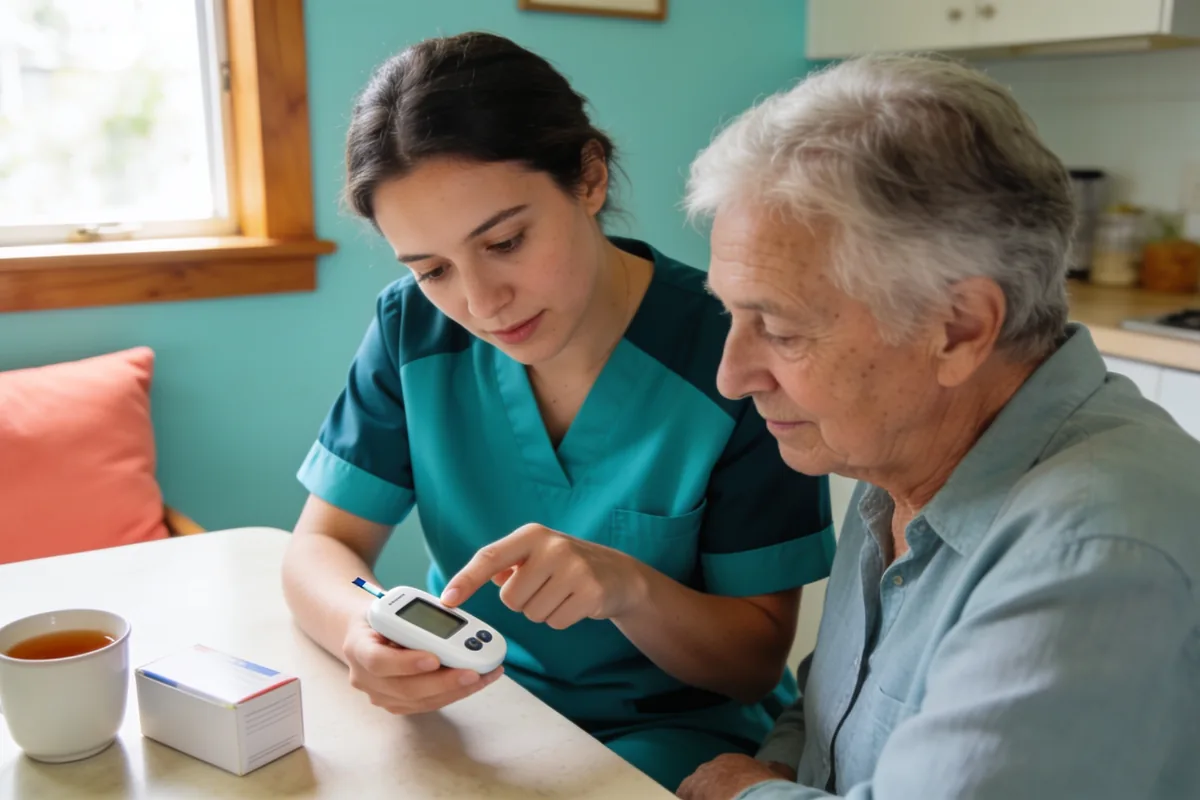
If you or someone you care for has diabetes, most of the day-to-day management happens at home, away from the doctor’s surgery. That is exactly where community nursing fits. A community or district nurse visits people in their own homes to help with the parts of diabetes care that are hard to manage alone, and for many people those visits are what keep blood glucose levels steady and stop small problems from turning into hospital trips.
What a home visit covers
A visit from a community nurse is a clinical visit, not a social call, and it is usually arranged through your GP or after a hospital stay. The nurse might check your blood glucose levels with you and talk through what the numbers mean, review how you are taking your medicines, and watch you use your insulin or glucose monitor to catch habits that are not working. They can also do a foot check, because people with diabetes are at higher risk of foot problems, and catching a small sore early matters a great deal.
The wider picture
It is not only about the numbers on the meter. The nurse talks through food and activity in a practical way, helps you plan for sick days, when diabetes can be harder to manage, and makes sure you know what to do if your levels run too high or too low. They are also the person who links everything together, feeding information back to your GP, arranging a podiatrist or dietitian, and making sure nothing falls through the cracks between appointments.
Who can get it
Community nursing for diabetes is not reserved for one type of person. An older person with diabetes and other health conditions may be referred after a hospital stay. A younger person learning to manage insulin can be referred by their GP. Anyone whose health makes getting to a clinic difficult, or who simply needs more support than a short appointment allows, can be a candidate. Referral usually runs through a doctor, a hospital discharge team or, for NDIS participants, a plan that includes nursing supports where they relate to disability.
Why home makes a difference
There are good reasons this care happens at home rather than in a clinic. For someone with diabetes, especially an older person, the trip to an appointment can be the hardest part of managing the condition. A home visit removes that barrier, and it lets the nurse see the context a clinic never shows: how food is stored, whether medicines are actually being taken, and whether the person can read the glucose meter. Care planned around a real life is more likely to work.
Not a replacement for your GP
A community nurse does not replace your doctor or your diabetes specialist. The nurse is an extra layer, the person who checks in more often and notices changes sooner. Most people with diabetes still see their GP regularly, and the nurse works with that team rather than instead of it. For a broader look at how community and district nurses work across different conditions, our guide to community nursing in Australia sets out the service in more detail.
How to ask for it
If you think community nursing could help, start with your GP. Ask whether a referral to a community nursing service is appropriate and what it would cover in your area. If you have recently been in hospital, your discharge team is just as good a place to raise it. You do not need to manage diabetes on your own, and an early referral is far easier than trying to arrange help in the middle of a health crisis.
A small step toward a lighter load
Diabetes is a condition that is managed day by day, and most of those days are spent at home. A community nurse brings clinical care into that setting, checking the numbers, the feet, the medicines and the plan, and keeping the GP in the loop. For anyone finding diabetes harder to manage than it should be, asking about community nursing is a small step that can make the daily load lighter.
Sources: Diabetes Australia (diabetesaustralia.com.au) · National Diabetes Services Scheme (ndss.com.au) · Australian Institute of Health and Welfare (aihw.gov.au) · Australian Podiatry Association (podiatry.org.au) · Silver Chain (silverchain.org.au)