
Food
How to Tell a Great Burger From a Good One (Before You Bite)

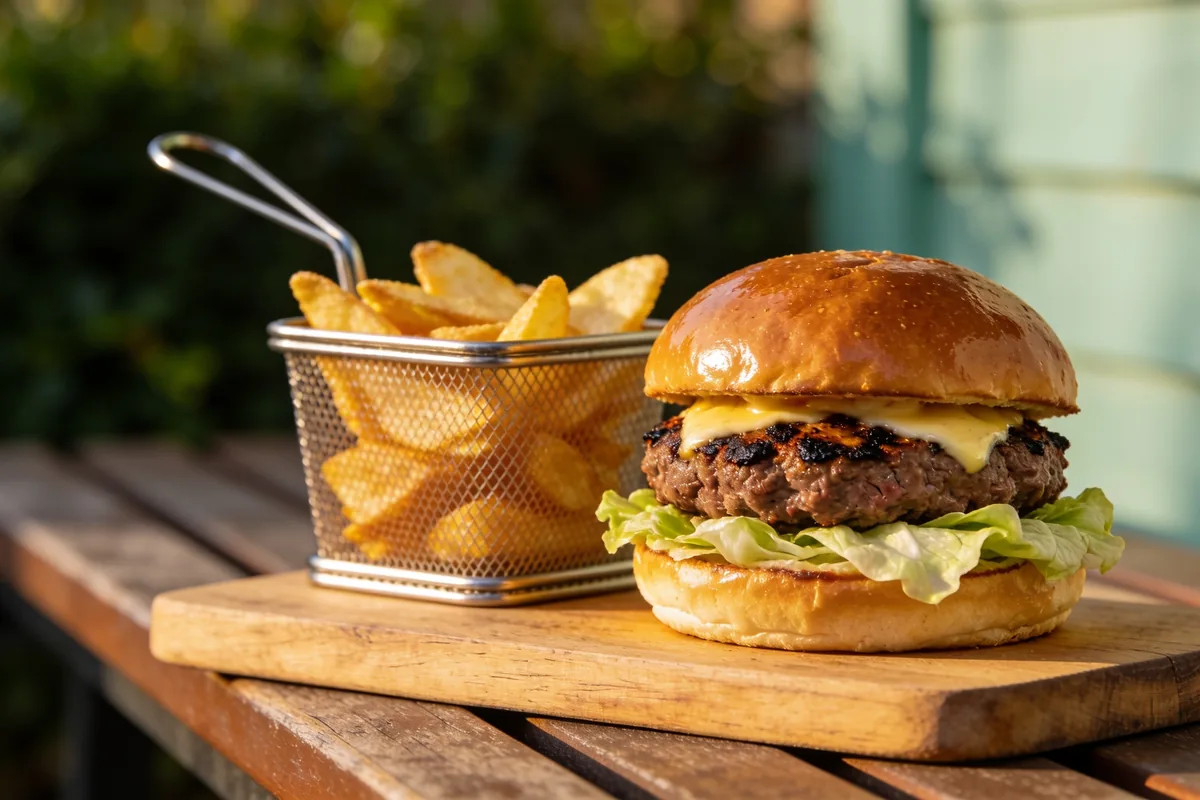
You know the feeling. The burger looked excellent in the photo, the first bite was promising, and then somewhere around the middle you realised you were mostly eating bread, or the patty had no flavour, or the whole thing fell apart before you finished. Here is the reassuring part: a great burger is not a mystery. It comes down to a few small details you can check before you even pick it up.
Start with the bun
The bun tells you more than you might expect. A good one is soft but sturdy, fresh rather than stale, and lightly toasted on the inside so it does not go soggy the moment the filling touches it. If the bun is dry and crumbly, or so thick that the filling disappears, that is your first clue.
Look at the size as well. The patty should roughly match the diameter of the bun. When the bread hangs over the edges by a wide margin, you are buying bread with a suggestion of meat, and no amount of sauce will fix that.
The patty is the honest part
The meat does the talking, and it does not lie. A patty that is cooked to order, seasoned on the outside and left with a little crust is a sign that someone is actually cooking rather than reheating. A grey, steamed patty that tastes the same at the end as it did at the start usually means it was cooked in bulk and held until ordered.
You can often see this before you bite. If the burger is pressed flat and pale, or if it arrives suspiciously fast at a busy counter, the odds are it has been sitting. If it has a proper edge and smells like a grill, you are probably in good hands.
Balance beats toppings
A great burger does not need to be tall. In fact, the taller and more loaded it is, the harder it is to eat and the more likely the flavours are to blur into one another. What separates a great one from a good one is balance: enough sauce to moisten, enough pickle or onion to cut through the richness, and not so many toppings that you cannot taste the beef.
If a menu item is named after its fourth or fifth topping, the kitchen may be hiding a patty that would not survive on its own. The places that are proudest of their meat tend to keep the extras simple.
Sides are a quiet signal
The side dishes often reveal how seriously a place takes its food. Hand-cut chips that are crisp and properly salted suggest a kitchen that cares about details. Frozen chips that arrive pale and under-seasoned tell you the burger was probably an afterthought too. It is not a perfect test, but it is a reliable one.
The same goes for the small things. Is the lettuce actually cold and crisp, or warm and wilted from sitting against the patty? Is the cheese melted over the meat rather than slapped on as a cold square? Those details cost almost nothing and they separate a cook who is paying attention from one who is assembling.
Price honesty
Nobody wants to be told that a great burger cannot be cheap, because some of the best ones are. But price does send a message. A suspiciously expensive burger that arrives with the same frozen sides and a dry bun is a worse sign than a modestly priced one that is put together with care. Look for a menu that is honest about what it offers, and judge the value after you have eaten, not before.
It is also worth remembering that taste is personal. One person’s perfect burger is another person’s too-salty stack, and that is fine. These are not rules to be precious about. They are simply things to notice, so that next time you can order with a little more confidence and a lot less guessing about what comes out of the kitchen.
The best test is the last bite
A good burger is enjoyable at the start. A great one is still enjoyable at the end, when the bun has held together, the meat has kept its flavour and you are not reaching for a stack of napkins to deal with a structural failure. If the last bite is as good as the first, you have found your place.
None of this is a science, and if you would rather read about how the burger became a worldwide favourite in the first place, that history is worth a look. But when you are standing at a counter deciding whether to order, the question is simpler: is the person cooking it paying attention? Most of the time, you can tell before you bite.


You must be logged in to post a comment Login