Automotive
The Smart Way to Keep Your Vehicle Running Without Trouble

Cars do not fail without warning as often as people think. Most breakdowns are the end of a slow process that had signs along the way, a noise, a vibration, a fluid level that kept dropping, a service that kept getting postponed. Keeping a vehicle running without trouble is mostly a matter of staying ahead of that process. This guide sets out the maintenance habits that separate the drivers who get caught out from the ones who do not.
Why regular servicing matters
A service is not an oil change with a checklist attached. It is the one time a vehicle is inspected properly, and the inspection is where small problems are found before they become breakdowns. A worn belt, a perished hose, a brake pad nearing its limit or a slow fluid leak is cheap to fix when it is found early. Left alone, each of those becomes a roadside failure at the worst possible moment. The service schedule in the owner’s manual exists for this reason, and following it is cheaper than the alternative.
The basics: oil, brakes and tyres
Most of what keeps a car reliable comes down to three things. Engine oil lubricates and protects the engine, and it breaks down over time, so regular oil and filter changes are the single most important habit. Brakes are the safety-critical system that wears with use, and they should be checked before they start making noise, not after. Tyres carry the whole vehicle, and they need the right pressure, enough tread and even wear. Each of these is simple to check and expensive to ignore.
Preventing unexpected breakdowns
Breakdowns are rarely random. The cooling system, the battery and the electrical system all give warning signs before they fail. A car that runs hotter than usual, struggles to start on cold mornings or needs a jump start more than once is telling the owner something. The same applies to the auxiliary belt that drives the engine accessories, which gives little warning before it snaps. Having these items checked as part of a service, rather than waiting for a failure, is what prevents the call to roadside assistance.
The value of a professional inspection
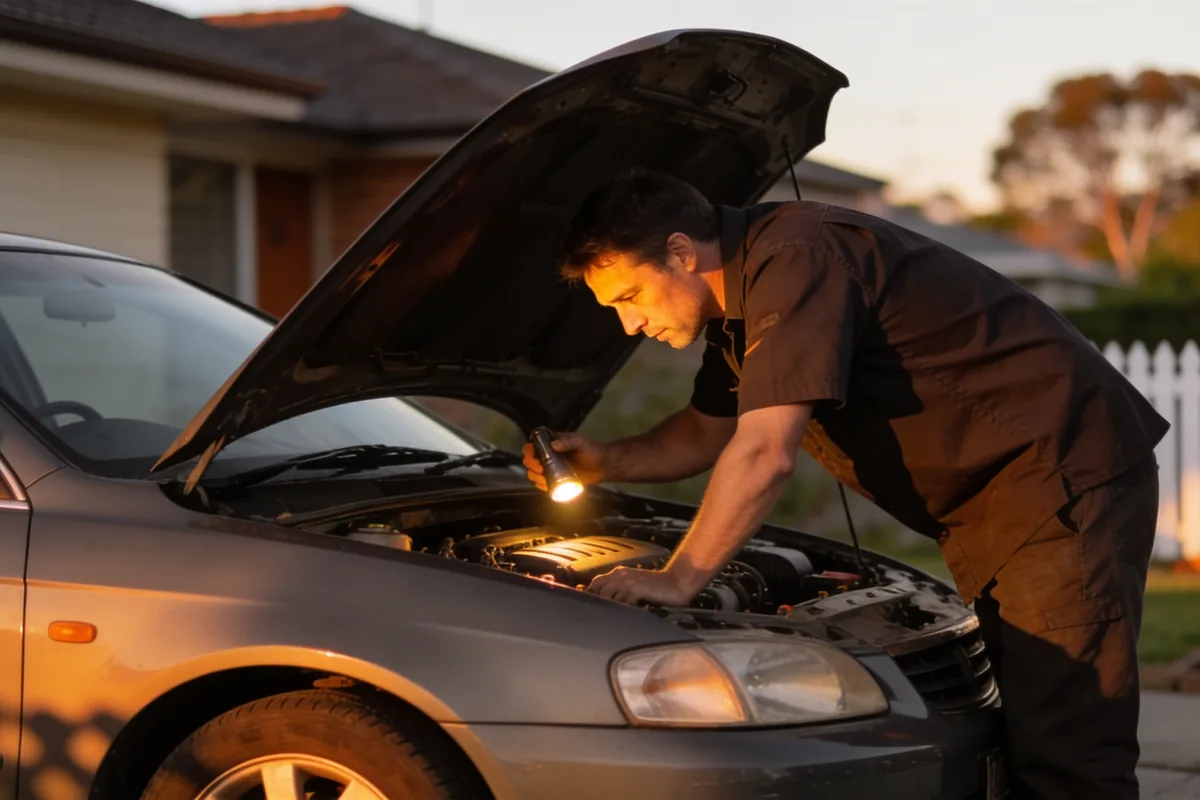
A driver can check oil, water and tyre pressures, and should. But a professional inspection sees what a driveway check cannot. A mechanic on a hoist can look at the underside of the car, where rust, leaking seals, worn suspension and damaged exhausts hide, and can test the systems that only show problems under load. The value of that inspection is that it finds the faults while the car is still drivable. A vehicle that goes in for a service and comes out with a list of small recommended repairs has just had a breakdown cancelled.
Simple habits that extend a vehicle’s life
Beyond the service schedule, a few habits make a measurable difference. Warming the car up gently rather than revving it cold, letting the engine settle before driving hard and not carrying unnecessary weight all reduce wear. Checking fluid levels between services, keeping the tyres at the pressure in the manual and washing the underside after driving on salted or muddy roads all protect the parts that corrode and wear. None of these habits is dramatic. Together they stretch the life of the vehicle and delay the big repair bills.
Adapting maintenance to how and where you drive
The service schedule in the manual is a starting point, not a fixed rule. A vehicle that works harder than the average car, whether it is towing, carrying heavy loads, doing long highway kilometres or running in hot and dusty conditions, places more demand on oil, brakes, filters and tyres. A mechanic who knows how the vehicle is used can advise on shorter service intervals for the parts that take the extra load. Matching the maintenance to the actual conditions the vehicle faces is what keeps it reliable in those conditions.
The long-term payoff of preventive care
Preventive maintenance is easy to postpone because the cost is visible and the benefit is not. The payoff arrives later, in the repairs that never happened, the breakdowns that never occurred and the resale value that holds because the service record is complete. A vehicle that has been serviced on schedule is worth more and sells faster than an identical one with gaps in its history. Over the life of a car, the driver who maintains it properly spends less and is stranded less than the driver who waits for things to fail.
The small warnings that prevent big repairs
How often should a car be serviced? Follow the interval in the owner’s manual, which is usually based on time or distance, whichever comes first. Vehicles used in severe conditions may need servicing more often.
Is it worth servicing an older car? Yes, within reason. Regular servicing keeps an older car reliable and is almost always cheaper than replacing it, provided the body and major systems are still sound.
Can I do any maintenance myself? Drivers can safely check oil, coolant and tyre pressures and top them up. Anything involving brakes, suspension, cooling or the electrical system is best left to a qualified mechanic.
What should I do if a warning light comes on? Do not ignore it. Some warning lights indicate a problem that will get worse and more expensive the longer the car is driven. Have it checked promptly.
How do I find a trustworthy mechanic? Look for a mechanic who explains what needs doing and why, provides a clear quote before starting work and does not push unnecessary repairs. A good relationship with one mechanic who knows the vehicle is worth more than the cheapest quote.
The drivers who avoid trouble are not the ones with lucky cars. They are the ones who treat maintenance as part of owning the vehicle, who follow the service schedule and who act on the small warnings before they become large failures. That is the smart way to keep a vehicle running, and it costs far less than the alternative.