Home & Garden
How to Prep Your Site for a Smooth Concrete Pour


A concrete pour goes wrong in the ground preparation, not in the pour itself. The slab is only as good as what is underneath it and what is holding it in place, so the time spent before the truck arrives is where the job is won. This guide walks through the steps that separate a clean, level result from one that cracks, sinks or ponds.
Clear the area first
The pour area needs to be free of loose material, vegetation and anything that will leave a soft spot under the slab. Grass, topsoil, roots and builder’s rubbish should be stripped back to a firm base. If the ground has been dug up recently, fill and compact any soft patches before going further, because a hollow under the slab will show up later as a crack.
Set up the formwork
Formwork is the frame that holds the concrete in its shape while it sets. It needs to be square, level and firmly staked so it does not bulge or move under the weight of the wet mix. Check the corners with a string line and a level, because it is much easier to adjust timber now than to grind a finished slab later. The top of the formwork sets the finished height, so it pays to be fussy here.
Prepare the base
Once the area is clear, the base is built up in compacted layers. Crusher dust or road base is commonly used, and each layer should be compacted before the next goes on. The depth depends on what the slab will carry, a garden path needs less than a driveway or a shed slab. A well-compacted base spreads the load evenly and stops one section of the slab settling more than the rest.
Sort out drainage
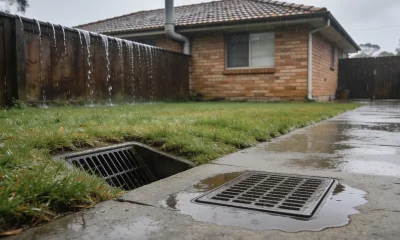
Water is the quiet enemy of a concrete slab. If the ground holds water, or if the finished slab sits lower than the surrounding soil, the base can wash out over time. The surface should slope away from buildings, and low spots that will trap water should be filled before the pour. Where a slab sits against a house, the finished level should let water run off rather than pool against the wall.
Lay any reinforcement
Not every slab needs reinforcement, but most do. Steel mesh or rebar controls cracking where the slab will carry a load, span a soft patch or sit over ground that moves. The reinforcement needs to sit in the middle of the slab thickness, not on the ground, which is why bar chairs or similar supports are used. For a plain path or a small pad, check whether reinforcement is worth the cost before adding it, because on solid ground it is not always needed.
Pick your day
Concrete does not set well in extreme heat, heavy rain or frost. Rain can wash the surface and weaken the top layer, and heat can draw moisture out too fast and cause shrinkage cracking. The forecast matters as much as the calendar. A mild, still day with the ground neither soaked nor baked gives the mix the best chance to cure evenly.
Gather the right tools before the truck arrives
Nothing wastes a pour like stopping to hunt for tools while the mix is going off. Wheelbarrows, shovels, a screed board, a bull float, an edging tool and a trowel should all be on site before the concrete shows up. Have a plan for where the mix will be unloaded and how it will be moved, because a truck cannot wait while a team reorganises itself.
Do a final inspection
Walk the formwork, the base and the reinforcement one last time before the pour. Check that the stakes are firm, the levels are right and nothing has worked loose. It is also worth confirming access for the truck and that the delivery address matches the site. A ten minute check at this stage is cheaper than any fix made after the slab has set.
When to diy and when to hire a concreter
Small jobs, like a path, a small pad or a repair, are within reach of a capable home handyperson with a few helpers. Anything large, heavily loaded or visible, such as a driveway, a shed slab or a garage floor, usually comes out better with a licensed concreter. The concrete itself is only part of the cost. The preparation, the equipment and the experience of placing and finishing a large area quickly are what a professional brings, and on a big slab that difference shows in the finished surface.
The rule of thumb is simple: the larger and more permanent the job, the more the preparation matters, and the more a professional is worth the money.