Healthcare
How Much Sleep Do You Actually Need? It Changes With Age


The short version
- There is no one magic number. Most healthy adults need roughly seven to nine hours, but the right amount for you is the amount that leaves you functioning well.
- Age moves the dial. Children and teenagers need more, and adults over about 65 often need less and sleep more lightly.
- Judge it by how you feel, not the clock. If you only wake because of an alarm, need caffeine to get going and nod off easily by day, you are probably short.
Almost everyone has a number in their head, and for most people it is eight. Ask them where it came from and they usually cannot say, yet they carry it around and feel vaguely guilty when they fall short of it. The problem is that sleep need is not a single figure stamped on the human race. It shifts with age, it varies between people, and the number that matters is the one your own body is asking for. This guide walks through the honest ranges by age, the signs that you are running short, and the small changes that actually help, without turning sleep into another thing to get wrong.
Why “eight hours” is the wrong question
The first thing to let go of is the idea that sleep need is one number. It is a range, and the range moves across your life and between people. Two healthy adults of the same age can need genuinely different amounts of sleep, and both can be fine. One might run well on seven hours while the other needs nine, and neither is broken.
That is not a licence to ignore sleep. It is the opposite. When you understand that the right amount is personal, you stop comparing your night against a stranger’s and start paying attention to your own signs. The “eight hours” rule is a useful rough guide for population averages, but it was never a prescription for you. The honest question is not “am I getting eight hours?” It is “am I getting enough for me?”
The ranges by age
Sleep-health bodies publish consensus ranges by age, and they are worth knowing as a guide, not as a rulebook. They overlap and they taper as life goes on, which is exactly why a fixed number never works.
Babies and toddlers need the most sleep of anyone, spread across naps and the night, and their needs change quickly in the first few years. School-age children settle into a clearer pattern, with most needing roughly nine to eleven hours a night. If a child in this age range seems tired during the day, the first place to look is usually bedtime.
Teenagers are the group people most often misunderstand. They need roughly eight to ten hours, which is more than many adults assume, and their body clocks shift later, which is why a teenager who cannot fall asleep at nine is not being difficult. The biology genuinely changes in the teenage years, and the school day does not always match it.
Younger and middle adults typically need roughly seven to nine hours. Within that band, your own number is the one that leaves you waking without an alarm and thinking clearly through the afternoon. Adults over about 65 often need slightly less, frequently seven to eight hours, and their sleep tends to be lighter and more broken into shorter stretches. That fragmentation is a normal part of ageing, not a failure on your part.
The honest takeaway from the ranges is that they are wide, they overlap, and they trend downwards across life. Use them to sanity-check your own pattern, not to judge it.
The stages that confuse people
Part of the worry around sleep comes from the language used to describe it. Sleep is not one flat state. Through the night you move through cycles that include light sleep, deep sleep and REM sleep, the stage where most dreaming happens. The cycles repeat several times a night, and the mix shifts as the night goes on.
The parts people get anxious about are deep sleep and REM sleep, because they have heard that they matter. They do. But the honest note is that you do not need to track the stages to know whether you are sleeping enough. Your body organises the mix on its own, and the stages are not something you can usefully command from outside. If you sleep roughly the right amount for you, the deep sleep and the dreaming sleep take care of themselves.
One more thing is worth saying gently. The stage-tracking features on phones and wearable devices give estimates, not measurements. They can be useful for spotting patterns over weeks, but they are not a medical read-out, and they should not be allowed to make you anxious about a night that felt fine. If you slept well and woke rested, a chart that says your deep sleep was low has not found a problem.
How to tell if you are short
The honest test of whether you are getting enough sleep is not a number on a screen. It is how you feel and function. The signs of running short are familiar to almost everyone: you only wake because the alarm drags you out, you need caffeine before you can think straight, your concentration wanders, small things irritate you more than they should, and you nod off easily in quiet moments like a meeting or the bus.
A bad night or two is normal. Everyone has them, and one short night does not mean your sleep is broken. What matters is a pattern. If these signs have been hanging around for weeks rather than the occasional rough patch, your sleep is probably short, and it is worth treating that as information rather than a personal failing.
The reassuring part is that sleep responds to small, steady changes. You do not need to overhaul your whole life. One consistent change, kept up for a couple of weeks, is usually enough to start shifting the pattern back.
The habits that actually protect sleep
The habits that protect sleep are not dramatic, which is probably why they are so easy to skip. They work slowly and quietly, and they are more about consistency than perfection.
A consistent wake time is the single most useful one. Waking at roughly the same time every day, including weekends, anchors your body clock more effectively than trying to force an early bedtime. If your wake time is steady, your bedtime tends to sort itself out.
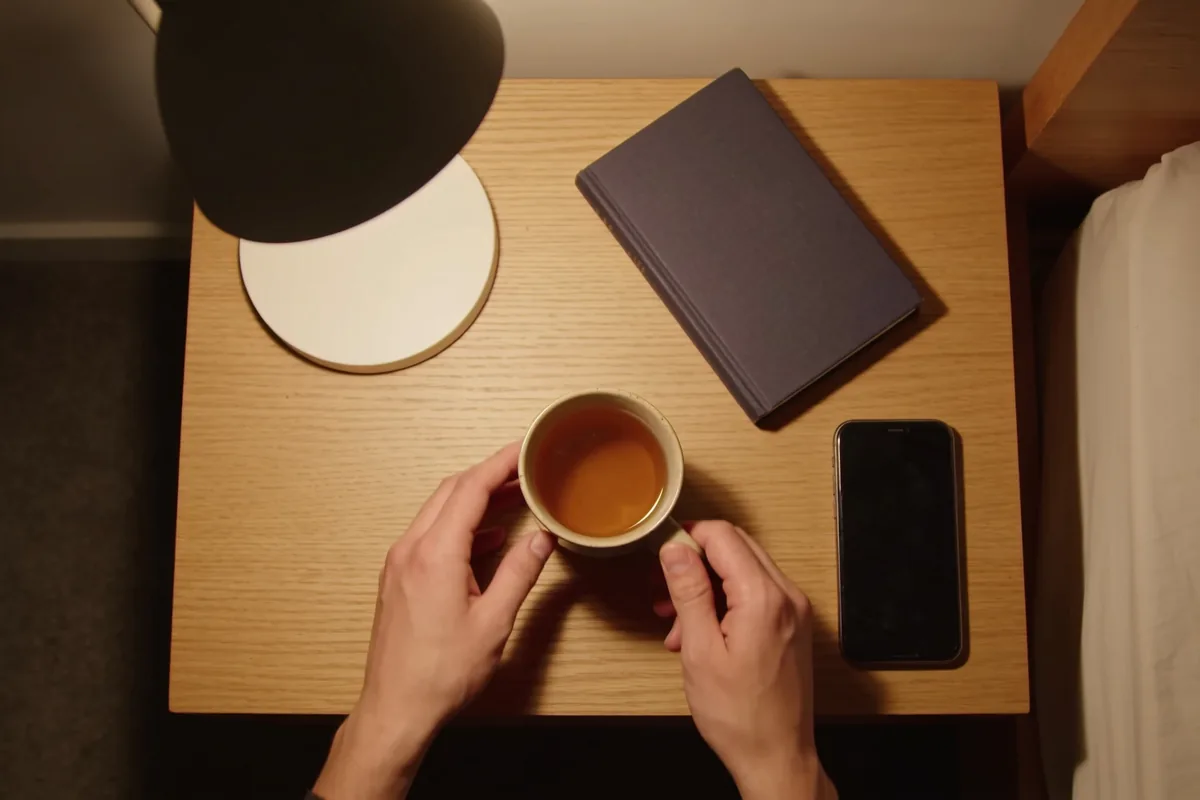
A wind-down routine helps too, and it does not need to be elaborate. The same quiet sequence most nights, whether that is tea and a book or a few minutes of stretching, tells your body that the day is closing. Dimming screens in the last hour matters because bright light, especially the light from phones and tablets, signals wakefulness. And the bedroom itself earns its keep when it is cool and dark, which is where the practical choices about bedding come in. The site’s guide to fleece versus cotton blankets is a useful read if you have ever wondered whether your bedding is part of the problem, because warmth and how settled you sleep are genuinely connected.
Movement through the day is part of the same picture. Regular activity is one of the most reliable supports for good sleep, and the site’s look at how much exercise your heart actually needs sets out the honest guidance on gentle versus intense movement. You do not need to train for anything. A body that has moved during the day is simply readier to rest at night.
One habit is worth unlearning: chasing sleep by lying in bed awake. If you are not drowsy, lying there watching the clock usually makes things worse. It is better to get up, do something quiet in low light, and come back to bed when you feel sleepy again. The bed works best when it is associated with sleep, not with staring at the ceiling.
Sleep through the seasons of life
Some changes in sleep are not problems to fix. They are normal chapters, and knowing that can save a lot of worry.
The teenage years bring the shift to a later body clock, which is biological, not behavioural. Early parenthood brings broken sleep that no habit fully prevents, because a small person’s needs do not respect your routine. Shift work asks your body clock to run against its natural pattern, which is genuinely harder and deserves patience rather than self-criticism. And in older age, sleep tends to become lighter, earlier and more broken, which is a normal change, not a defect.
The point of this section is simple: at each of these times, a change in how you sleep is expected. It does not mean you are doing sleep wrong. Give yourself the same kindness you would offer a friend in the same season, and hold the basics, the steady wake time and the wind-down, a little more loosely when life is already demanding.
When to talk to someone
Most of this guide is about the ordinary dips that everyone meets. There is a separate category where the right step is to talk to a health professional, and it is worth naming clearly.
If poor sleep has become persistent, if it is affecting your daily life in a real way, or if it is joined by loud snoring, gasping during sleep or unusual daytime sleepiness, it is worth raising with a GP. These can be signs of something that needs proper attention, and a doctor is the right person to sort that out. This is a health read, so the honest closing note here is the one that applies to all health advice: when a pattern persists, seek real advice rather than self-diagnosing from the internet. Your GP can look at the whole picture in a way no article can.
The honest number for you
The right amount of sleep is the amount that lets you wake without the alarm, think clearly and stay awake through the afternoon. Use the age ranges as a guide, but trust how you feel, because your body has been keeping its own score all along. And if you have been running short, start with one small change this week. One change is enough, and you can build from there.
Sources: Sleep Health Foundation (Australia), how much sleep you need by age · Australian Department of Health and health advice, sleep and rest guidance · Published consensus sleep-duration guidelines, age-based ranges