Travel
Frost, Fog and the Early Run: Getting Around the Macedon Ranges on a Cold Morning

- The hard part of a cold morning is not the destination. It is the first stretch of the drive, and deciding whether the drive should happen.
- A frost is a signal rather than a hazard. The glass going white is the morning telling you that the ground has changed.
- The risk is the surface under the wheels: thin, patchy ice that survives in shaded places long after the open road has cleared.
- Fog is a different problem. It does not make a road slippery. It removes the distance you have to react in.
- Some mornings the right answer is not to drive at all, and that decision belongs to the night before rather than to the windscreen.
A cold morning asks two questions before you have left the driveway. Is this a morning that needs care, or a morning that needs a different plan? This article is about the difference: what the cold actually does to a road and a car, which local journeys are worth rethinking, how to tell a merely cold morning from a genuinely bad one, and what is worth arranging before winter arrives rather than on the morning it matters. This is not an alarm about driving in the Ranges. It is an attempt to make the margin visible, because margin is what every decision on a morning like this comes down to.
What the cold actually does
Three things happen on a cold morning, and they are worth separating, because they call for different responses.
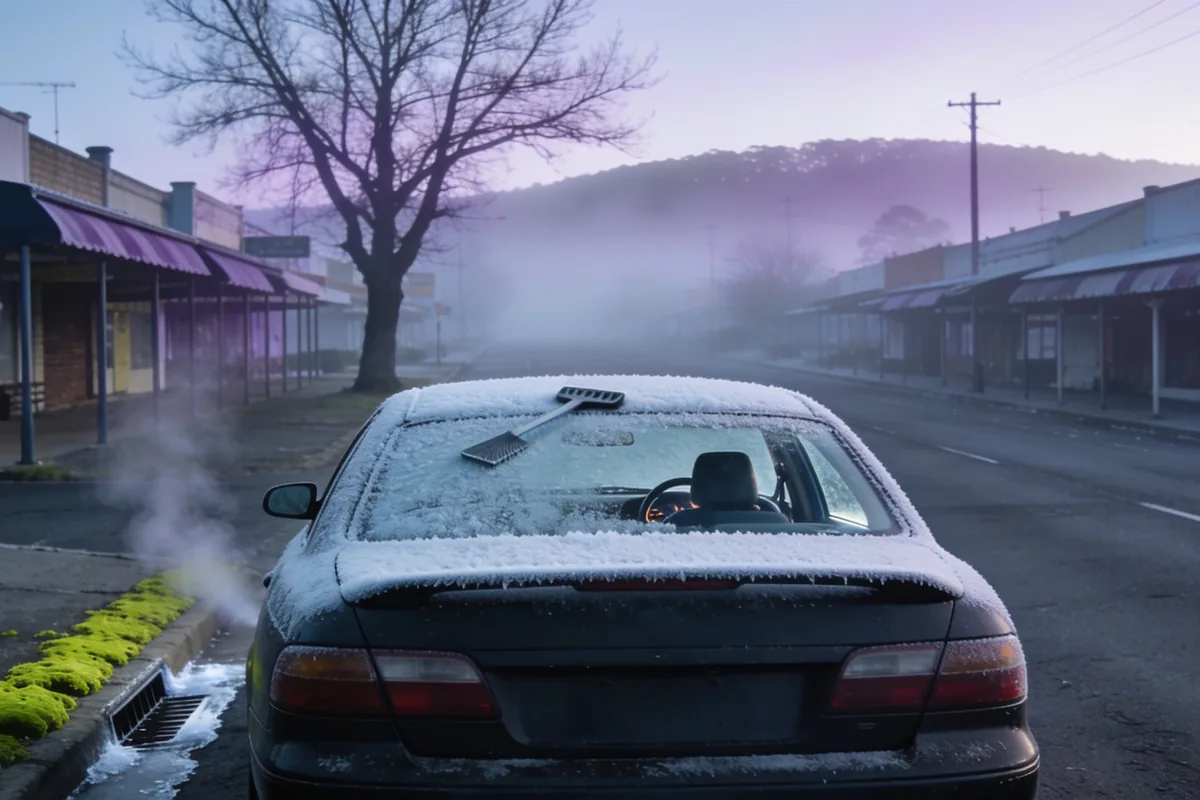
The frost comes first, and it is the signal rather than the problem. Ice forms first on the surfaces that lost their heat first, which is why the windscreen is white while the paving beside it is only wet. The important part is not the glass; it is what the glass says about the road.
The surface underneath is the risk. A road can be colder than the air above it, which is how ice survives out of sight on a surface that looks like any other. It forms in the places that stay cold longest: a shaded stretch, a cutting where the sun arrives late, a descent that faces away from the morning light. This is what people mean by black ice, and the reason it matters is its patchiness. Most of the drive is fine. One bend is not, and it is rarely the bend you were watching.
Fog changes a different equation. It does not make the road slippery. It removes the distance you have to react in, and it sits in low ground rather than spreading evenly, so a trip can start in clear air and drop into a bank of it within a short stretch. Fog asks you to slow down, and it asks you not to trust the tail lights ahead.
And the car has its own cold morning. A battery that has been asked too much through the week can find the one morning it has nothing left. A windscreen fogs on the inside while it frosts on the outside, which is a job for the demister rather than the scraper. Say plainly which is which: frost on the glass is a nuisance, the road surface is the risk, and the fog is a distance problem.
Where it goes wrong, in the Ranges specifically
Three structural things matter here, and none of them is about any one road.
The first is that a route here can climb and drop over a short distance. On a route like that, the conditions at the front door are not the conditions two bends away, and a household that checks the weather once and then drives downhill has made a decision on old information. The conditions that matter are the ones at the height you are driving, at the hour you are driving them.
The second is that shaded sections last longest. A cutting, a tree-lined bend or a descent that faces away from the sun can hold its ice long after the rest of the trip has cleared, and a driver can rarely see the surface there. The morning that catches people is not the deep winter day. It is the bright one after a cold night, where everything looks settled and one stretch has not caught up.
The third is that fog collects in the low ground, filling the dips rather than the tops. It means a trip that begins in clear air can run into poor visibility over a short stretch, and the trip home in the evening does the reverse, dropping out of the fog and into the clear. The pattern to carry in your head is not a forecast. It is the shape of the route.
None of this is an argument against driving here. It is an argument for treating the first few minutes of a trip as the part that needs attention, rather than the open road at the far end of it. How the town moves in ordinary weather is a different subject, and the site’s navigating Woodend with ease: a closer look at local cab travel covers it properly.
The journeys that are worth rethinking
The conditions matter differently depending on the journey, and a handful of trip types carry all the risk on a morning like this.
The pre-dawn run with a time on it. A train to catch, an appointment, a shift. This is the journey with no margin built in: somebody else owns the start time, and the conditions have taken the margin away. If one journey in the week cannot move, it is usually this one, and it is worth naming in advance.
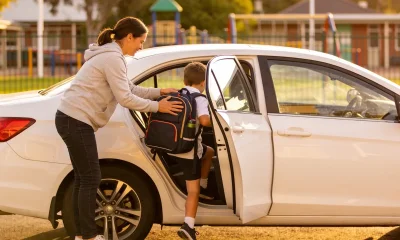
The school run. A short trip with children, bags and a deadline, which stops being a short trip when the car needs clearing and the first stretch of the road is white. The site’s school runs without the stress: when a booked taxi helps busy families covers the ordinary version of that juggle; on a bad morning it is simply the juggle with worse conditions in it.
The long run out of the district before sunrise. The first part of it is the part nobody plans for, and changing from a cold local road onto faster traffic is the change of mode that gets skipped.
The evening return. This is the trip people underestimate, because the morning’s caution has been spent. The fog comes back to the low ground in the evening, the driver is tired, and the route is being driven at the end of a long day. The site’s getting home after dark: when a cab is worth it over public transport takes the evening decision further than this piece needs to.
And the visitor’s version. Someone staying in the Ranges for a weekend, who has never driven these roads in these conditions. Visitors are not reckless; they are reading the road for the first time.
The honest counterpoint: most of these journeys, on most cold mornings, are ordinary drives. What this article describes is the minority where they are not, and the way to handle those is to see them coming.
Telling a cold morning from a bad one
There is a judgement to be made each morning, and it can be made partly from the house, as long as its limits are understood.
What you can establish before leaving. Whether the frost has settled as ice or is simply a heavy dew that never froze, which is a different drive. Whether the glass clears and stays clear once the car has warmed, because a windscreen that keeps fogging is telling you about the car rather than the weather. Whether the fog is lying in the low ground or has come up to the house, because that decides the first part of the trip. And whether the road immediately outside is shaded, because shaded ground is the ground that will still be holding its ice later.
The limit of all that: nobody can judge a road from a house. The useful question is not “is it safe out there”; it is “how much margin do I have this morning”. A morning with margin can be driven carefully. A morning with no margin, plus two of the bad signs above, is a morning to rearrange rather than to manage.
Driving it, if you are driving it
For the mornings that go ahead, the practical list is short, and every item on it is about the same thing.
Clear the whole screen rather than a letterbox. The part of the glass you did not clear is the part with the cyclist in it, and a few extra moments with the scraper is cheap.
Treat the first minutes as the part that matters, because the open road at the end of the trip is usually in better condition than the shaded street it starts on.
Leave the gap, and brake earlier and more gently than the day appears to require. The surface that has changed is the one under the wheels rather than the one in front of them.
Use the lights for being seen rather than for seeing, because in grey light and in fog the point is that somebody else notices you.
Do not follow the tail lights of the car ahead in fog. Their distance is the one thing in the scene you cannot judge, and following them replaces your judgement with somebody else’s.
And watch the shaded sections, including on the way home, when they have not warmed up all day. Almost everything on this list is about buying back margin, and the only morning it does not work is the one with none.
When not to drive it at all
This is the section the article exists for, so it is written without drama.
The conditions where the right answer is to leave the car where it is. The road surface outside is visibly white, and the route has a descent or a shaded stretch on it. The fog is thick enough that you cannot see far enough to stop in the distance you have. The car itself is not fit this morning: a battery that is struggling, a demister that does not work, a windscreen you cannot clear. Or the trip simply has no margin in it, and the conditions have taken what little there was.
What to do instead, in the order a household usually does it. Move the trip rather than the destination, because an appointment can often be rebooked and a train can usually be caught later, and neither of those changes needs the car to be somewhere it should not be. If the trip cannot move, hand the drive to somebody whose job it is. A Woodend taxi service that covers the Macedon Ranges around the clock is one version of that answer, and choosing it is a decision rather than a failure. And if neither of those is possible, leave earlier and accept that the journey will take longer, which is a decision made the night before rather than at the windscreen.
The discipline of this section is that it is decided in advance. A household that has already agreed which mornings it will not drive does not have to make the call at the kerb, in the cold.
What to sort out before the first cold snap
The compressed version, written as the jobs to do in autumn rather than on the morning itself.
The scraper and the de-icer kept where you actually are, rather than in the boot under the shopping. The demister and the heater checked before you need them, not discovered on the first frost. The battery checked as maintenance rather than discovered as a failure. The windscreen washers filled with something that will not freeze onto the glass. And the one appointment in the week that cannot move, identified now rather than on the morning it matters.
The way most people get through a Ranges winter is not by driving better. It is by deciding the night before which mornings they are not going to drive at all.
Sources consulted: Bureau of Meteorology climate and forecast information; Macedon Ranges Shire Council transport information.