Travel
Car Hire Excess, Explained: What You Pay, What Is Excluded, and What to Check at Pickup

- The excess is the amount you are liable for if the car is damaged or stolen. It is not a fee, and it is not a deposit.
- “Insurance included” does not mean nothing can be charged to you. It means standard cover is in the agreement, with an excess attached.
- Standard cover commonly excludes windscreen and tyres, roof and underbody, water, animals and unsealed roads. Ask for that list in writing.
- Excess reduction lowers your liability on covered events. It does not change the exclusion list.
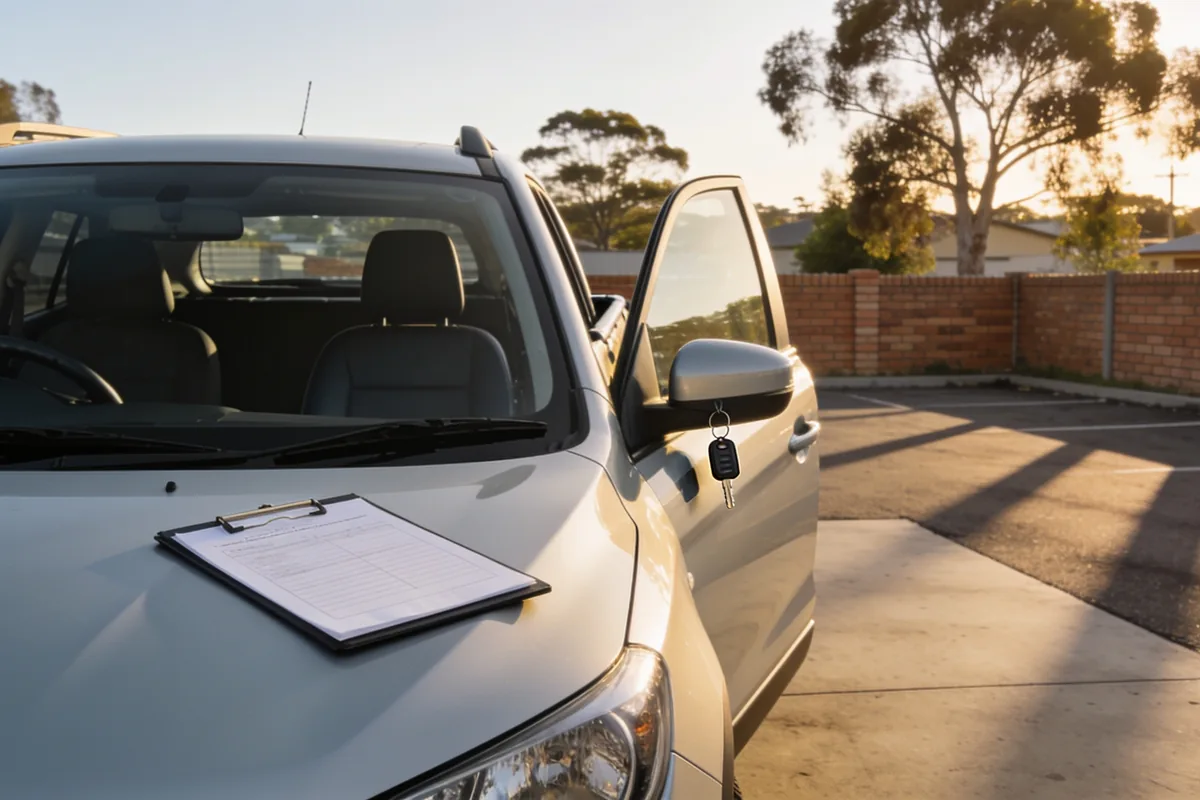
- Photograph the whole car before you move it, and get every existing mark onto the condition report with a copy for you.
The counter conversation is where hire car money gets spent, and most of it gets spent on confusion. Insurance is included, so nothing can happen to you. The excess is just a formality. The tank policy is standard. None of that survives contact with the agreement, and none of it needs to. Once you know what the excess actually is, what the cover excludes, and what you already own, the sales talk has nowhere to land.
Before you drive away
0 of 12Two minutes with the car before you move it is the cheapest insurance you will ever buy. Tick each item as you do it, and the count keeps track.
General information, not insurance advice. Check your rental agreement and your own policies, and ask the rental company to confirm the excess and the exclusions in writing.
The rental agreement, in plain English
A rental agreement bundles three different things, and the counter conversation runs all three together.
The first is the right to use the vehicle for the agreed time and kilometre allowance. The second is third-party liability, which covers injury to other people. In Australia, that part is not a product at all: compulsory third-party insurance, or CTP, is a legal requirement on every registered vehicle, hire cars included. Nobody can sell it to you and nobody needs to buy it, which is why it never appears on the menu of extras. If you have read American rental advice, that is the difference you are looking for.
The third is the damage position: what happens, and what you pay, if the car is damaged or stolen while it is with you. This is where the excess lives. The excess is the amount of that damage you are liable for, and it is not a fee and not a deposit. It is a liability you are accepting, and the deposit is simply the mechanism that secures it. Read the two words as different things and half the counter confusion disappears.
So when a rental company quotes an excess figure, that number is the shape of your liability on the standard terms, before any reduction product is applied. It will vary by vehicle and by provider. The structure is standard across the industry, including for a Dandenong car rental company that hires across Greater Melbourne. What varies between operators is how plainly it is explained, and that is worth more than a cheap headline rate.
What standard cover usually includes, and the exclusions that catch people
Standard cover in Australia commonly bundles three things: cover for collision and loss damage, protection if the vehicle is stolen, and the third-party liability described above. Anyone who has hired a car has met this package. It is the norm, not an upgrade, and it is what “insurance included” refers to.
Then comes the part the counter skips: what standard cover does not include. The commonly excluded list is short and consistent, and you should read it as commonly excluded rather than universal, because the agreement is the document that decides. Windscreen and tyre damage. Damage to the roof and the underbody. Driving on unsealed roads. Water damage. Animal damage.
There is a logic to that list, which helps it stick. These are the single-vehicle failures: the damage types with no other driver to blame and no witness to call. A cracked windscreen, a kerbed wheel, a branch on the roof, a flooded crossing. The cover is priced for them differently, and the exclusions are how the pricing is expressed.
Some products add a windscreen, tyres and undercarriage extension as an extra. If you are offered one, the question to ask is not what it adds but what it still leaves out. An extension that closes three gaps is worth having only if you know how many gaps remain.
One habit is worth forming here. Whatever you are told at the counter, the agreement is the document that counts. Ask for the exclusion list in writing, and if the answer is a wave at a screen or a sentence, ask again.
Excess reduction: what the daily add-on buys
Excess reduction is the product every counter offers, and it is easier to decide once you know exactly what it does.
What it does is straightforward: it lowers or removes your liability for the events that the standard cover already covers. What it does not do is change the exclusion list. If the damage type sits outside the cover, the reduction does not reach it. This is the single most misunderstood point in the whole transaction, and it is worth saying plainly: the reduction applies to the covered events, not to the exclusions.
So how do you decide? The honest frame is that the add-on is a price for certainty. Weigh it against the excess itself, and weigh it against what you already own. For a short hire in a strange city, with a family in the car and a flight to catch, the certainty is often worth it. For a weekend hire with your own cover in place, it may not be. Both answers are rational, and nobody should tell you which one is yours.
One line to hold on to if the conversation gets pushy: you are not required to decide at the counter. The product is a choice, the excess is on the agreement, and you can read both before you sign.
What happens when something goes wrong is worth knowing in advance. If the car is damaged, the rental company assesses the damage against the agreement, applies the cover, and charges you for the covered items up to the excess. With a reduction product in place, that charge shrinks or disappears. Without it, the excess is the number you are working from. The process does not otherwise change, and that is the honest way to think about what the add-on buys: it moves one number.
What you might already own
Before paying for certainty, check whether you are already holding it. Three places to look.
Travel insurance. Many Australian policies include cover for rental vehicle excess, and it is worth checking the limit and, importantly, whether the policy covers a rental in your own country. Domestic hires are the ones that slip through the gap, because people assume travel cover only applies overseas.
Credit card cover. Some cards include rental excess cover, often as a secondary layer behind other insurance, and often with its own conditions: an excess of its own, vehicle type limits, and rules about domestic hires. The terms are in the card’s insurance booklet, not in the marketing.
Your own car insurance. Do not assume your comprehensive policy follows you into a hire car. It may or may not, and the policy wording is what decides. It is a two-minute check before you travel, and it is worth doing, because relying on cover you do not have is worse than paying for cover you did not need.
The point is not which option wins. The point is to know what you have before you reach the counter. If you are weighing whether to drive at all, the site’s taxi or your own car? why hopping in a cab might be the safer choice looks at the same liability question from the other side.
The four questions to ask at the counter
Four questions, each answerable in a sentence by any decent operator. Ask them before you sign, and ask exactly this way.
First: what is the excess on this vehicle, in writing? The answer should be a figure on the agreement, not a description.
Second: what is excluded from the cover I am being offered? You are listening for the list in the previous section, in the operator’s own words.
Third: what is the fuel policy, and what level is the tank at right now? The second half of the question is the one people forget, and it is the one that costs money at return.
Fourth: what time and where does the car come back, and what happens if I am late, or after hours? A clear answer here tells you how the company handles the parts of the hire that go wrong.
Notice what none of those questions is about: the price of the rental itself. The rate is the easiest part of a hire to compare. The four questions decide what the hire actually costs when something goes sideways, which is where the money in this transaction quietly lives.
Booking-time decisions matter as much as the counter: the site’s holiday travel hack: save big on airport car rentals and drive more for less covers the savings side of that. And if a hire is replacing a second car you rarely use, the site’s the second car that never gets driven: when taxis and car hire are cheaper runs the numbers on when hiring beats owning.
What to do when you pick the keys up
The pickup walk is the cheapest insurance in the whole transaction, and it takes about two minutes.
Walk the whole car once, slowly, with the condition report in your hand. Photograph every panel, the roof, both bumpers and all four wheels before you move the car. Photograph the windscreen and every window, including any chip, however small. Then photograph the dashboard in one shot: odometer and fuel gauge together. Inside, check the seats, the boot floor and the parcel shelf, and photograph anything already marked or stained.
Any mark you find should be written on the condition report before you leave the lot, and you should keep a copy or a photograph of the report itself. Find the spare wheel or the sealant kit and the jack, and check that both actually exist. Save the roadside assistance number into your phone while you are still sitting in the car.
The return is the same walk in reverse. Bring the car back at a time when a person can look at it with you and sign it back in. A car dropped into a dark lot after hours is a car whose condition nobody agreed on, and that is where damage disputes start.
The widget above is this whole section as a tickable list. Take your phone out at the kerb, work down it, and you have done more than most renters ever do.
Sources consulted: NRMA car hire insurance guidance; Insurance Council of Australia motor insurance information.