General
Papercraft and STEM: What Folding, Cutting and Building Teaches Kids (No Tablet Needed)

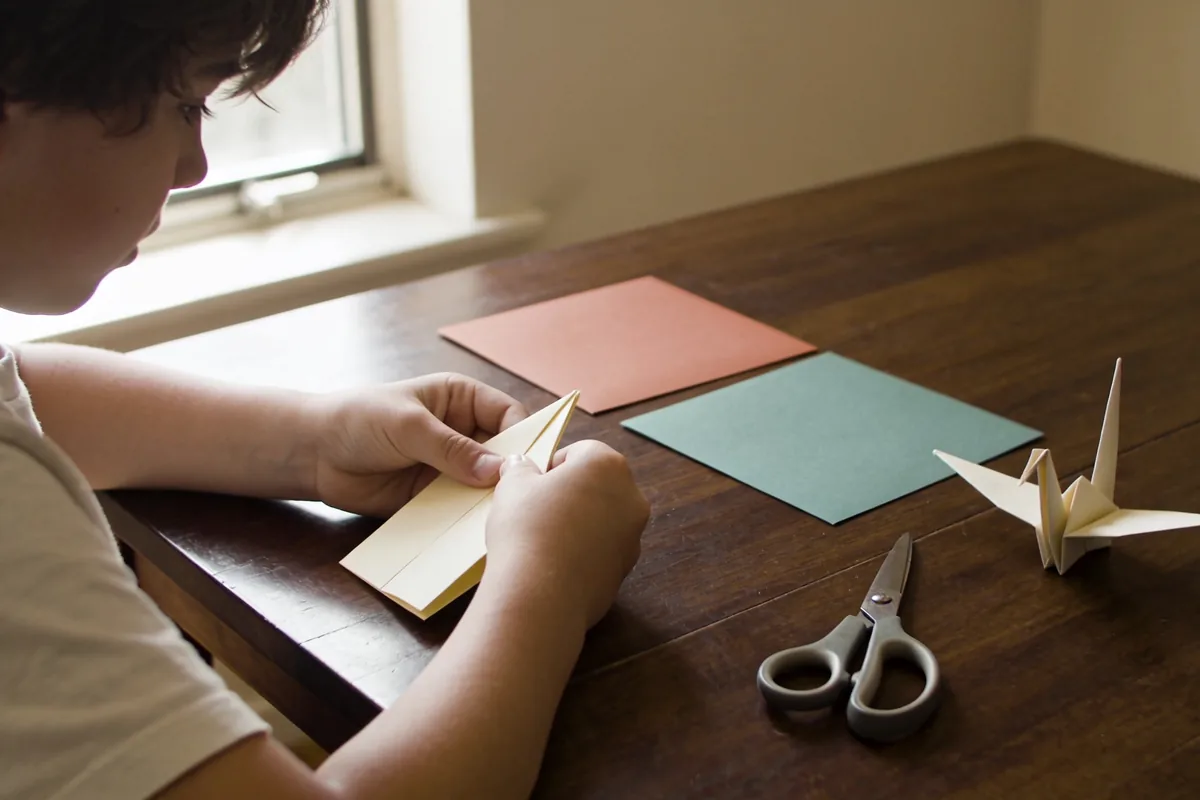
If you have watched a child reach for a tablet the moment they are bored, you might worry that “learning” has quietly become another word for “screentime.” You are not alone, and you are also in a better position than you think. The same curiosity that pulls kids toward apps can be met with a sheet of paper, a pair of scissors and a steady table. Papercraft will not replace every screen moment, and it does not need to. But it builds some of the same thinking skills a good learning app does, without the glow, the login or the subscription.
The maths hiding in a fold
When a child folds a square in half, they are not just making a shape. They are watching fractions appear. Fold it again and the paper shows quarters. Bring one corner up to meet another and you have introduced angles and symmetry without naming them. Origami instructions are really geometry puzzles wearing a paper hat.
Teachers tend to notice this. A child who has folded a few dozen cranes develops a feel for symmetry, proportion and careful measurement that is hard to rush with a worksheet. The paper does the teaching and the child’s hands do the thinking, which is a far more active arrangement than watching someone else explain it.
Bridges, planes and the engineering loop
Papercraft is not all neat folds and tidy corners. Give a child two blocks and a single sheet of paper, then ask them to build a bridge strong enough to hold a toy car. The first attempt will probably collapse. That is not failure; it is the starting point. They add a fold, double the paper over, spread the load and test again. That predict, test and adjust cycle is engineering in miniature, and it is the same habit of mind that science and technology learning lean on.
Paper planes work the same way. Change one fold and the plane veers left. Make a small adjustment to the tail and it glides further. A child can spend a contented hour tinkering with a design and, without anyone saying the word, absorb a lesson about cause and effect.
Enough to start this afternoon
You do not need a craft cupboard or a formal lesson plan. A ream of printer paper, a pair of blunt-nosed scissors and some patience will do.
- Paper bridges: span two books and test how many coins the bridge can hold before it buckles, then redesign it.
- Origami: start with a paper cup or a simple boat, then try a crane once the basic folds feel familiar.
- Snowflake cutting: fold a square into eighths, snip small shapes out, then unfold to reveal the symmetry.
- Pop-up cards: a scored fold and one careful cut can turn a greeting card into a small moving machine.
- Paper planes: run a little competition and change one variable at a time to see what difference it makes.
None of this needs a charger, a password or a connection. That is part of the appeal. The only thing a child can break is the paper, and it is cheap and endlessly replaceable.
Why hands-on making holds its own
There is a reason papercraft still turns up in classrooms, and it is not nostalgia. In Australia, design and technologies is its own learning area within the national curriculum, and practical making is a recognised route into those skills. Even the space industry uses the same idea: NASA has drawn on origami-inspired thinking to design structures that fold down small and open out large. You do not need to explain any of that while your child is folding. But if they stop and ask why paper matters, it is a lovely answer to have ready.
The quiet win
The screen can wait. A sheet of paper, a pair of scissors and a child who is allowed to get it wrong and try again add up to a gentle kind of learning that builds as steadily as any app. Whether they fall in love with origami or simply make a wobbly bridge that eventually holds, they will have spent the afternoon thinking in three dimensions. That is time well spent, no tablet required.
Sources: Australian Curriculum, Assessment and Reporting Authority (acara.edu.au); Australian Curriculum, design and technologies (australiancurriculum.edu.au); NASA (nasa.gov).