
General
Is Solar Power Worth It for Your Home? An Australian Cost and Payback Guide

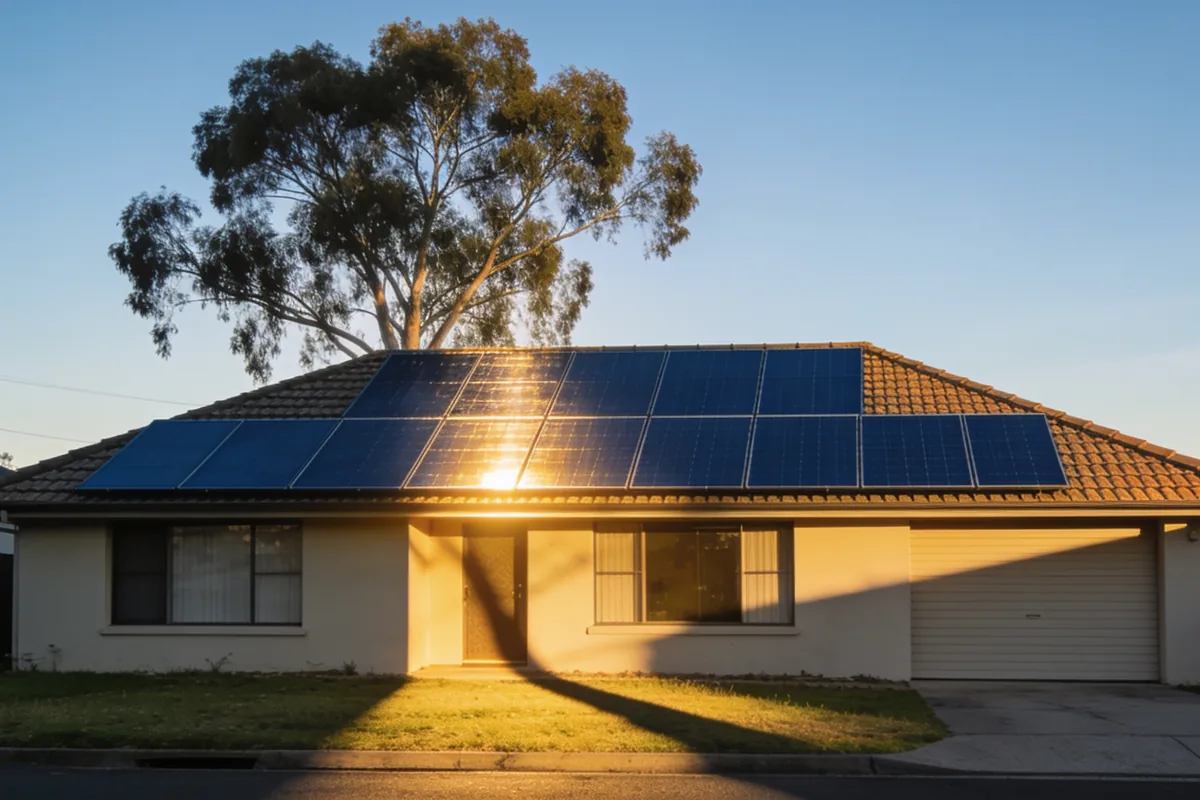
Few home improvements get as much hype as solar, and the hype makes the honest answer harder to hear. For many Australian households solar genuinely pays for itself. For some it is a slower deal, and for a few it is not worth it at all. Which one you are depends less on the marketing and more on your roof, your power bill and how long you plan to stay. Here is a calm way to work it out.
The short version: solar usually pays off through lower power bills, but the payback time varies with your usage and your roof. The upfront cost comes down through small-scale technology certificates and, in some states, extra rebates. And a battery is a separate decision, not a compulsory part of going solar.
The case for solar
The appeal is straightforward. A rooftop system generates electricity during the day, and the value comes in two forms: the power you use directly and the power you export to the grid for a feed-in credit. Most households that go solar do it to shrink the bill, and most do see one, because the sunlight is free once the panels are up.
The honest trade-offs
The system costs money up front. Sizes, brands and installers vary, so the price you are quoted can differ a lot, and the cheapest quote is not automatically the best value. The panels also do their best work in daylight, which is often when nobody is home. A house that is empty all day exports most of its power and earns only the feed-in rate, which is much lower than the price you pay to buy power back at night. That is the single biggest reason solar can disappoint: it trims the daytime bill but not the evening one.
Your roof matters more than you think
Australia has some of the best solar resources in the world, but output still varies by roof and by season. North-facing roofs with little shade give the best results, and east and west facing can still work well for a household that uses power in the morning and evening. Trees, nearby buildings and hills can shade a roof for part of the day, and shading matters more than most people expect. A good installer should model your roof properly rather than guessing.
Rebates and incentives
Two things bring the upfront cost down. Small-scale technology certificates, or STCs, are created when a system is installed, and their value is usually passed on as a discount at the time of purchase. Some states add their own help, such as Solar Victoria’s rebate and interest-free loans for eligible households, and a few states have battery incentives as well. These programs change, so check the current rules rather than trusting a figure you read last year.
The payback question
Payback is the number that matters. In its simplest form it is the upfront cost after incentives divided by what you save on bills each year, but the honest version is messier because power prices, feed-in rates and your usage all change over time. A practical test is to get three quotes and ask each installer to estimate your annual saving from your actual bills, not from an average. If the system looks like paying for itself within a timeframe you are comfortable with, and you plan to stay in the house that long, solar is a reasonable buy. If you may move soon, the maths gets harder, because panels add some resale value but rarely dollar for dollar.
Who should think twice
It is fine to skip solar for now if your roof is shaded most of the day, if it needs replacing in the next few years, or if your power bill is already small, because the fixed supply charge stays no matter what. Renters cannot usually choose the roof they live under. And treat the battery as its own question. A battery stores your daytime solar for the evening, which sounds ideal, but it adds a large cost. For most households it only makes sense with low feed-in rates, high evening usage or a state incentive that changes the numbers. Going solar without a battery is a normal, sensible choice.
A five-step checklist
- Pull together a year of power bills and see when you actually use power.
- Check your roof for orientation, shade and age.
- Get at least three quotes comparing the same system size.
- Confirm the installer is accredited and the quote lists the equipment.
- Check your retailer’s feed-in rate and any state rebate you qualify for before you sign.
A maths question, not a sales pitch
Solar is not a guaranteed win and it is not a scam. It is a maths question with your roof, your bills and your plans as the inputs. Work through the checklist, treat the sales pitch as noise, and the decision tends to make itself.
Sources: Clean Energy Regulator (cer.gov.au) · Solar Victoria (solar.vic.gov.au) · Energy Made Easy (energymadeeasy.gov.au)