General
Growth Mindset in PE: How Inclusive Sport Gets Every Kid Off the Sidelines

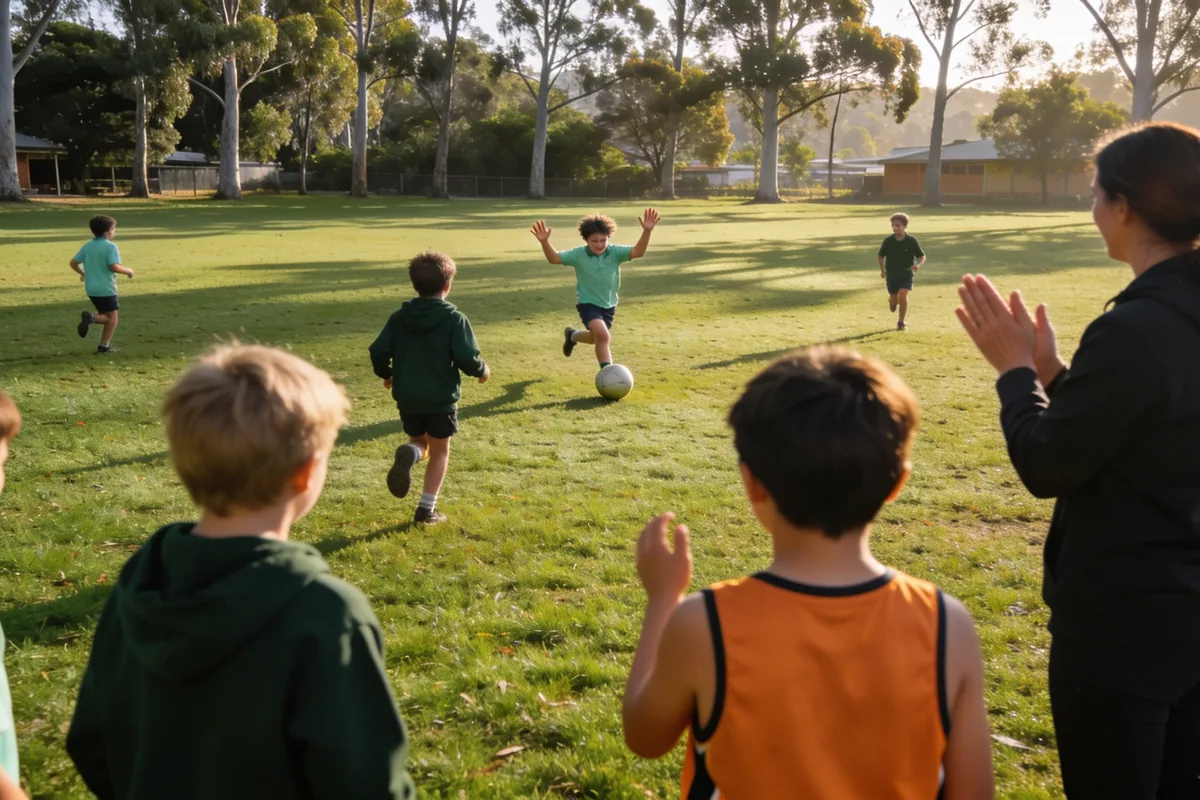
If your child is the one who holds back during sport, the one picked last or quietly hoping the lesson gets rained out, you are in good company. Plenty of parents recognise the scene. The encouraging part is that it can change, and the change usually starts with how a child thinks about ability, not with how fast they run.
What a growth mindset actually means
The idea comes from the psychologist Carol Dweck. A growth mindset is the belief that ability grows with effort, good strategies and help from others. Its opposite, a fixed mindset, treats ability as something you are born with: either you are a sporty person or you are not, and no amount of practice will change it.
In the schoolyard the difference shows up fast. A child with a fixed mindset who finishes last in a race reads it as proof they are not sporty, so they stop trying. A child with a growth mindset reads the same result in a softer way. I am not fast yet. That little word, yet, is what keeps the door open.
Why kids end up on the sidelines
It helps to remember that most children do not sit out sport because they are lazy. The reasons are usually more tender. Mostly it is fear: of being watched, of coming last again, of getting it wrong in front of classmates. When every game turns into a competition, the stakes feel high, and for a child who expects to lose, opting out can feel safer than having a go.
None of this is a judgement on the child or the teacher. It is simply what a fixed mindset does when it feels exposed.
What inclusive PE looks like
Inclusive physical education lowers those stakes without lowering the bar. The aim stays the same for everyone, but the path is widened so different abilities can travel it together.
That can mean rules that give every child a turn at the key moment rather than only the strongest players. It can mean teams mixed by skill on purpose, or children chasing a personal goal instead of racing the whole class. It can also mean adapted sports. Boccia, a target game played from a seated position, is a good example of a game designed so that students with high support needs play alongside everyone else. When an activity is set up so that every child can genuinely take part, the child who usually hides at the back often discovers they like moving after all.
Small changes that help in class
Teachers do not need a new programme to make PE more welcoming. A few habits go a long way. Praising effort and strategy rather than natural talent sends the right signal, because “you kept going when you were tired” lands very differently from “you’re so sporty.” Giving children the chance to beat their own best, rather than only comparing them with others, keeps the focus on progress. And letting a child choose how to take part, fully in the game or in a supporting role first, offers a way in instead of a wall to climb.
What parents can do at home
You have more influence than you might think, mostly through the words you use. When your child talks about sport, notice what they did rather than what they are. Comment when they kept trying, when they helped a teammate, when they had another go after a miss. It is also worth watching your own language. If you say “I’m hopeless at sport” often enough, they will borrow that sentence for themselves. Saying “I’m still learning that” models a growth mindset better than any lecture.
Where every improvement starts
A growth mindset will not make every child love sport, and it does not need to. What it can do is take away the fear that keeps children on the sidelines. When a child believes that trying is how you get better, rather than proof that you are not good enough, they are far more likely to have a go. And having a go, in PE or anywhere else, is where every improvement starts.
Sources: Carol Dweck and Mindset Works (mindsetworks.com) · Paralympics Australia (paralympic.org.au) · Australian Journal of Applied Education (ajae.com.au)