
Science & Nature
Southern Lights in Australia: How and Where to See the Aurora Australis

The short version
- Yes, from Australia: during this solar maximum the aurora australis is seen reliably from Tasmania and, on strong nights, as far north as southern mainland skies.
- The best spots: Tasmania’s dark, south-facing coastline (Bruny Island, kunanyi / Mount Wellington, the Tasman Peninsula), with an open southern horizon and no city glow.
- The honest bit: your eyes see a pale moving glow, not the saturated colours in the photos. The camera sees more than you do, so let the phone surprise you later.
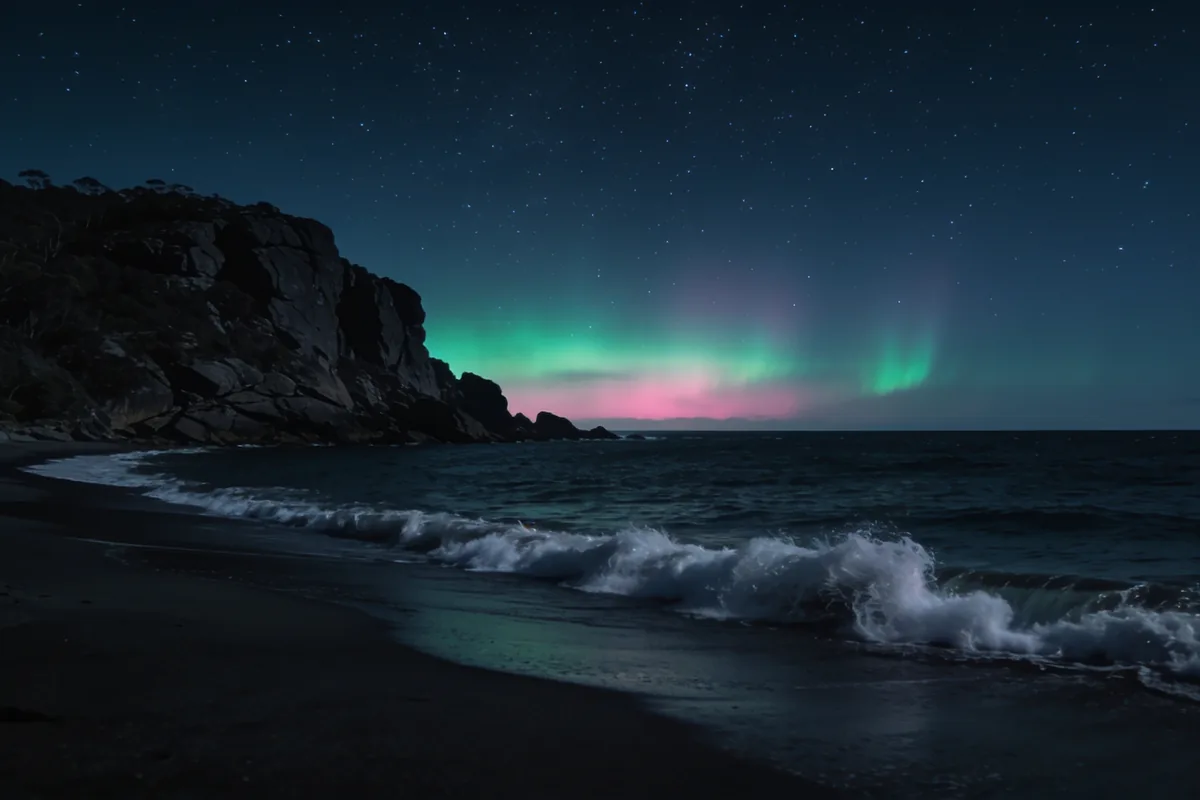
On a clear winter night on a southern Tasmanian beach, the sky can do something the phone later proves. A pale smudge low over the ocean gathers, shifts and begins to move, and once the camera holds its shutter open the night turns green and pink. This is the aurora australis, and through 2026 it is putting on a show Australians can see without leaving the country.
Why this is the moment: the solar maximum
The southern lights are the visible end of a chain that starts on the Sun. The Sun runs on a roughly 11-year activity cycle, and near its peak it hurls more charged particles into space. When those particles reach Earth and hit the upper atmosphere, the air glows near the poles. In the south, that glow is the aurora australis.
We are near the top of the cycle now. Solar Cycle 25 peaked in 2025 and stays near peak through 2026, so displays visible from Australia are far more common than in the quiet years. Activity then fades toward the next minimum, and the next strong maximum is not expected until around 2035.
That makes 2026 one of the best years in a decade to try. A major display hit Australia in July 2026, and the coverage carried the familiar refrain: missed it last night, try again tonight. The window is not closing this month, but it closes over the years ahead, so the time to plan a cold night out is now.
Where to go in Australia
Tasmania is the anchor. It sits further south than the mainland, its skies are dark, and its southern coast faces an open ocean horizon with nothing between you and the pole but water.
Bruny Island has beaches that face due south. Mount Wellington, known to locals as kunanyi, lifts you above Hobart’s lights for a clear horizon view. The South Arm Peninsula and the Tasman Peninsula point the same way, and Cockle Creek is one of the most southerly points you can drive to. Cradle Mountain-Lake St Clair adds a truly dark inland sky.
The mainland can join in, but needs stronger activity. Southern Victoria, the south coast of New South Wales and Western Australia’s south coast can all catch a big display, and in July 2026 they did. The rule of thumb: the further south, the darker the sky and the more open the southern view, the better. City lights and hills are what quietly ruin a good forecast.
When to look
Winter is the season, because winter means long nights. May to August is prime across southern Australia, and August 2026 sits in that window. The equinox months of March and September also tend to bring more geomagnetic activity.
Within a night, the best hours are roughly 10pm to 2am, at least an hour after full dark. You need a clear sky, a not-too-bright moon and activity in the magnetic field. A display comes and goes in waves, so patience is a requirement. People who give up at 11pm often miss the best of it at 1am.
The moon is the quiet killer. A bright moon washes out the faint glow the way it washes out the Milky Way, so aim for nights around a new moon.
What your eyes will actually see (and what the camera sees)
This is the part most guides skip, and it stops people being disappointed. The viral photos are long exposures. A camera holding its shutter open for seconds gathers far more light than your eye ever can, so the saturated curtains online look nothing like a first-timer sees.
With your own eyes, a typical display is a pale moving glow low on the horizon, sometimes throwing up faint green or pink shafts. On a strong night the movement is unmistakable, but it is subtle, more like weather than a light show.
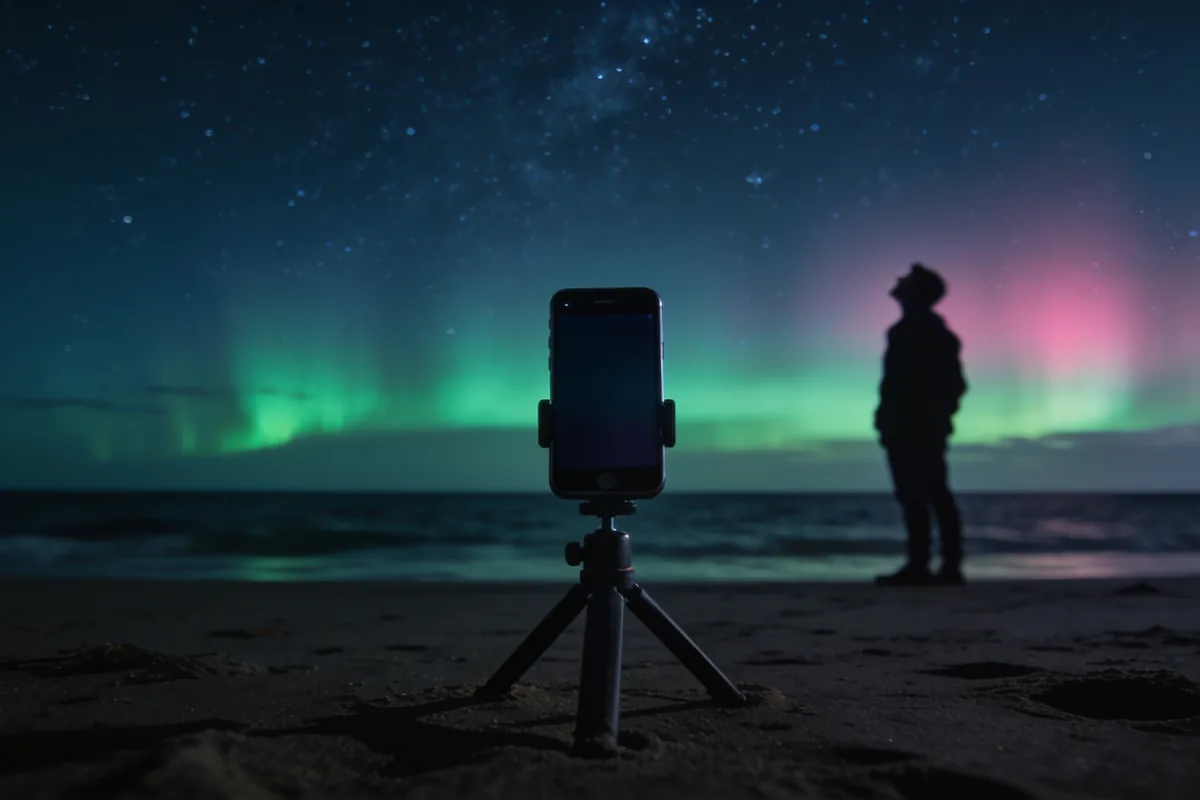
The phone changes the picture. A modern phone in night mode, sitting still on a rock for 10 to 20 seconds, shows more colour than you saw. That gap between eye and camera is not marketing; it is how light works.
If you are weighing up whether your camera is up to it, the tool in your pocket is usually enough. The site’s guide to packing a phone or camera for a trip makes the same argument: take what you have, learn its limits, and spend the money on getting somewhere dark. A basic tripod and patience beat an expensive camera that stays at home.
How to know a display is coming
You cannot rely on luck, but you can rely on the forecasters. The Bureau of Meteorology’s Space Weather Services issues alerts when geomagnetic activity is expected, and the Aurora Australis Facebook group fills in the gaps with on-the-night reports.
The measure to know is the Kp index, which rates geomagnetic activity on a scale. Tasmania can catch a display from a Kp of 4 to 5; the mainland generally needs higher. Realistic notice is one to three days, enough to pick a dark site, not enough to plan a holiday around one night. Treat a forecast as an invitation, not a guarantee. Cloud and moon are the two reasons to stay home.
Practical notes for a cold night out
A winter night on a Tasmanian beach is cold, and the aurora does not hurry. Take warm layers, more than you think you need. A tripod earns its weight, because the phone must sit still. A torch with a red setting protects your night vision and stops you blinding the rest of the lookout.
Book somewhere with a dark, south-facing option if you can, so the viewing spot is a short walk away. Before driving to a remote headland, check road and park access; a closed gate at midnight is a cold end to the night.
A dark southern sky and a little patience
The 2026 window is real, and it is closing. You do not need a camera you do not own, or a degree in astronomy. You need a dark sky with an open southern horizon, a night with no cloud and not much moon, and the willingness to stay out later than feels sensible.
The southern lights have been showing off all winter, and the show comes to you. Pick a clear night, drive south, turn off the car and give the sky an hour. Once you have seen it move, you will understand why the people on that beach stay out past midnight.
Sources: Bureau of Meteorology – Space Weather Services (aurora forecasts and alerts) · Australian Antarctic Program / NASA – what causes the aurora and the solar cycle · Tourism Tasmania / Parks Tasmania – dark-sky and viewing-location notes