Pets & Animals
Pet First Aid: A Room-by-Room Guide to the Emergencies That Happen at Home

If you share your home with a dog or a cat, you already know that trouble tends to find them in the most ordinary places. The chocolate left on the coffee table, the washing tablet within reach of a curious nose, the snail bait stored in the garden shed. You cannot watch them every second, and you do not need to. What helps is knowing which rooms carry which risks, and what to do in the first few minutes before you call the vet.
This guide is not a substitute for veterinary advice. It is a map of the usual trouble spots, so that a scare does not become a crisis.
The lounge room
Heat is the big one here. On a hot day a closed room or a glassed-in sunroom can overheat fast, and heatstroke in pets comes on quickly. Keep fresh water available, make sure a pet can reach a cooler part of the house, and never leave a pet in a car, even for a few minutes. The lounge also hides small swallowing risks: toys with loose parts, batteries, remote controls and cords. And the classic one, chocolate, along with lollies sweetened with xylitol, should never be left where a dog can reach.
The kitchen
The kitchen is where the food hazards live. Onions and garlic, grapes and sultanas, macadamia nuts and sugar-free products can all be harmful to dogs in different ways, and cats have their own sensitivities. Keep them off benches and out of reach, and make sure the bin is not an open buffet. When you cook for a pet, keep it plain, because sharing “just a little bit” of what you are having is how many pets end up at the vet.
The laundry and bathroom
Cleaning products are the risk in the laundry. Detergent pods, laundry powder, dryer sheets and stain removers all smell interesting to a pet, so keep them closed and stored up high. In the bathroom the danger is human medicine. Paracetamol, ibuprofen and several other common medicines can be harmful to pets, so keep bottles in a cupboard a dog cannot open, and never dose a pet with a human medicine because it seems about right.
The bedroom
Bedrooms are lower risk, but they collect the things pets should not eat: medication left on a bedside table, lozenges, chewing gum and handbags that contain all of the above. A dog that can reach a handbag can reach a pack of gum, and sugar-free gum is a genuine poisoning risk. If you take medicine in the bedroom, keep it out of reach rather than on the nightstand.
The garden and garage
Outside, the risks change with the seasons. Snake bites happen in the warmer months, and the right first response is to keep the pet calm and still and get to a vet quickly, not to try to suck out venom or apply a tourniquet. Rat bait and snail bait are highly toxic, and pets will eat them deliberately, so store them where a pet cannot get in. Antifreeze tastes sweet and is extremely dangerous, so mop up any spills in the garage. In the garden, a number of common plants are toxic to pets, so it is worth checking what is planted and what your pet can actually reach.
What to do in those first minutes
The rules are the same whatever the room. Stay calm, move the pet away from the danger, and do not try to make them vomit unless a vet or a poisons service has told you to, because inducing vomiting can sometimes make things worse. Do not give human medicine, and do not offer food or milk hoping it will help. Keep the pet warm and quiet, and phone your regular vet, their after-hours service or a pet poisons information line. Have the packaging of anything they may have eaten with you when you call, because that tells the vet what they are dealing with.
The first-aid kit
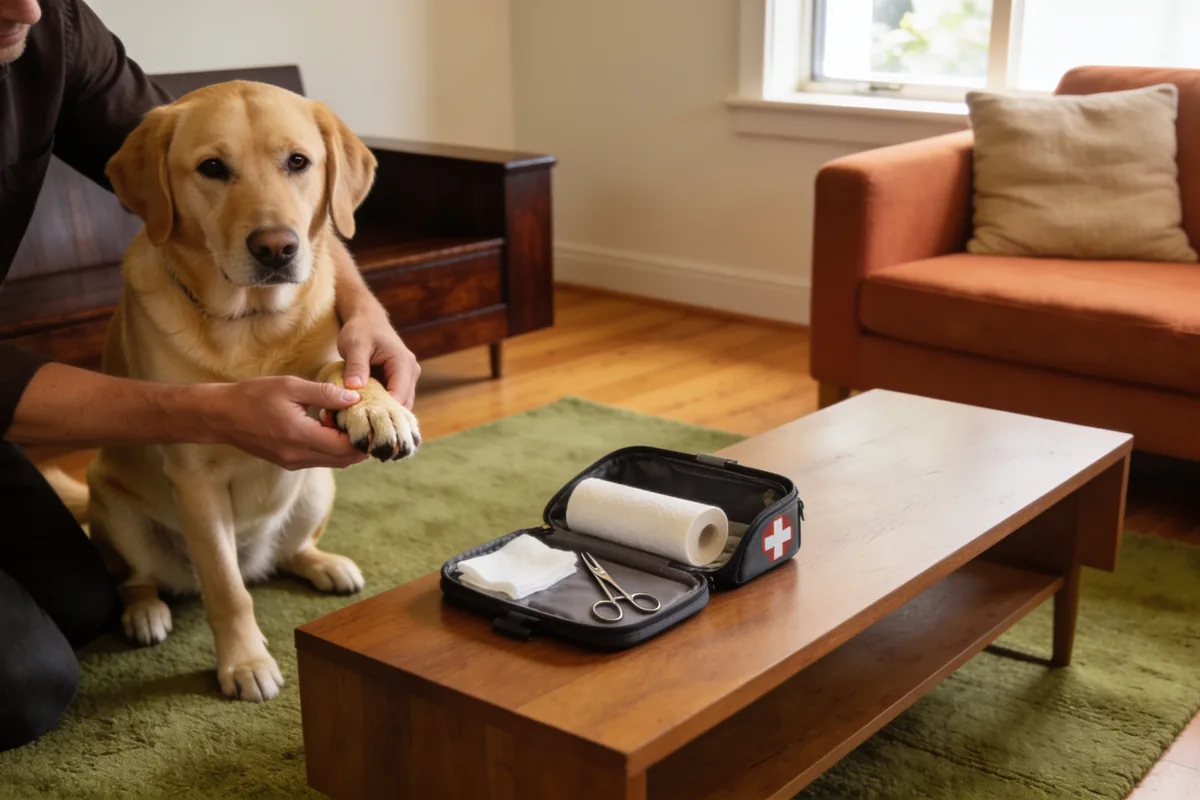
A small kit is worth putting together before you need it. Include some gauze or non-stick dressings, a roll of bandage or vet wrap, saline for rinsing eyes or wounds, blunt-nosed scissors, tweezers and a towel. A scared animal in pain may bite, so a soft muzzle, or a towel over the head, can protect you while you help. Skip the muzzle if the pet is struggling to breathe or is vomiting. Keep your vet’s number somewhere obvious, along with the phone number of your nearest after-hours clinic.
Turning panic into action
You cannot pet-proof the world, and you do not need to. Knowing which rooms hide the usual risks, and what to do when something does happen, is what turns panic into action. When you are in doubt, call the vet. They would always rather take a cautious call than meet you at the door of the emergency room later.
Sources: Animal Poisons Helpline (animalpoisons.com.au) · Australian Veterinary Association (ava.com.au) · Clean Up Australia (cleanup.org.au)