Healthcare
How to Prepare for a Health Emergency in Australia: A Household Checklist

This guide explains how an Australian household can prepare for a health emergency, such as a pandemic, a severe seasonal illness or a local public health incident. It is general information, not medical advice. Households should follow the guidance issued by official health authorities at the time, because advice changes as circumstances change.
Preparedness is not about stockpiling. It is about having the essentials, the information and a plan in place before they are needed, so that a stressful situation does not become a chaotic one.
Know where official information comes from
The first step is to identify the sources the household will trust during an emergency. In Australia these are the state and territory health departments, the Australian Government Department of Health and Aged Care and the emergency services for the local area. During a large-scale event, the ABC carries official announcements and is a reliable reference point.
It is worth confirming these sources now, writing them down and agreeing that the household will treat them as the point of truth. Acting on unverified claims circulated through social media is one of the most common ways a household makes a health emergency worse.
Keep the essentials in one place
A household should keep a small stock of the items it would need to stay at home for a period without difficulty:
- Prescribed medicines, with enough supply to cover a disruption where the pharmacist can lawfully provide it. For most households this means not leaving a repeat prescription until the last day.
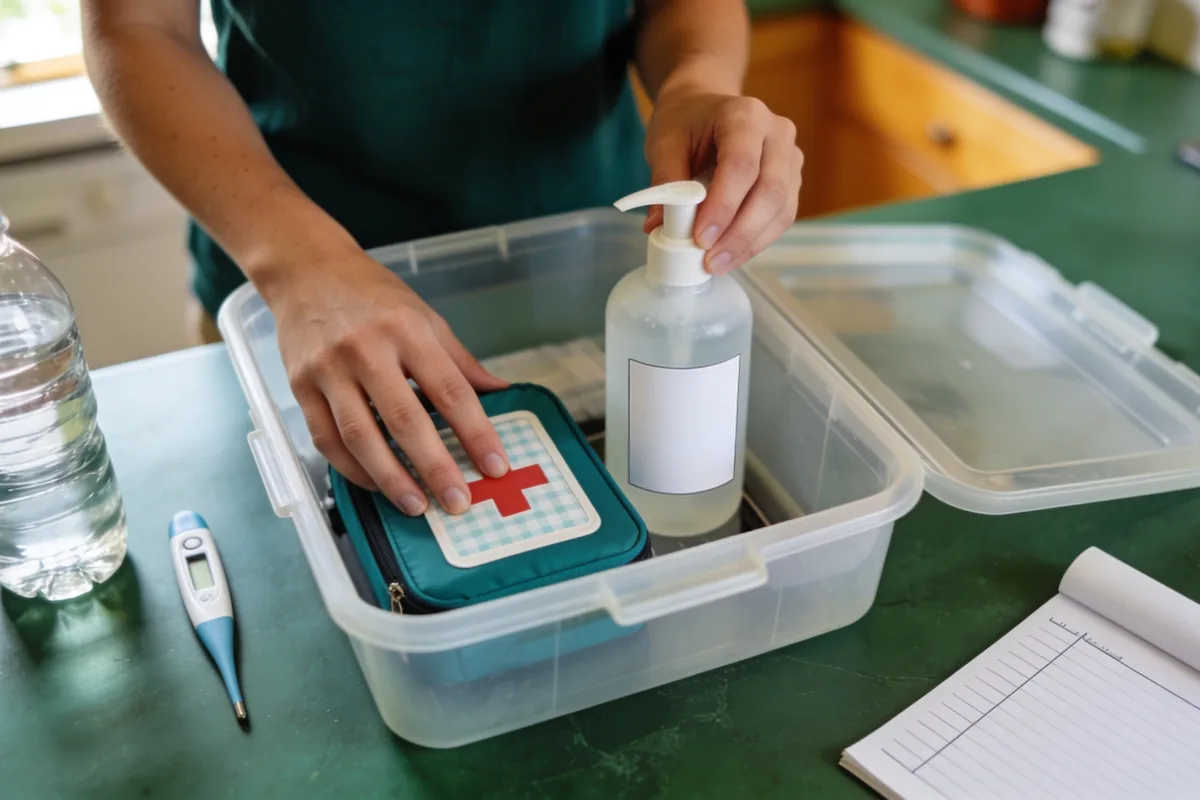
- A well-stocked first-aid kit, a thermometer and the regular non-prescription medicines the household uses.
- Hand soap, hand sanitiser, tissues and basic cleaning supplies.
- A supply of water and non-perishable food that the household would actually eat, enough for a short period of staying home.
- A written record of the household’s important details, including Medicare numbers, current prescriptions, allergies and the contact details of the regular doctor.
That record matters more than most people expect. In a hurried situation, having the information written down and stored where everyone can find it removes a great deal of pressure from the household and from any clinician treating a family member.
Practise the hygiene that limits spread
For any illness that spreads between people, the basic measures remain the most effective. These include regular handwashing with soap and water, covering coughs and sneezes, disposing of used tissues promptly and staying home when unwell.
Households should also keep vaccinations current in line with the national immunisation schedule and any seasonal advice from the health authorities. Vaccination status is a year-round matter, not an emergency response.
Agree on a family communication plan
A household plan should answer a few simple questions in advance. How will family members contact one another if they are in different places? Who is the out-of-area contact that everyone can reach if local networks are strained? What is the arrangement for a member who lives alone or has a chronic condition?
The plan does not need to be elaborate. It needs to exist and to be known to everyone in the household.
Plan for those who need extra support
Preparation matters most for the people a health emergency would affect most. This includes older adults, people with chronic conditions, pregnant women and people who live alone. Households should consider how they would support these members, whether that means a regular check-in, an arrangement for collecting medicines or a plan for care if the usual carer is unwell.
What preparation is for
A health emergency is rarely a good time to make decisions for the first time. The value of a checklist is that the thinking is done in advance, when there is no pressure. Households that have identified their information sources, set aside the essentials and agreed on a simple plan are in a far stronger position than those starting from scratch when an emergency is already under way.
Readers should refer to their state or territory health department and the Australian Government Department of Health and Aged Care for current guidance, and to their local emergency services for region-specific advice.
Sources: Australian Government Department of Health and Aged Care · state and territory health departments · state and territory emergency services






You must be logged in to post a comment Login