Travel
The Great Ocean Road in Three Days: Where to Stop, Stay and Skip

The short version
- Three days is the honest minimum. It fits the whole road from Torquay to Warrnambool without a rushed day, and it still leaves time for the short walks.
- Drive west, not east. Going from Melbourne towards the Twelve Apostles keeps the ocean on your side and builds to the big finish.
- The marquee stops are a timing game. See the Twelve Apostles, Loch Ard Gorge and the London Arch early or late, when the tour groups are not there, and skip them at their crowded middle-of-the-day peak.
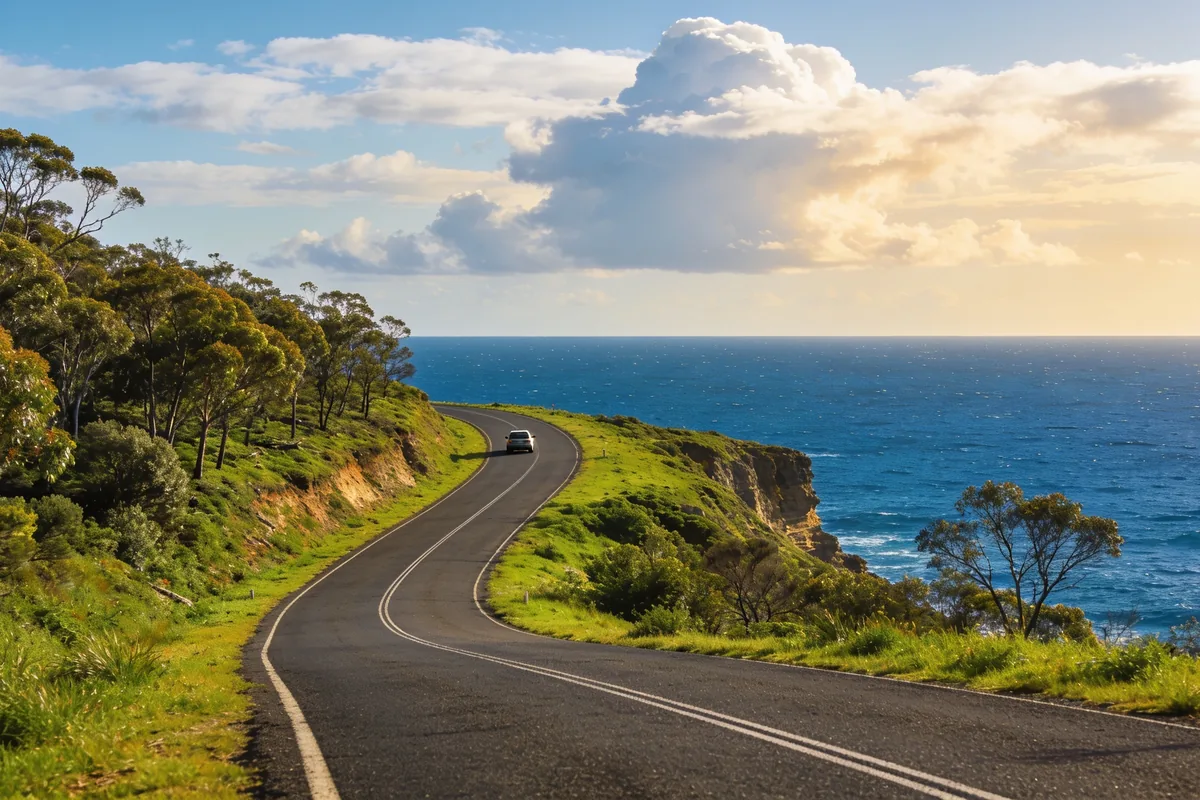
The road does not announce itself. One minute you are driving out of Torquay past low surf shops and takeaway counters, and the next the bitumen bends and the Southern Ocean fills the view, blue-grey and endless, with surf breaking white against rocks you could almost reach from the car window. Any Australian driver knows the feeling. You came for the famous ending and the road keeps handing you reasons to stop long before you get there.
It is world-famous and genuinely worth the trip. The catch is that the standard one-day tour from Melbourne forces the worst of it: long hours of coach window, a rushed ten minutes at each lookout, and the Twelve Apostles at their busiest. A three-day self-drive is the version locals actually recommend, and it is not complicated. You need a car, three days, and a plan that admits you cannot see everything. That plan is what follows.
One honest note before the route. This is written for the driver who wants to see the road properly, not for someone with a single free day in Melbourne, and not for the five-day campervan trip that takes the whole coast at a crawl. Both of those are different journeys with their own plans. This one assumes you want the famous stops, the quieter ones beside them, and a pace that never feels like a checklist.
Before you go: the shape of the drive
The Great Ocean Road runs roughly 240 kilometres along Victoria’s south-west coast, from Torquay near Geelong in the east to Allansford, just past Warrnambool, in the west. Drivers usually take it west from Melbourne so the ocean stays on the driver’s side and the trip builds towards its most famous stretch.
The classic three-day shape falls into three natural legs. Day one is the surf coast, from Torquay through Anglesea and Lorne down to Apollo Bay. Day two turns inland for a while through the Great Otway National Park, with its rainforest, waterfalls and coastal lookouts, then comes back out to the coast and finishes near Port Campbell. Day three is the shipwreck coast, the morning at the Twelve Apostles and the other marquee lookouts, and then the long run home.
The direction question deserves an honest answer. West is the classic direction for a reason: the ocean is beside you rather than across the traffic, and you are not driving past the Twelve Apostles on day one and then backtracking. Driving east works, and some people prefer to save the coastal side for the return leg, but you will be crossing traffic at the lookouts and facing the sun at the worst times. For a first trip, go west. The road is well signposted and there is no serious navigation to think about.
Two practical things are worth knowing before you set off. The road is at its busiest through the summer school holidays and around Easter, when the coastal towns and the Apostles car parks fill early, so if you can travel just outside those windows you will see the same drive with a fraction of the company. And you do not need to plan fuel like an expedition. The towns along the way all have the basics, so a full tank in the morning and a top-up when you stop for lunch is all a standard car needs.
Packing is simple because the weather is not. The coast can be warm and still at sea level while the Otway forest is cool and damp an hour later, so the useful wardrobe is the layered one: a light jacket or jumper that lives on the passenger seat, comfortable shoes for the short walks, and a hat and sunscreen for the exposed lookouts. The phone in your pocket covers most of the photography, and everything else is just the normal stuff of an overnight trip.
Getting there and finding a car
Melbourne to Torquay is an easy morning run, under two hours from the city centre on a good day, which makes it a sensible starting point rather than a hurdle. Set off early enough to be on the road by mid-morning and you gain the whole first afternoon, which is where day one earns its keep. You can pick up the road closer to its official start and simply follow the signs along the coast, and there is no need to overthink the route from here.
A standard car is fine for the whole drive. The road is sealed and well maintained, and the inland Otway detour is on good bitumen too. You do not need a four-wheel drive, and hiring one would only add cost and burn more fuel on a trip where neither is needed. If you are weighing up rental options, the site’s guide to saving on airport car hire and driving more for less is worth a read before you book, because the same principle applies here: rent the smallest car that fits your people and your bags, not the one that looks best in the driveway.
Day one: the surf coast, Torquay to Apollo Bay
Day one is the stretch that makes the road famous in the first place. From Torquay the highway hugs the cliffs past Bells Beach, where the surf breaks in long clean lines and the car park fills early on a good swell. It is a short stop. Park, watch the waves for ten minutes, and move on.
Anglesea comes next, a laid-back coastal town, and then the road tightens as it runs south towards Lorne. This is where the drive earns its reputation. The bitumen curves along the edge of the land with the ocean below, and the lookouts between Lorne and Apollo Bay are the ones that make you reach for a camera. The phone in your pocket is enough for most of it. If you are still weighing up whether to carry a dedicated camera at all, this site’s realistic guide to phone or camera for a trip makes the case that the gear you already own covers most travel photography, and this drive is a good example.
Lorne is the natural place to stop for lunch and a stretch. It has a proper main street and a beach that fronts the town, with bush walks in the hills behind if you want to stretch your legs properly. It also makes a sensible first-night base, with plenty of places to stay along the bay. Apollo Bay, further down the coast, is the other good option and the better choice if you want to be closer to the Otway leg the next morning. Either works. The point of day one is not to rush: the day’s best moments are the unplanned ones, the lookout you pull into because the view demanded it, the beach where you stop for no reason at all.
What to skip on day one is the inland side-trips if you are short on time. The Otways deserve a proper look, and they get one tomorrow. Trying to fit the inland waterfalls into the same afternoon as the whole surf coast turns day one into a race, which is exactly what three days is meant to avoid.
Apollo Bay is the natural place to land at the end of it. It sits right at the turn in the road, the town beach on one side and the forested hills on the other, and it has the unhurried feel of a place that exists for both the sea and the drive. In the late afternoon the light softens over the water, and it is a good spot to sit with a meal and let the first day settle before the forest leg in the morning.
Day two: the rainforest and the shipwreck coast, Apollo Bay to Port Campbell
Day two is the quieter half of the drive, and for many people the best of it. From Apollo Bay the road heads inland through the Great Otway National Park, and the scenery changes completely. The open coast gives way to cool temperate rainforest: tall tree ferns, mossy trunks, and soft green light that filters down through a closed canopy. Even on a busy summer day, the crowds thin out here because the tour coaches stay on the coast road.
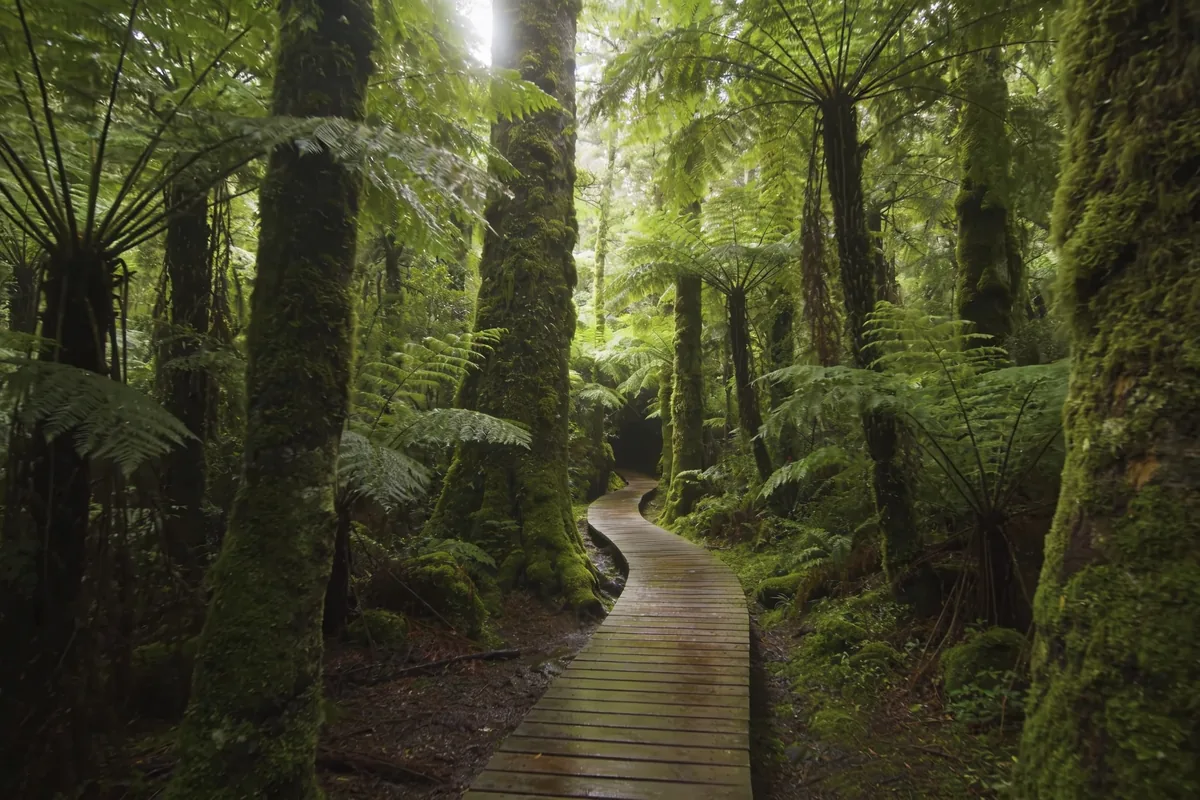
There are short rainforest loops and waterfall walks through this stretch, most of them easy and under an hour, and they are the reason a three-day pace works. A driver doing the whole road in one day skips these entirely. Take one. The walk is cool, the air smells of damp earth and eucalypt, and you come out the other side having actually been in the Otways rather than just driven past them. Koalas are common in parts of the park, though no sighting is ever guaranteed, so treat one as a bonus rather than a box to tick.
A sensible rhythm for the day is to spend the morning in the forest and aim to be back on the coast by early afternoon. That leaves the daylight hours for the coastal lookouts on the run towards Port Campbell, and it means you arrive at the town with time to spare rather than in the dark. The inland leg is not a detour to be rushed through. It is the half of the drive that most people miss, and it deserves the morning.
Back on the coast, the road runs through the shipwreck country towards Port Campbell. The name is not decoration. This stretch of coast has claimed more than its share of vessels over the years, and the cliffs and rock stacks that make the scenery so dramatic are the same ones that made it dangerous. There is a moment on this leg where the road drops back out of the trees and the ocean reappears, and it is worth pulling over for. The coastline here is different from the surf coast: the cliffs are higher, the water below is a deeper green, and the contrast with the soft forest of the morning is the whole point of the day.
You are not stopping at the big lookouts yet, because they get their own morning tomorrow. Finish the day in or near Port Campbell so the marquee stops are close when you wake up. The town is small and fills up fast in peak season, which is where the “book ahead” advice stops being optional. If you are travelling in the school holidays or over summer, sort your accommodation for this night early, because everyone on this road has the same plan.
Day three: the Twelve Apostles and the way home
Day three is the payoff, and it rewards an early start. The Twelve Apostles are the reason most people drive this road, and they are at their best, and their quietest, in the first couple of hours after sunrise. The tour buses start arriving from mid-morning. Get there before them, walk the boardwalk, and you will have the lookouts close to yourselves.
Loch Ard Gorge and the London Arch are the other two marquee stops, and they sit close enough to the Apostles that you can do all three in one morning without rushing. Loch Ard Gorge is a sheltered cove with a beach you can walk down into, its name part of the shipwreck history that runs through this whole stretch of coast. The London Arch, further west, is a dramatic archway of rock standing offshore. All three are worth the stop. All three are also the crowd magnets of the whole drive, which is exactly why the timing advice matters. See them early or late, treat each as a twenty-minute stop rather than a lingering one, and you will not be queuing for a car space at eleven.
Beyond the Apostles the crowds thin out sharply, and this is where the drive gives you its quietest reward. The lookouts further west towards the Bay of Islands and the stretch towards Warrnambool have the same dramatic coast with a fraction of the people. If you have the energy, keep going. Warrnambool is a proper regional city with places to eat, and the Bay of Islands is a genuine highlight that most one-day tours never reach.
The drive back to Melbourne is the least scenic part of the trip and the one to plan around. Coming back along the coast means retracing the road you have already driven. Cutting inland from around the Colac direction is faster and gives you a different view of the countryside, and it is the route most locals take to get home. Allow roughly three hours for the inland run back to Melbourne, and a bit more if you stop. Either way, save a little energy for it. Day three has a long tail.
Where the crowds actually are, and how to beat them
The crowd problem on this road is concentrated in one place and one window. The Twelve Apostles area, which includes Loch Ard Gorge and the London Arch, draws the tour buses from mid-morning to mid-afternoon, and in peak season the car parks and boardwalks are at their busiest in that stretch. The rest of the road is nowhere near as bad. Lorne and Apollo Bay get busy in the middle of the day, but they are towns, and busy is manageable.
The short answer is timing. Arrive at the big three early, before the buses, or stay late, after they have gone. Take the short walks at off-peak times. And treat the marquee stops as timed stops rather than places to linger, because lingering is exactly what the middle of the day punishes. If you arrive at the Apostles at eleven on a January morning and find the car park full, that is not a failure of planning. It is the one predictable bottleneck on the whole drive, and it is solvable by simply being there two hours earlier or two hours later.
How to skip well
The honest edit is the part most guides leave out. You cannot see everything on this road, and the trip is better for admitting it. The coast is roughly 240 kilometres of lookouts, walks and towns, and the driver who tries to stop at all of them spends more time parking than looking.
Some stops are safe to skip. The ones that are mostly a photo from the car park can be seen from the road, and the long walks you will not finish are better left unstarted. There is no prize for the highest lookout count. The stops that are worth it even when busy are the ones that give you something a photograph cannot: the surf at Bells Beach moving in real time, the cool of the rainforest walk, the scale of the Twelve Apostles when you are standing at the edge of them. Those justify the crowd. The rest is repetition.
This is the discipline that makes three days work. Every skip is a small decision to be present at the stop you did choose, and the road rewards that. It has been rewarding it since it was built, and it will still be doing so long after the car parks empty.
The three-day trip, summed up
Three days is the version of this road that lets you stop when the view demands it. You see the surf coast, you walk the rainforest, and you catch the Twelve Apostles in the quiet of a morning, and then you drive home without having rushed any of it. Somewhere on the drive back you will already be planning the return, and that is the real measure of the trip. The road still does what it has always done, which is make you pull over. Give it the time, and it will keep its side of the bargain.
Sources: Visit Victoria, Great Ocean Road official tourism information · Parks Victoria, Great Otway National Park and Port Campbell National Park · Victoria’s regional tourism guides, coastal towns and lookouts along the route