
Food
How to Meal Prep Without Eating the Same Thing Five Days in a Row

The short version
- Prep components, not just finished meals. Cook grains, roast a tray of veg, cook one or two proteins, make a sauce, and let the week mix and match.
- Same parts, different plates. A bowl, a wrap, a salad and a pasta night can all come from the same cooked base.
- Freeze the surplus. Single portions of different meals in the freezer mean a rotating pool, not a five-night repeat.
If the words “meal prep” make you think of five identical containers in a row, you are in good company. That is how most guides teach it, and it is also the reason so many people quit by Wednesday. Meal prep does not have to mean eating the same thing until the container runs out. This is the gentler version, the one where you do the boring work once and still get a different dinner most nights.
Why “one big batch” is the trap
The standard meal-prep method is simple to explain: cook one big dish on Sunday, portion it into containers, and eat it all week. It is fast and it is cheap, which is why it dominates every guide. One pot of curry, five lunches, done.
The cost is repetition. By Tuesday the dish still tastes fine. By Wednesday it tastes like an obligation, and by Thursday most people are ordering takeaway and feeling guilty about the four containers left in the fridge. The guilt is the real problem, because it makes people conclude that meal prep is not for them and give up on the whole habit.
Here is the thing worth hearing: that failure is not a willpower problem. It is a method problem. Batch cooking saves time and money, but it trades away variety, and variety is what keeps a week of home cooking sustainable. The fix is not to try harder. It is to change what you prep.
The component method, in plain terms
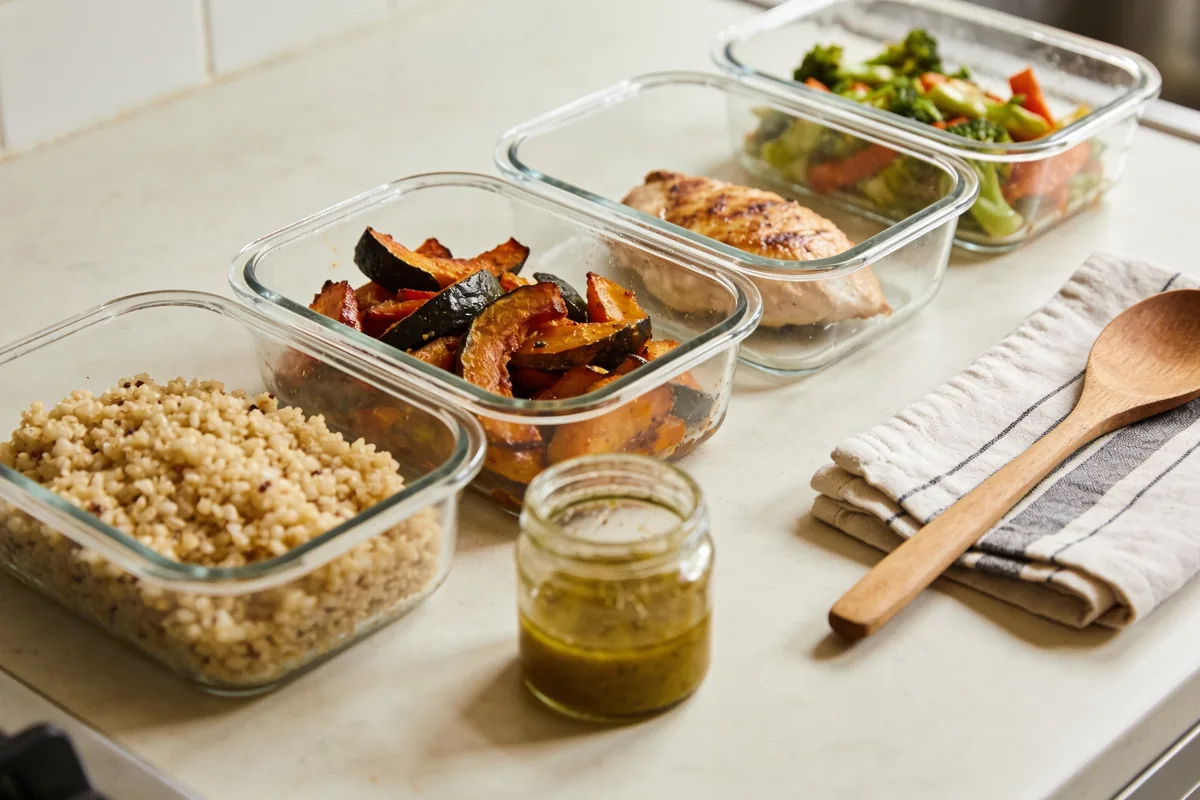
Instead of preparing finished meals, prepare building blocks. Four blocks cover most of a week: a grain or base, a tray of roasted or cooked vegetables, one or two proteins, and one or two sauces or dressings.
That sounds like more work, but it is the same cooking, just arranged differently. While the oven is on, roast two trays of vegetables instead of one. While a pot is boiling, cook extra grains. Cook a protein you can use cold or hot. Make a sauce while things simmer. You are not cooking five separate meals. You are cooking a small set of parts that happen to go together in more than one way.
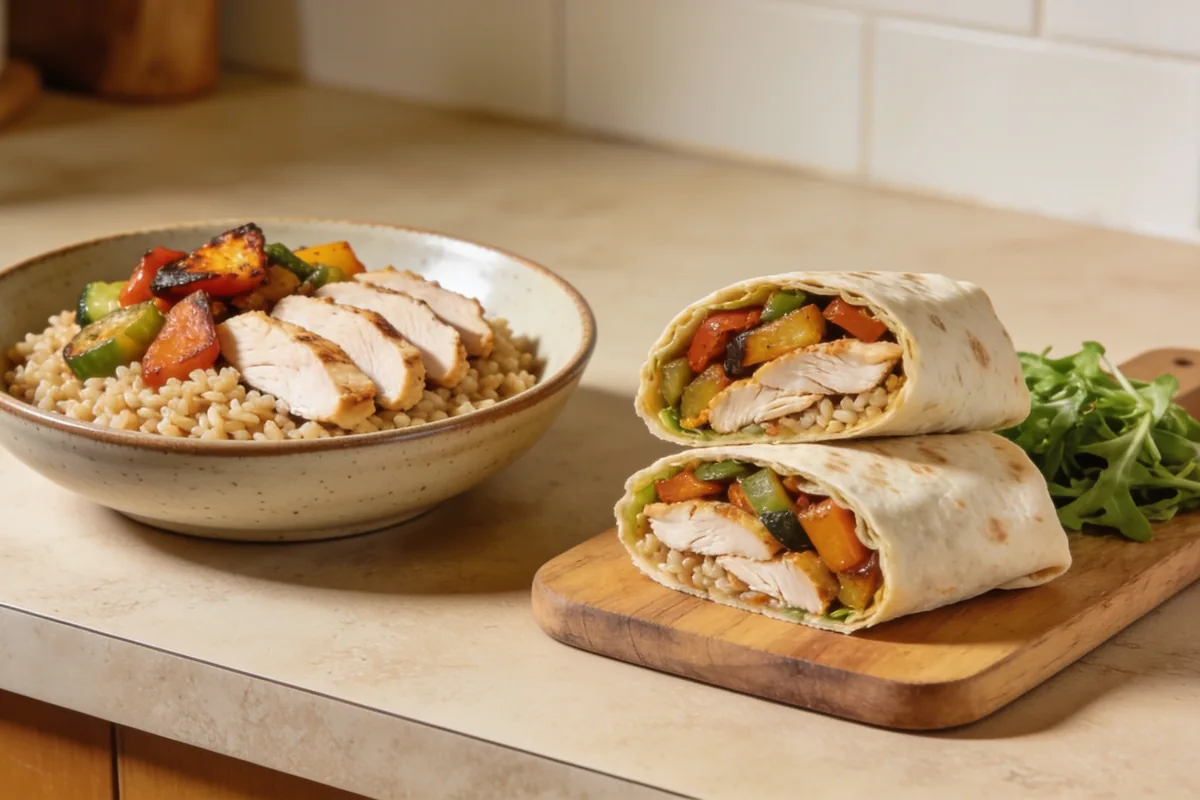
The magic is in the recombining. The same roasted vegetables and the same grain can sit under a fried egg one night, inside a wrap the next, and over greens the night after. The food does not change much. What changes is the plate, and a changed plate reads as a changed dinner.
Start the method at the shops rather than in the kitchen. If you buy with the blocks in mind, a bag of grain, a tray’s worth of vegetables, one or two proteins and the makings of a couple of sauces, the Sunday prep takes care of itself. The shopping list is shorter than you expect, because the same four blocks feed most of the week, and choosing what is in season keeps both the cost and the repetition down.
A realistic week, built from blocks
Here is what a week looks like when the parts do the work. Keep the meals as categories, not fixed recipes, so you can adapt them to what you like and what is in season.
A grain bowl night: warm grain, roasted vegetables, sliced protein, sauce over the top. This is the easiest night and a good one for early in the week, when the vegetables are at their freshest.
A wrap or flatbread night: the same grain becomes a side or disappears, the roasted vegetables and protein go into a wrap with something green and a different sauce. It uses the same parts but eats like a completely different meal.
A salad night: the vegetables and protein go cold over greens, with the grain scattered through or left out. This is the lightest night, and it is a good reset halfway through the week.
A pasta or noodle night: the grain is swapped for pasta or noodles, the vegetables are warmed through with the sauce, and the protein goes in or on top. Same components, new base, different dinner.
A use-up night: whatever is left becomes a hash, a soup or a pile of bits on toast. This is the honest night, the one that clears the fridge and stops food going to waste, and it is often the most satisfying of the week.
You will notice the shopping list does not grow much across those nights. The same four blocks feed all five dinners, which is where the saving comes from. What changes is the sauce and the base, and that is enough to make Monday feel different from Thursday.
The sauce is the shortcut
If you only take one idea from this article, make it this: two or three sauces change a bowl of the same grains and vegetables more than any other single step. A plain bowl and a bowl with a good sauce over it do not taste like the same meal.
Keep it simple and keep it varied. A herby one, green and bright. A creamy one, for the nights you want something comforting. A spicy one, for when you want a kick. None of these need to be complicated, and they keep for most of a week in the fridge. A spoonful of a different sauce is often the difference between “same again” and “this is good”.
Fresh herbs are the cheapest variety booster of all, and a few pots on a windowsill mean you have them whenever you need them. If that sounds like a project, the site’s guide to a windowsill herb garden starts with the herbs that are genuinely hard to kill. And if you want to understand why sauce and texture change a meal so much, the science of flavour explains what is going on when a plain bowl suddenly tastes like dinner.
Freezing so you never hit the Wednesday wall
The freezer is the second half of the variety trick. When you do cook a batch, freeze single portions of it rather than filling the fridge with five identical containers. Over a few weeks you build a rotating pool: a portion of this, a portion of that, each different, ready to be pulled out on the nights you have nothing planned.
That pool changes the rhythm of the week. Instead of committing to one dish on Sunday, you cook what you feel like and let the freezer fill in the gaps. A night with no plan becomes a choice from three or four different meals, not a resignation to the last container.
A word on safety, kept simple: cool cooked food promptly, get it into the fridge, eat leftovers within a few days, and freeze anything you will not get to. Most cooked food freezes well, and labelling a container with what it is saves the midweek guessing. If you have ever stood over an unlabelled container wondering whether it is soup or sauce, you know why. For the full picture on how long food keeps and when the dates on the label actually matter, the site’s guide to use-by and best-before dates is the one to read.
Not everything freezes the same, and it helps to know which parts earn a place in the pool. Sauces, cooked grains, roasted vegetables and most cooked proteins freeze well, while watery salads and anything meant to stay crisp are better eaten fresh. Freeze the components you will not use within a few days, label them with what they are, and the pool builds itself without any extra cooking.
The honest amount of effort
Component prep takes an hour or two on a Sunday, depending on how much you make and how practised you are. That is not nothing, but it is less than it sounds, because most of the time the oven and the stove are doing the work while you tidy the kitchen.
It also saves more than it costs. Across a week, the time you do not spend chopping, cooking and washing up on weeknights adds up quickly, and the money you do not spend on takeaway tends to add up faster. Most people find the trade easy to live with once they feel it.
If an hour or two still sounds like too much, start smaller. Prep two blocks, not five. Cook extra grain one night and extra vegetables the next, and let the week build from there. The habit matters more than the scale, and a small routine you keep beats a big one you abandon. There is no prize for doing it all at once.
One honest note as you find your rhythm: a portion that does not make it into the week is not a failure. A container that goes into the freezer instead of the bin is still a win, and last week’s leftover sauce becomes this week’s shortcut. The method is forgiving, and the only real waste is food you throw away.
Dinner, five nights, no repeats
Meal prep is not about eating the same thing until the container runs out. It is about doing the boring work once so the weeknights are easy and the dinners stay different.
Start with the four blocks, let the sauce do the heavy lifting, and freeze the surplus so you always have a choice. You will not get it perfect, and some weeks will be more “use-up” than “plan”. That is fine. The goal is not a flawless system. It is a week of real dinners that you did not have to think about at 6pm, none of them the same.
Sources: Food Standards Australia New Zealand (FSANZ), safe storage of cooked and leftover food · Australian Dietary Guidelines (NHMRC), healthy meal planning · NSW Food Authority, leftovers and refrigeration guidance