Science & Nature
Why Is the Sky Blue? The Answer Is Shorter Than You Think

The short version
- The one-line answer: blue light scatters more than other colours when sunlight hits the atmosphere, so the whole sky glows with scattered blue.
- Not the ocean: the sky does not reflect the sea. It looks blue even over the middle of a desert or a continent.
- Why sunsets turn red: at sunset the light travels through more air, the blue scatters away first, and the reds and oranges make it through to you.
The question everyone asks
It happens on a clear day, usually when you are not expecting it. A kid looks up from the back seat, squints at the blue above the roofline and asks why it is that colour. Sometimes it is a grown adult who finally admits they have never really known. Either way, the question sits there, simple and almost embarrassing: the sky is blue every single day, and most of us cannot say why.
There is a reason it feels like a trick question. The answer is not hidden in chemistry or in a long list of facts. It is one idea, and once you have it, the whole thing clicks, including the orange sunsets.
The one-sentence answer
Sunlight contains all the colours of the rainbow, mixed together into what looks like white light. When that light hits the atmosphere, it collides with the tiny gas molecules in the air, and blue light gets bounced around more than any other colour, because blue travels in shorter waves. Look at any part of a clear sky and you are not seeing empty space. You are seeing scattered blue light coming at you from every direction at once.
That is the whole answer. The sky is a scattering of light, and blue is the colour that scatters the most.
What “scattering” means, without the maths
Think of light as tiny waves moving through the air, and think of the atmosphere as full of invisible gas molecules, so small you could pack billions into a single breath. When a wave of light meets one of those molecules, it gets knocked sideways.
Short waves get knocked around the most, and blue light has the shortest waves of the colours we can see. So blue light bounces from molecule to molecule, scattering in all directions, until it is coming at your eyes from everywhere above you. The other colours mostly carry on in a straight line, which is why the sun itself still looks white or yellow. You see blue because blue is the colour that takes the most detours on its way to you.
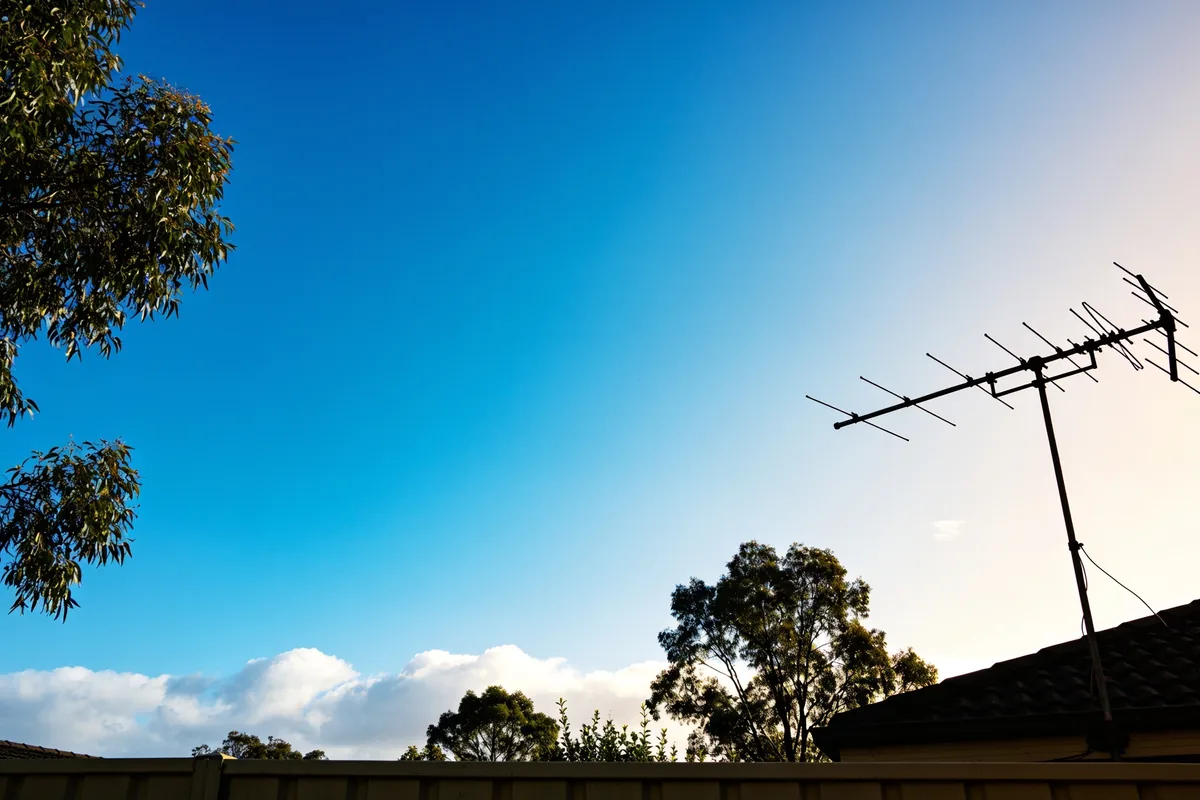
You have watched the same effect without realising it. The sky is not one flat blue. Look straight up on a clear day and the blue is deeper; look toward the horizon and it fades toward pale white. That is because you are looking through more air near the horizon, and more of the blue has been scattered away along the way. The reason distant hills look hazy blue is the same trick: there is a layer of scattering air sitting between you and them.
Three myths to drop
The sky is not blue because it reflects the ocean. If that were true, the sky over the middle of a desert would be a different colour, and it is not. The sea looks blue partly for the same reason the sky does, not the other way around.
The sky is not blue because the atmosphere is made of blue air. Air is colourless. The blue happens when sunlight passes through it.
And there is no solid blue dome overhead. The blue you see is light, not a surface. It has no edge you could reach, which is why the colour fades into black the higher you go.
The neatest proof that the sky is made of light, not paint, is to leave the atmosphere altogether. In space there is no air to scatter the sunlight, so the sky is black even in the middle of the day, and the sun looks white rather than yellow. The blue that fills the sky from the ground is the atmosphere doing its scattering work, and nothing more.
Why the sky turns orange and red at sunset
The same trick explains the sunset, with one change. When the sun is low in the sky, its light has to travel through far more atmosphere to reach you than it does at midday. Think of the extra air as a much longer hallway of those tiny molecules. It is also why a hazy evening, with more particles in the air, can turn a sunset a deeper red.
Blue light, being scattered so easily, gets knocked away sideways over that long journey. By the time the remaining light reaches your eyes, most of the blue is gone, and what is left is the reds and oranges, the colours that scatter least and therefore travel the straightest. That is why the western sky glows orange and pink, and it is why the sun itself looks redder near the horizon. You are watching the same scattering, just through a longer stretch of air.
Why it is not violet
A sharp-eyed reader might ask the obvious follow-up. Violet scatters even more than blue, so why does the sky not look violet?
Two reasons, and they work together. The sun sends more blue light than violet light to begin with, so there is less violet around to scatter. And human eyes are simply more sensitive to blue than to violet. Between the two, the sky reads blue. If our eyes were wired differently, the whole thing might look lavender. As it is, blue wins.
The takeaway
The sky is the colour of scattered sunlight, and the sunset is the same trick seen through more air. A clear blue day and a red dusk are not two different mysteries. They are one small idea wearing two outfits, and now you can see the trick every time you look up.
Sources: NASA Space Place, why the sky is blue · Australian Academy of Science, light, colour and the atmosphere · NOAA SciJinks, why the sky is blue and sunsets turn red