
Eco Friendly
Plastic-Free Shampoo and Conditioner: A Practical Guide to Making the Switch

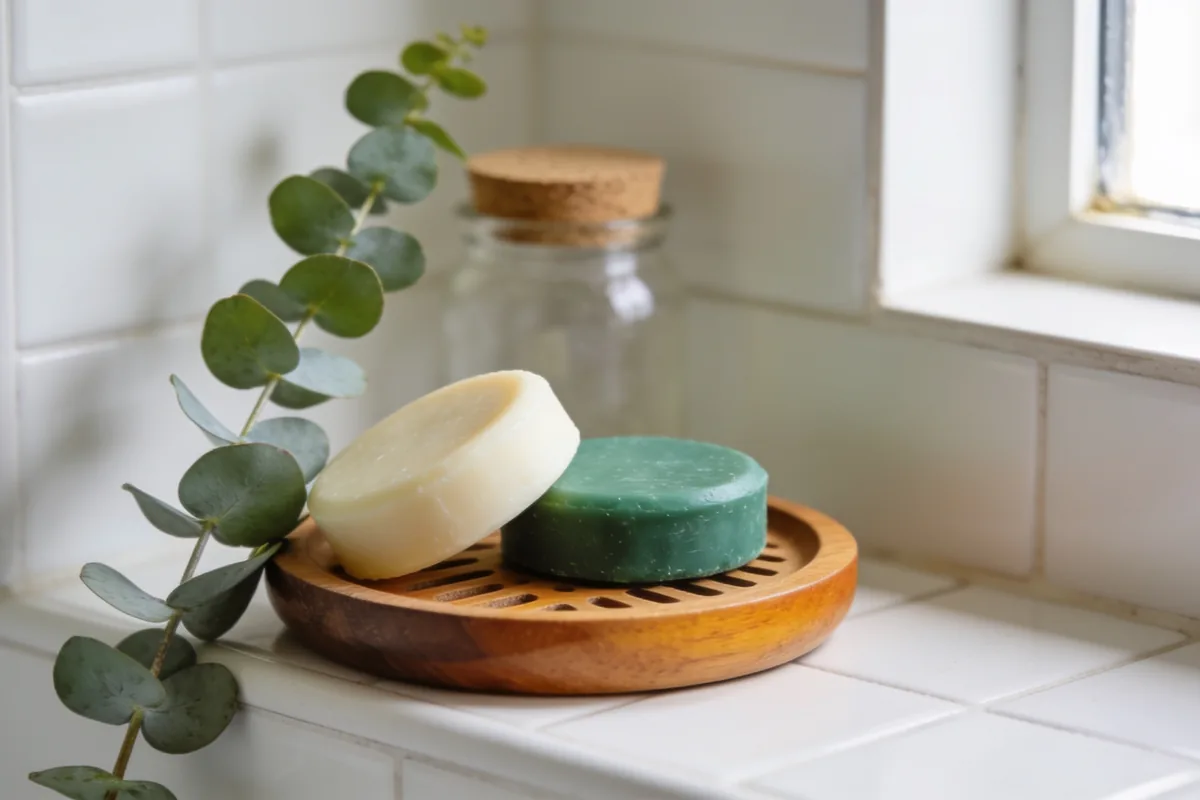
Shampoo and conditioner are among the household products most often sold in single-use plastic bottles. The product is used up, the bottle is discarded, and because most households replace these bottles regularly, the packaging accumulates steadily in the bathroom. This guide sets out the formats available, the points to check before purchasing, and a practical order for making the change without creating additional waste.
Three alternatives to the conventional bottle are widely available.
Solid bars. Shampoo and conditioner bars contain little or no water, which makes them more concentrated than their liquid equivalents and removes the bottle entirely. A bar must be allowed to dry between uses; stored on a wet surface, it softens and dissolves more quickly than it should.
Refill schemes. Some retailers sell liquid hair care by weight into a container the customer provides, and a number of brands operate refill or take-back arrangements for their own bottles. These options keep an existing bottle in service rather than requiring a new one.
Glass and metal containers. A small number of products are sold in glass or aluminium packaging. These are heavier and more fragile than plastic, and the pump or dispenser, where one is fitted, may still contain plastic components.
The same care that applies to any personal-care purchase applies here.
The ingredient list. The full list should be read rather than a headline claim such as “natural” or “plant based”. Those terms describe some of the ingredients, not all of them.
The packaging claim. Labels such as “compostable” and “biodegradable” warrant scrutiny. Compostable wrapping is only useful where a suitable composting service is available to the household, and a paper box can still contain a plastic liner. The disposal instructions should be explicit.
The storage requirement. Solid products depend on correct storage. If the household cannot provide a draining dish or a dry shelf, a bar may not be the most practical first step.
The most efficient approach is to replace one product at a time, in the order that causes the least disruption.
First, use the existing bottle to the end. Discarding a half-used product to begin the new one creates the very waste the change is intended to reduce.
Second, introduce the bar or refill only when the bottle is empty. This spreads the cost of the change and gives the household time to adjust to a different routine.
Third, allow a short adjustment period. Solid shampoo and conditioner are applied differently from liquids, and a week or two is a reasonable period in which to settle on the correct amount and technique.
The range of plastic-free hair care available in Australia has grown considerably. Ethique, a solid hair-care brand widely stocked in Australian retailers, offers shampoo and conditioner bars in a number of formulations. Other Australian and imported brands supply similar formats through health-food shops and online stores. Brand names appear here for identification only and are not an endorsement.
A reader comparing options should consider cost per use rather than cost per unit. The life of a bar varies with hair length, washing frequency and storage, so the cheapest bar is not necessarily the most economical.
Retailers that specialise in bulk and unpackaged goods have expanded in Australia, and most also sell online. The delivery packaging deserves the same scrutiny as the product itself, because a plastic-free bar can still arrive wrapped in plastic.
Moving to plastic-free shampoo and conditioner does not require a complete overhaul of the bathroom overnight. Replacing one bottle at a time, storing the new product as the maker advises, and reading labels with care is a measured approach that most households can sustain.









You must be logged in to post a comment Login