
Eco Friendly
Plastic-Free Dish Soap: How to Choose One That Cuts Through the Grease

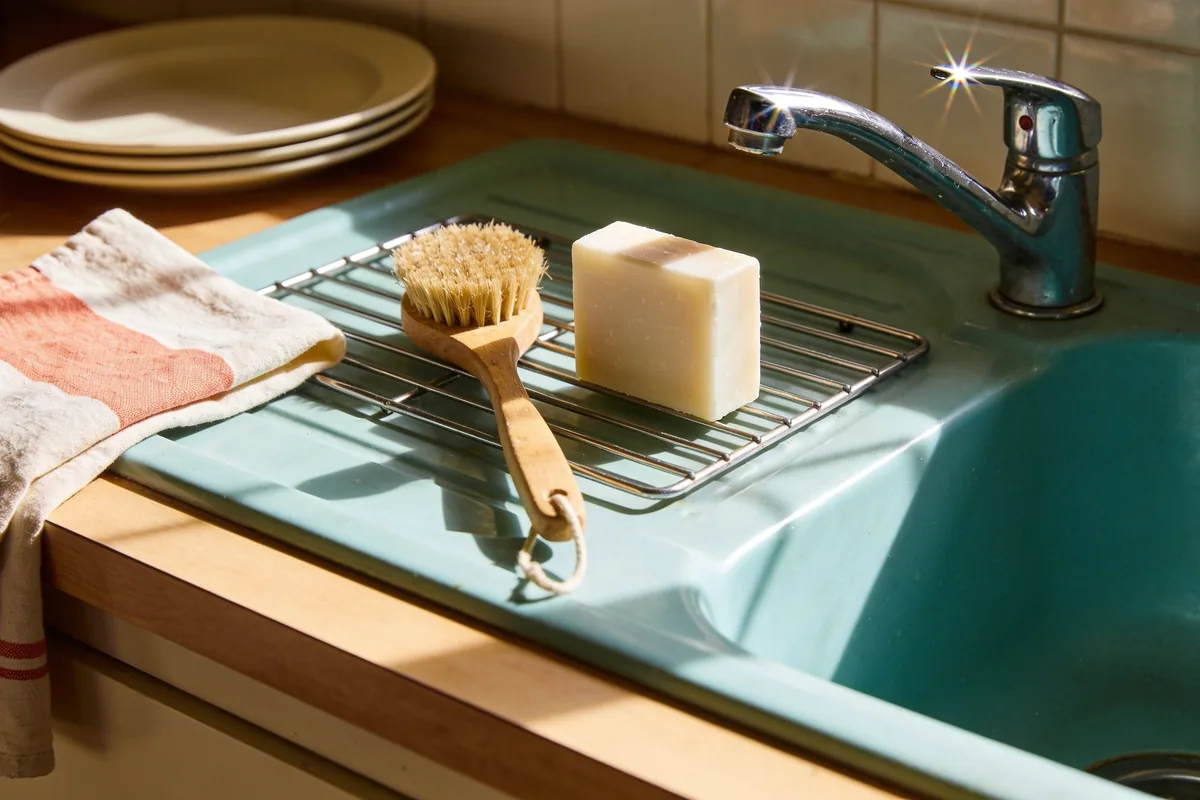
If the bottle under the sink has been quietly bothering you, you are in good company. Dish soap is one of those small daily things most people do not think about twice, until the day it clicks that you buy it every few weeks, finish it, and throw the bottle out, and that the same loop has been running for years. The good news is that you do not need to overhaul the whole kitchen to do something about it.
There is a gentle way into this, and it starts under the sink. When the current bottle runs out, that is the moment to try something else. Finishing the soap you already own is common sense, and it means the swap does not cost you anything extra this week. You also do not need to change anything else about the washing up; the swap is about the soap, not a whole new routine.
Plastic-free dish soap mostly comes in three forms.
Solid bars. A dish soap bar works much like a bar of hand soap. You run a damp brush or sponge over it to pick up the soap, then wash as usual. One bar replaces several bottles, and there is no container to throw away. The main adjustment is storage: a bar needs somewhere to drain so it does not sit in a puddle and soften.
Powders and concentrates. Some brands sell a concentrated product that you mix with water at home in a bottle you already own. You are buying the soap rather than the water, and the refill tends to be much smaller than a full bottle of liquid.
Refill stations. Bulk and refill shops let you bring your own bottle and fill it by weight. You keep using the same container for years, and you can take exactly as much as you need instead of whatever size the supermarket happens to sell.
The honest test for any dish soap is whether it cuts through a greasy pan without you using half the bottle. A few reviews from real kitchens will tell you more about that than the label will.
If your hands get dry or sore from washing up, it is worth checking the ingredient list and looking for an unscented or gentler formula. Plant-based cleaning ingredients, often derived from coconut, are common in this category, but the label should say what is actually in the bottle rather than leaving it at a vague “natural” claim.
One reassurance: you are looking for a soap that does its job, not a perfect product. The best dish soap for your household is the one you reach for without thinking.
The Australian market for plastic-free cleaning products has grown, even if it is not yet as big as the conventional aisle. Solid dish soap bars and refill options turn up in health-food shops, bulk and refill stores, and online retailers. Not every suburb has a refill shop nearby, so for many people the easiest first step is a bar or a concentrate delivered to the door. If your usual supermarket does not stock any of it yet, that is not a sign you are doing something wrong; the range simply varies by suburb and store.
You do not have to replace everything at once, and you should not feel bad about the bottle that is still half full under the sink. When it runs out, try one bar or one refill. If it works, wonderful. If it does not, you have lost very little and learned something about what your kitchen actually needs. That is how most good changes happen, one small swap at a time.









You must be logged in to post a comment Login