


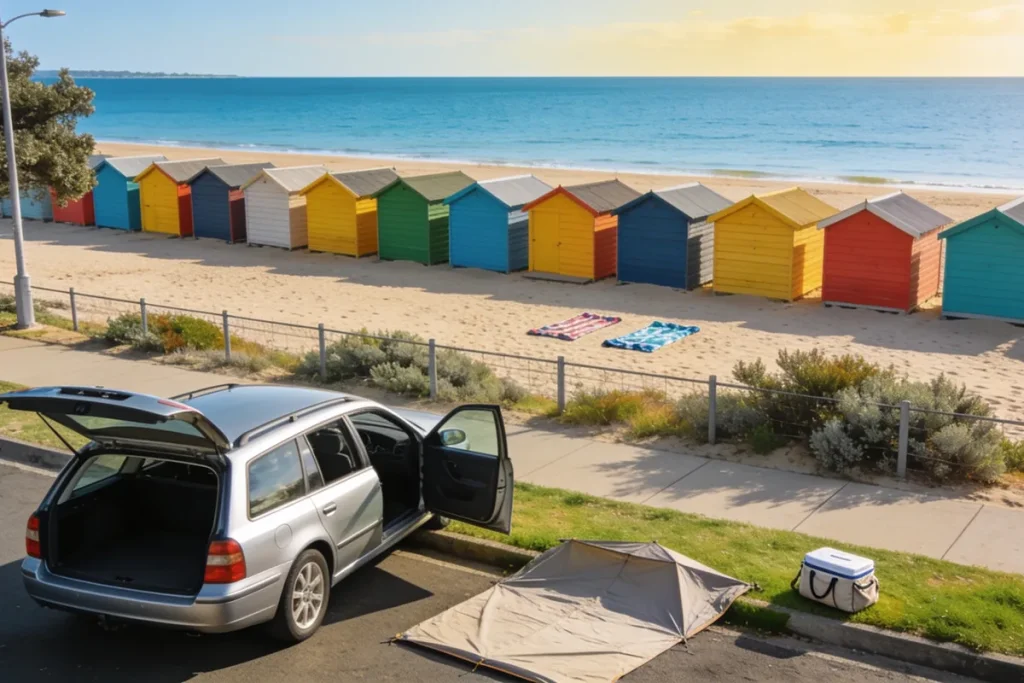
- The beach was never the problem. The last four hundred metres, and where to leave the car at the end of them, is where beach days actually go wrong.
- Mount Martha Beach is one name over two beaches. Which end you choose decides your morning, and it is the first decision of the day.
- On a hot weekend, assume the foreshore is full by mid-morning. That changes the plan, and changing the plan is easier than changing the mood.
- A car can stop almost anywhere and park almost nowhere. A drop-off is a stop, not a park, and the group has to be ready when the car is.
- Agree the pickup point and the time before you leave the house. The end of the day is when the phones are dying and nobody can find anybody.
The beach was never the problem. The sand is fine, the water is fine, and the view has never let anyone down. What ruins a beach day, when something does, is the part nobody plans: the last stretch between the car and the sand, which on a hot weekend turns into a slow, hot loop around full car parks while the swimmers in the back seat get quieter and quieter. This is the small, blunt guide to that stretch.
It is two beaches wearing one name
Mount Martha Beach is not one place. It is a stretch of sand that carries a single name and behaves like two beaches, split roughly where the creek meets the bay, with the busier side and the quieter side filling at different speeds.
That is more practical than it sounds. Which end you choose decides your morning. The end that is easiest to walk onto is the end that fills first, which is the whole problem in one sentence, and the end that rewards a little more effort is the end where a family can still find room to lay out towels on a January Sunday.
In summer this beach is a morning place, and the morning is when it works: cool air, empty kerbs, and the whole stretch still to choose from. By lunchtime on a hot day, everything that can fill is filling. A beach run planned for the early hours is a different trip from the same run planned for noon, and the difference costs nothing but an alarm clock.
There is also a driver’s version of the same point. “Mount Martha Beach” is not an address, and a driver who is told “the beach” will drop you at whatever comes first. Say which end, and say the landmark you mean. The difference between a good drop-off and a bad one is usually one sentence.
One more thing about the sand itself, and it is the sort of thing worth knowing before you are standing at the top of a path holding too much. Access onto the sand varies along the coast, some entries are gentler than others, and some days the sand is firmer than others. If you are travelling with a pram, a walking frame or a wheelchair, ask about the access at the end you are choosing before you commit to it, and ask about the vehicle at the same time. It is a question with an answer. It is only a problem when it is asked late.
What the parking actually does
On an ordinary weekday, in the cooler months, parking near this beach is fine. That is the part everyone remembers when they suggest the beach run, and it is true for most of the year.
On a hot weekend it is a different beach. The Esplanade fills end to end, people park further back and walk, and the walk with an esky, a beach tent and two children is where the day quietly goes wrong. Nobody is angry yet. They are just arriving at the sand already tired, which is not the plan anyone had.
So here is the rule of thumb this article is willing to stand behind: on a summer weekend, assume you will not park near the sand. Not because the car park is unreasonable, but because everyone else had the same idea at the same time, and the arithmetic of a small car park and a hot day does not have a clever solution.
This article will not list a single parking rule, fee or time limit, and that is deliberate. Rules on this coast get debated and changed, and the rule that matters on the day is the one on the sign. What does not change is the shape of the problem: arrive as early as the day allows, or do not arrive by car.
Where a car can stop, and where it cannot
Here is the trick that makes the whole beach run work: a car can stop almost anywhere and park almost nowhere, and the difference between the two is the group.
A drop-off works when the driver knows three things: which end, which side of the road, and which doorway or path you are aiming for. Give a driver those three and the stop takes seconds.
It works even better when the group is ready. The drop-off is a stop, not a park, so everyone should be at the kerb with everything in hand before the car arrives, not inside looking for a towel. Bags on the footpath, children holding a hand, doors open and closed, car gone. A group that treats the drop-off like a pit stop gets dropped at the good end on a full morning.
The return pickup is the same discipline, in reverse, and it needs two things agreed in advance: a fixed point, and a time. The end of a beach day is when every phone is nearly flat and nobody can find anybody, and a group standing on the wrong side of the Esplanade at dusk with wet towels is a small problem that feels enormous.
One note on gear, because it is the honest reason some groups should not take two cars. A beach group with an esky, a tent, boards and children is not going to walk the last stretch cheerfully twice, once in and once out. Beach bookings with gear are routine rather than a special ask for a Mount Martha taxi and transfer service that runs everything from a sedan to a maxi.
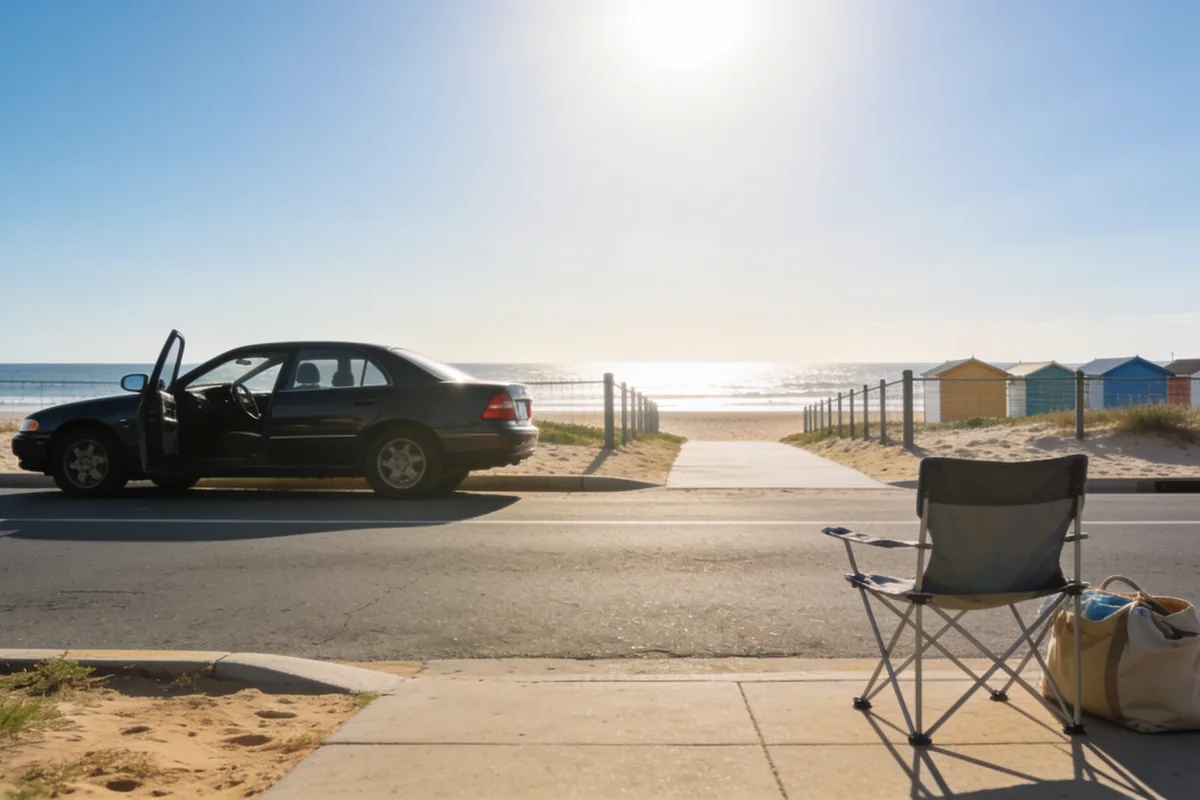

The trip is short, and that is the whole argument
For a household a few streets back from the water, the beach run is close enough that driving feels obvious, and the parking hunt feels absurd for exactly the same reason. It is not a road trip. It is a short, ordinary errand that turns into a long one on the days the whole coast has the same idea.
That is the honest case for a booked car on the heavy days, and it is also the honest case for walking or cycling on the light ones. A cool morning, a light group and a couple of towels: walk. Nobody needs a car for that trip, and this article is not going to pretend otherwise. The recommendation here is for the day you are actually having, not for the days the car parks are empty.
Two practical links, since this section is about the household arithmetic. The site’s is your current travel option saving you time and effort? covers what a repeated local trip actually costs in time, and the beach run is a weekend-sized version of the same sum. And the site’s school runs without the stress: when a booked taxi helps busy families is the weekday version of the family-with-gear journey, for anyone who recognises the shape.
Coming home is the part that goes wrong
Wet towels, tired children, one sunburnt adult and a beach that empties all at once. The return leg is where a good day earns its ending or loses it.
Three things fix almost all of it.
Agree the pickup point in the morning, not when you are standing on the sand with no shoes on. A point is not a suburb. A point is a spot two people could walk to blindfolded.
Pick a spot with somewhere to wait. Convenient for the driver is worth less than bearable for the group, and a strip of shade or a seat near the path beats a closer kerb with nowhere to stand.
Decide who is carrying what before the walk back. The walk back is uphill with everything you brought, and it is longer than the walk down in every way that matters. Sort the cargo before you pack up, and the last stretch stops being a punishment.
If the group is being picked up at all on a hot weekend, the return is the trip to book first. The outward leg has options. The way home has one, and it is the booking you either made or did not.
The rest of the suburb’s beach days
Two more things worth knowing, kept brief because this article is about access rather than attractions.
The village shops and the market make up the other half of a beach morning for plenty of local households, and a market morning is the one time the town is busier than the beach itself. Come early, or come after lunch.
And the smaller bay along this coast that serves as the local dog beach is a different trip with a different way in and its own rules. If you are bringing a dog, check the rules for the beach you have chosen rather than assuming they carry over. The same access logic in this article applies to every bay on this coast, which is exactly why it is worth learning once. If the day you are really planning is a coastal drive rather than a swim, the site’s the great ocean road in three days: where to stop, stay and skip is the trip you are actually planning.
The two-minute version for a hot Sunday
The compressed version, for the car.
Pick the end before you leave the house, and tell the driver which one. On a hot weekend, assume you will not park near the sand, and plan as though you are being dropped at the kerb and walking in with what you can carry. Take less than you think. Have everyone ready to step out rather than ready to pack. Agree the pickup point and the time in the morning, while everyone is still cheerful.
The beach is the easy part. The four hundred metres between the car and the sand is where a good day is won or lost.
Sources consulted: Visit Victoria Mount Martha Beach information; Mornington Peninsula Shire foreshore information.