



Black Friday falls on Friday 27 November this year, with Cyber Monday three days later on 30 November. Between now and then you will see a lot of red tickets and a lot of big percentages.
Ignore the percentage. Of all the numbers on the ticket, it tells you the least. What matters is what the item actually sold for in the weeks before the sale, and you can find that out yourself, today, in about ten minutes.
So here is the position, plainly. A Black Friday price is only a deal if it beats what the item genuinely sold for over the weeks leading up to the sale. If it doesn’t, you aren’t saving anything. And a “was” price that was only charged for a few weeks can be misleading under Australian law. In 2026 the Federal Court found exactly that.
Dates, prices and the court position below are as at 30 October 2026.
Why the percentage tells you nothing
A discount is a comparison. “Save 40%” means nothing until you know what the 40 per cent comes off.
Usually it comes off a recommended retail price, or off a “was” price the retailer picked. Neither tells you what people were paying last month. Mark Serrels of the consumer group Choice told the ABC that plenty of markdowns are measured against RRP, a figure few shoppers ever pay, and that big sales are also a handy way to clear stock a store wants gone. His advice was short: “You’ve got to be wary of those markdowns.”
Dr Sara Quach Thaichon, a marketing academic at Griffith University, came at it from the other side. The percentage, she told the ABC, “doesn’t actually tell us whether the final price is good”. She also pointed out that most genuine discounts sit nearer 20 to 30 per cent than the “up to 70% off” on the banner. “Up to” is carrying that whole sentence. It means one thing in the store might be 70 per cent off. Most of the rest won’t be.
None of that makes the banner illegal. It’s marketing, and stores are allowed to market. Your job is just to find the real number underneath it.
What the law says a “was” price has to be
Under the Australian Consumer Law, a business can’t make false or misleading claims about price. A “was” price counts as a claim. It says the item sold at that price. It also implies the item sold at that price for long enough that it was the normal price, rather than a figure parked on the shelf so it could be cut.
So how long is long enough? The law doesn’t give a number. But in May 2026 the Federal Court gave shoppers a clear signal. In a case the ACCC brought against a major supermarket, the court found 13 of a sample of 14 “was/now” tickets misleading. The was price had typically been charged for about four weeks before the discount kicked in. The court indicated that a was price held for 12 weeks or more would likely not have misled.
Two cautions, because they matter. First, the 12 weeks comes from one judgment about one set of supermarket tickets. It isn’t a rule written into the law, and another case on different facts could come out differently. Second, the court has only ruled on liability so far. Penalties come later.
As a shopper’s yardstick, though, 12 weeks is very useful. If something sat at its was price for three months, the discount is probably real. If the was price turned up four weeks ago, be suspicious. Everything below uses that test.
The October check: how to find what it really sold for
Most sale coverage skips this part, and it’s the part that saves you money. You can check the price history yourself. Do it now, while the pre-sale price is still out in the open.
Pin down the exact model first. Not “a 65-inch TV”. The model number, the colour, the storage size. During big sales retailers often sell slightly different versions, like a bundle or a new variant code, and those are much harder to compare. If the model number changes, the history starts again from zero.
Look up the retailer’s own page in a web archive. Public web archives, of which the Wayback Machine is the best known, keep snapshots of web pages by date. Paste in the product page address and look at the captures from August, September and October. If the item showed $399 in every September snapshot and $549 in mid-November, that’s your answer. Small stores aren’t always captured, but product pages at the big retailers often are.
Use a price-history tracker for marketplace listings. A number of free sites and browser extensions chart a marketplace listing’s price over months. They’re best on the large online marketplaces and much weaker for bricks-and-mortar chains.
Check Google Shopping. For some products, Google Shopping shows a price history or marks a price as low, typical or high for that item. It doesn’t do this for everything, but when it does, it’s a quick second opinion.
Start your own record today. Build a watchlist. Once a week between now and the sale, screenshot the price of each item you’re weighing up, with the date showing. It sounds tedious, but it takes two minutes. Then on 27 November you’ll have the one thing the ticket won’t give you, which is your own evidence.
A worked example (hypothetical)
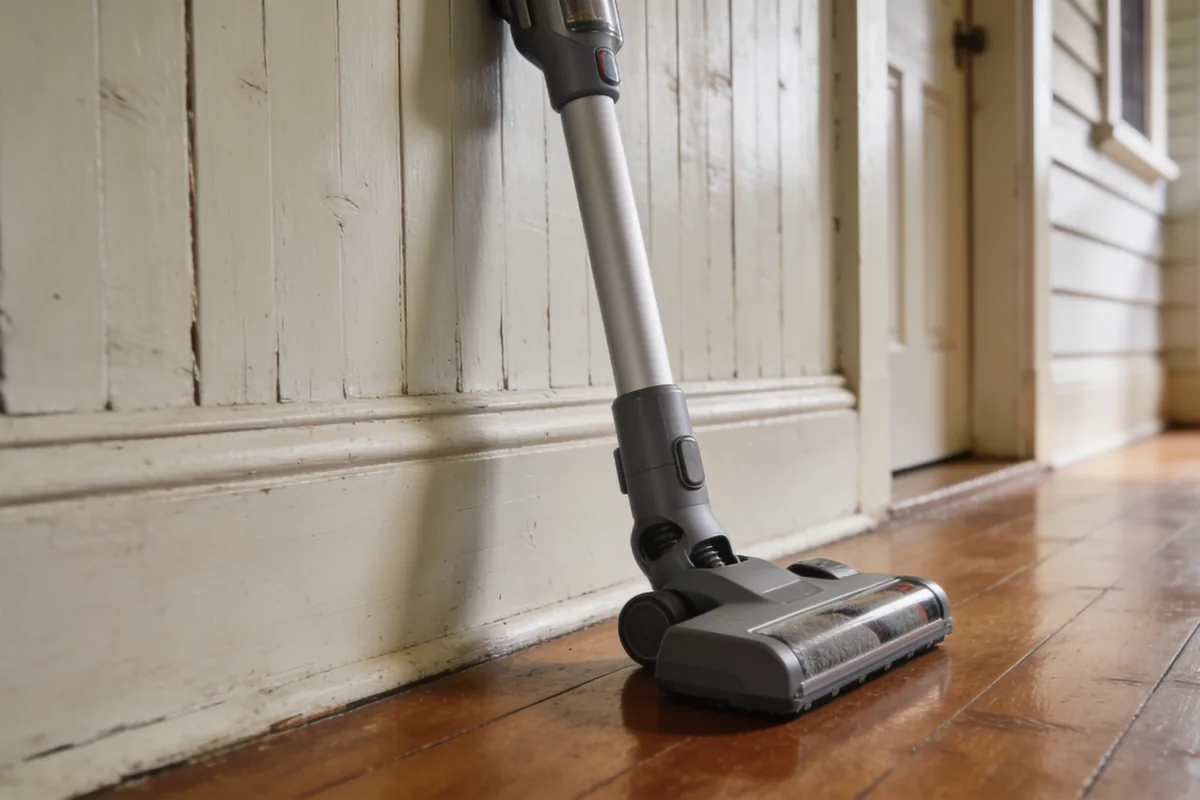

Take two hypothetical stick vacuums. The figures are made up to show how the test works. They don’t come from any real store.
Vacuum one. It sells for $399 from early September through to 2 November. On 3 November the ticket goes up to $549. On Black Friday it’s advertised as “was $549, now $399, save 27%”.
Now run the test. What did it genuinely sell for in the weeks before the sale? $399, for roughly eight weeks. The $549 lasted a little over three. Real saving: $0. You’d be paying the price it was already selling for, with a ticket claiming otherwise.
Vacuum two. It sells for $549 for 12 weeks straight, then drops to $449 on Black Friday. The ticket says “save 18%”.
Same test. Twelve weeks at $549, and now $449. That’s $100 off what people were actually paying. Real saving: $100.
| Vacuum one (hypothetical) | Vacuum two (hypothetical) | |
|---|---|---|
| Price before the sale | $399 for about 8 weeks, then $549 for about 3 weeks | $549 for 12 weeks |
| Black Friday ticket | was $549, now $399, “save 27%” | was $549, now $449, “save 18%” |
| Passes the 12-week test? | No | Yes |
| Real saving | $0 | $100 |
Side by side, the smaller percentage is the real deal. That’s the whole lesson. A headline percentage rewards whoever pushed the was price up the furthest. The price history rewards the store that actually cut its price.
To be fair to retailers, real deals do happen. Plenty of stores run honest discounts, and the advice you’ll hear most often from shoppers online is the sensible one: only buy what you’d have bought anyway. If something has been on your list for months, or it’s a consumable you go through regardless, like nappies, coffee pods or printer ink, a sale price that passes the 12-week test is simply money you keep. The trouble starts when you buy off the percentage instead of the history.
Black Friday or Boxing Day?
Ask around and you’ll get both answers, each with total confidence. Plenty of shoppers online reckon Boxing Day or the end of financial year sales still beat Black Friday. Just as many say Black Friday has overtaken Boxing Day as the big one.
Our ruling: neither is reliably cheaper. We found no Australian price study showing either sale consistently wins. What decides it is the item’s own price history, not the name of the sale.
Black Friday does have one real edge. If you’re buying gifts that have to be under the tree by 25 December, Boxing Day can’t help you. For those, a Black Friday price that passes the 12-week test is the one to take.
For everything else, buy on the history, not the date. And keep Serrels’ other line in mind: “There’s always another sale around the corner.”
Sale stock still carries your rights
A discount doesn’t cancel your rights. Under the Australian Consumer Law, the consumer guarantees cover sale items just as they cover full-price stock. If a product is faulty, isn’t as described or doesn’t do what it should, you’re entitled to a remedy. Depending on the problem, that could be a repair, a replacement or a refund.
That’s why the sign at the counter matters. The Queensland Government puts it plainly: “Signs stating ‘No refunds’ or ‘No refunds or exchanges on sale items’ are unlawful”. A store can set its own change-of-mind policy. It can’t opt out of the guarantees.
The other side is worth knowing as well. “Businesses don’t have to give you a refund or exchange if you simply change your mind,” the same guidance says. A change-of-mind return is the store’s policy, not your right, and some retailers tighten those policies over big sales. Read the returns terms before you pay. It’s the same habit as checking use-by and best-before dates before you put something in the trolley: thirty seconds of reading saves you a nasty surprise later.
The full cost and the pressure tactics
The price on the ticket isn’t always what you end up paying. Moneysmart, the government’s money guidance service, gave shoppers a short checklist through the ABC: make a list, set a limit, and work out the full cost before you pay. Full cost means delivery, international transaction fees on overseas sites, and what you’ll actually be paying back.
That last one is where buy now, pay later comes in. Moneysmart’s advice was to take care with it, and that’s right. Splitting $399 into four payments doesn’t make it any cheaper, but it does make it easier to say yes to three more things. Buy now, pay later is still borrowing, and borrowing feeds into your wider credit picture, so it pays to know how that works before you sign up. Our explainer on credit scores in Australia covers it.
Then there are the tactics built to rush you. A countdown clock makes you feel hurried, but the price is no better for it. If a deal passed the 12-week test at breakfast, it will still pass at lunch, and if it didn’t pass, the timer changes nothing. “Only 2 left” banners work the same way: a reason to check faster, never a reason to skip the check.
Big sales also draw fake stores dressed up to look like brands you know. Check the web address letter by letter, and be wary of any store you’ve never heard of selling well below everyone else. A price that looks too good usually is.
None of this is a reason to skip the sales. It’s a reason to do the October check first.
Before you tap the card
Know the exact model.
Know what it sold for over the last 12 weeks.
Know the consumer guarantees come with it, sale or no sale.
If the Black Friday price beats that 12-week price, buy it and enjoy it. If it doesn’t, it isn’t a deal. It’s just a ticket.
Sources: Why a big discount during Black Friday sales isn’t necessarily a great deal, ABC News (https://www.abc.net.au/news/2026-10-27/how-to-avoid-wasting-money-shopping-during-black-friday-sales/107302152); When you can get a refund, Queensland Government (https://www.qld.gov.au/law/your-rights/consumer-rights-complaints-and-scams/buying-products-and-services/guarantees-warranties-refunds/when-you-can-get-a-refund); When is an advertised discount genuine?, Clayton Utz (https://www.claytonutz.com/insights/2026/may/when-is-an-advertised-discount-genuine-accc-wins-wasnow-price-case-against-coles)