


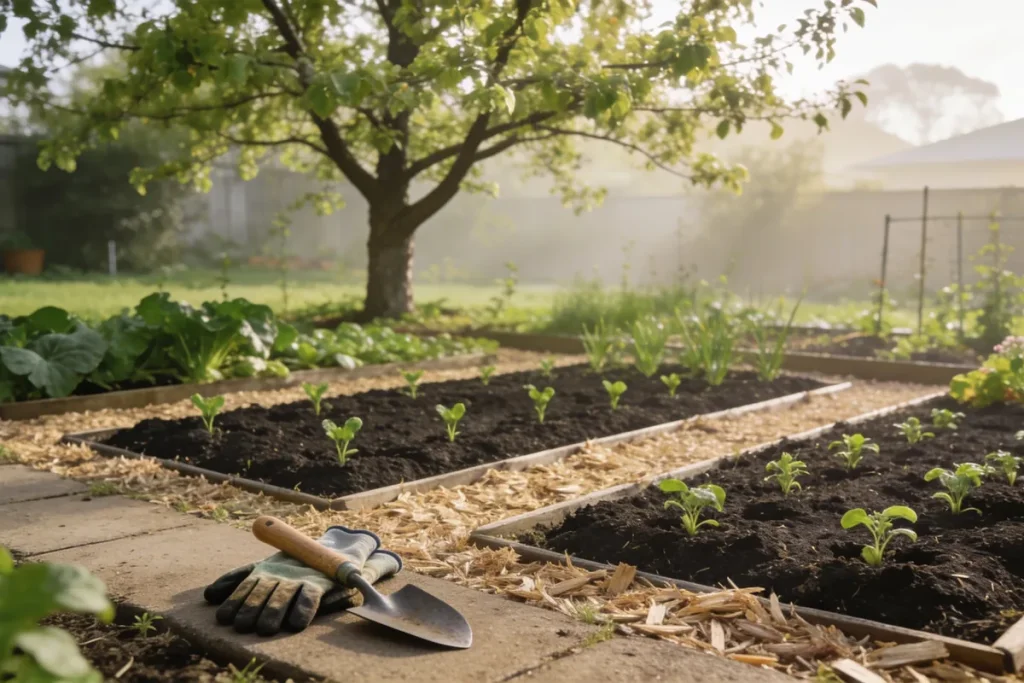
The short version
- Soil comes first. Loosen it, add compost or well-rotted manure, and check drainage before anything goes in.
- Mulch after planting. A layer of wood chips, straw or lucerne holds moisture and keeps weeds down, but keep it off plant stems.
- Plant in the right order. Hardy veg and greens early in cooler areas; frost-tender plants like tomatoes and basil wait until the frost risk has passed.
Spring garden advice is overwhelming because it is usually an unordered list of everything you could possibly do, and reading it feels like falling behind before you have started. The gentler truth is that a handful of jobs matter first, and they have a sensible order. If you do those, in that order, the rest of the season looks after itself. Here is the order: soil, then mulch, then the right plants at the right time.
Why order matters
There is a logic to the order, and it is not arbitrary. Plants establish best in prepared, well-drained soil, so the ground work comes before the planting. The soil is what holds the water and the nutrients, and a plant put into hard, dry, compacted ground starts its life fighting. Loosen the soil and add organic matter first, and everything you plant after has a fair chance.
Mulch comes after the planting, because its job is to protect the soil and the young plants. A layer over the surface holds moisture, suppresses weeds and keeps the soil temperature steadier. Put it down before you plant and you are mulching empty ground. Put it down after, and the plants go in with their roots in prepared soil and a blanket over the top.
Doing it the other way, planting into hard ground and mulching over it, is the quiet reason so many spring gardens disappoint. The plants go in, the mulch goes on, and nothing thrives, because the soil underneath was never ready. The order is not a preference. It is the whole method.
Spring is the moment the soil wakes up. Through winter the ground is cold and the life in it slows almost to a stop, and the first warm weeks are when it stirs again. Working with that timing, preparing the bed while the soil is still waking, means the plants go into ground that is ready to support them rather than ground that is still asleep.
Step one: sort the soil
Start with the ground, because the ground does the real work. Loosen compacted beds with a fork or a trowel, enough to break up the hard surface without digging the life out of the soil. Most garden soil does not need a full renovation. It needs to be opened up so water and roots can move through it.
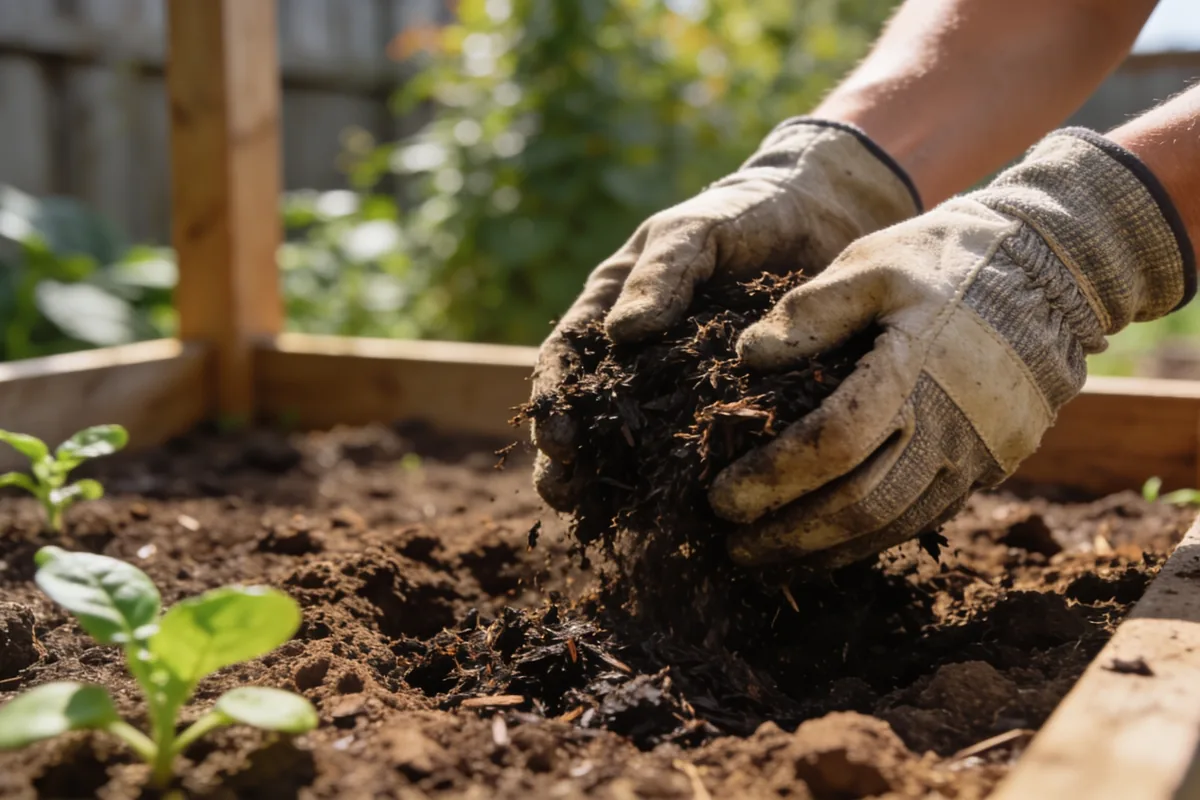
Add organic matter, compost or well-rotted manure, and work it into the top layer. This is the single most useful thing you can do for a garden bed, and it matters more than fertiliser at this stage. Most garden soil needs organic matter more than it needs a bag of synthetic fertiliser, because the organic matter feeds the soil life that makes nutrients available to plants. Fertiliser feeds the plant directly, and there is a time for it later in the season. In spring, before planting, the soil food web is the priority.
Check the drainage while you are there. If water sits on the surface after rain, or a hole you dig fills with water, the bed has a drainage problem that will drown young roots. Raised beds or mounding the soil are the common fixes. Getting this right now saves a season of waterlogged plants later.
The type of soil you have changes what it needs. Sandy soil drains fast and dries out quickly, so it drinks organic matter to hold moisture. Heavy clay holds water and can set into a hard crust in summer, so it needs organic matter to open it up and let air in. Either way the answer is the same, compost and well-rotted manure worked through, which is why the organic-matter step suits every garden.

Step two: mulch, done properly
Mulch is a layer of material spread over the soil, and it earns its keep three ways: it holds moisture in the ground so you water less, it suppresses weeds by blocking the light they need to germinate, and it keeps the soil temperature steadier through the swings of spring.
The common materials are all fine, and the choice is mostly about what is available and what suits the garden. Wood chips last a long time and look tidy. Straw and lucerne break down faster and feed the soil as they go. Any of them work, and a mix is perfectly sensible.
The two mistakes that cause trouble are easy to avoid. Do not pile mulch against plant stems or tree trunks, because it holds moisture against the bark and can rot it. Keep a small clear space around each stem. And do not lay it so thick that it sheds water, because a heavy layer can form a crust that rain runs off instead of soaking through. A depth of a few centimetres is plenty, and it should be spread loosely, not compacted.
When to mulch is simple: after planting, once the soil is prepared and the plants are in. Mulch before planting and you are covering empty ground; the whole point is to protect the bed once it is working.
Watering through mulch needs one adjustment. The layer slows evaporation, so the soil stays moist for longer, but it can also shed light rain, so water slowly enough that it soaks through, and check the soil underneath rather than trusting the surface. Mulch is a blanket, and like any blanket it works best when you check what is under it.
Step three: what to plant first
This is the part everyone actually wants, and it comes with an honest caveat: Australia does not have one planting calendar, because it does not have one climate. The guide here is for temperate southern Australia, and gardeners in the tropics or in very cold areas should follow their local climate rather than a national rule.
In cooler southern areas, the hardy plants can go in early, as the soil warms and the worst of the frost risk passes. Early vegetables such as peas, broad beans and leafy greens are the classic early-spring plantings, and they tolerate the cool nights that would stop a tomato. If you want the earliest possible start, these are what to put in first.
The frost-tender warm-season plants are the ones to be patient with. Tomatoes, capsicums, beans, zucchini and basil all want warm soil and no frost, and planting them too early is the most common spring mistake. The honest instruction is to check your local frost date and wait until it has passed, rather than trusting a date on a seed packet written for a different region. In most temperate areas, that means the mid-to-late spring window for the warm-season crowd.
A second trick stretches the season once the warm-season plants are in: sow in rounds rather than all at once. A row of leafy greens or beans sown every few weeks gives a steady supply instead of a glut, and the harvest spreads across the season rather than arriving in one week. The first round goes in early, the next a few weeks later, and the garden keeps producing instead of peaking and stopping.
Spring is also the season for many herbs and flowers. Marigolds, petunias and zinnias are common spring choices in Australian gardens, and herbs go in well now too. If herbs are on your list, the site’s windowsill herb garden guide is the companion read for growing them close to the kitchen, and it starts with the ones that are hard to kill. For the broader question of whether the effort of real plants is worth it, the site’s guide to real versus artificial plants weighs the trade-offs honestly.
For gardeners who want low-maintenance beds, native plants are the honest shortcut. They suit their local climate, need less water once established and bring in the birds and insects that keep a garden healthy. Spring is a good time to add them, and the local nursery is a better guide to what belongs in your area than any national list.
A simple spring month-by-month shape
For temperate Australia, the season has a gentle shape. Early spring is the time for soil and the hardy plantings: prepare the beds, sow the peas and broad beans, plant the leafy greens. The ground is warming and the days are lengthening, and the hardy plants make the most of it.
Mid-to-late spring is the warm-season window. As the frost risk passes, the tomatoes, capsicums, beans and basil go in, along with the summer annuals. This is the busy planting time, and it is also when the early-spring sowings start paying off.
The tropics run on a different rhythm, with wet and dry seasons rather than a spring planting push, and gardeners there should follow their local advice rather than a temperate calendar. The same goes for cold mountain areas, where spring arrives later. The month-by-month shape here is a guide for the temperate majority, not a national law, and the local garden centre or a regional planting guide is the better source for the precise timing in your area.
In most temperate years the season runs later than the calendar suggests. September is the soil and hardy-planting month, October is when the warm-season planting gets serious, and November is when the garden fills out and the early harvests begin. Watching the frost date rather than the month is the honest way to read it, because a late cold snap does more damage to tender young plants than any winter chill ever could.
The jobs people forget
The small jobs are the ones that make the difference between a garden that does okay and a garden that thrives. Refresh the watering system early, because a dripping tap or a blocked line is easier to fix before the plants need it than after. Check new growth for pests, because aphids and other sap-suckers arrive with the spring growth and are far easier to deal with when a colony is small. The site’s guide to the reality of pest problems in the home is a useful read on why early attention beats a later infestation.
Sharpen the tools while you are at it, because clean, sharp tools make cleaner cuts and do less damage to plants. And feed the soil as the season goes rather than once and forgetting it, a light top-up of compost or a liquid feed through spring supports the plants as they grow. These are not big jobs. They are the maintenance that keeps the big jobs from going wrong.
Two small habits protect the early work. Water new seedlings and transplants regularly until they establish, because a young plant with a small root system cannot ride out a dry spell the way a mature one can. And pinch out the first flowers on some annuals to push energy into the roots and leaves, which gives you a stronger, bushier plant for the whole season.
Start small and build
Here is the permission slip you came for: you do not have to do all of it. Spring garden advice lists a hundred jobs, and treating them as a to-do list is a fast route to burnout. The garden does not need everything. It needs the three things in order, soil, mulch, the right plants, in the beds that matter most to you.
Pick the bed you actually use, the one you see from the kitchen or the one that grew the tomatoes last year. Do the three steps there, properly, and let the wins carry you into the rest. A single bed growing well is a better spring than ten beds half done, and the confidence from one success is what makes the second bed feel easy. Gardening is a slow skill, and it rewards people who build it a bed at a time.
The garden, ready for spring
Spring gardening is not about doing everything. It is about the order: soil first, mulch after planting, and the right plants at the right time. Get those three right in the beds you care about, and the garden does the rest.
The soil holds the water and the nutrients, the mulch holds the moisture and blocks the weeds, and the plants, planted when they are ready, grow the way they are meant to. It is a small, satisfying system, and it is within reach of anyone with a patch of ground and a few hours. Start with the soil, be patient with the frost-tender plants, and let the season do what it does best.
Sources: ABC Gardening Australia, seasonal garden jobs and soil care · Sustainable Gardening Australia, mulching and composting guidance · Australian Institute of Horticulture, planting calendars by region