


- It is usually one of four things: the power, the gas, the water, or the unit itself. Two questions narrow it down before any tools come out.
- One hot tap that has stopped is a tap problem. Every hot tap failing is a system problem. If the cold has stopped too, it is not a hot water problem at all.
- Three faults are a repair every time. Two are a replacement. One is not a plumber’s job in the first place.
- There is no figure anywhere in this article, and that is deliberate. Nobody can quote your repair without seeing it, and anybody who does is guessing.
- In most houses this ends in a repair. The reason to read on is to know which conversation you are having before somebody has it with you.
Six in the morning, and the shower runs cold. You stand under it a moment longer than you should, as if the water might change its mind, and then the day reorganises itself around a phone call nobody plans to make. Two questions are already running. Did I do something? And am I about to be told I need a new unit? The second question is the one this article is really for. Hot water is the household failure that gets the fastest answer from the trade, and a few minutes of looking, in the right order, changes what that conversation is about.
First, the two questions that sort almost everything
Before anything else, ask whether it is every hot tap or one. If a single tap has gone cold and the rest of the house is fine, that is a tap problem and not a system problem. It has a different fix, a different cost and a different urgency, and it does not need this article. Move on with your morning.
The second question is whether the cold water has stopped too. Hot water comes out of a cold water system; if the cold has failed as well, the problem sits with the supply rather than with the unit, and the place to start is the utility rather than a plumber. Checking the kitchen cold tap costs ten seconds.
Those two questions eliminate half the possibilities before a single panel is opened or a single phone number is dialled.
The ten-minute check, in order
What follows is a list of things to look at, not things to take apart. Nothing in it needs a tool, and nothing in it involves opening a panel, relighting anything by hand or adjusting a valve. If a step needs any of those, it belongs with a licensed person.
For a gas system, start where the utility’s own guidance starts: check whether the other gas appliances in the house are working. If the cooktop and the heater are fine, the gas is reaching the house, and the fault is at the unit. Then look at the unit’s pilot light. If it is out, follow the manufacturer’s own relighting instructions and nothing else, because every unit has its own sequence and a guess can be more than a nuisance.
For an electric system, the check is the switchboard: whether a breaker or a safety switch has tripped, and whether it trips again the moment it is reset. Note the answer to the second half of that, because it is the most useful single observation in this whole article.
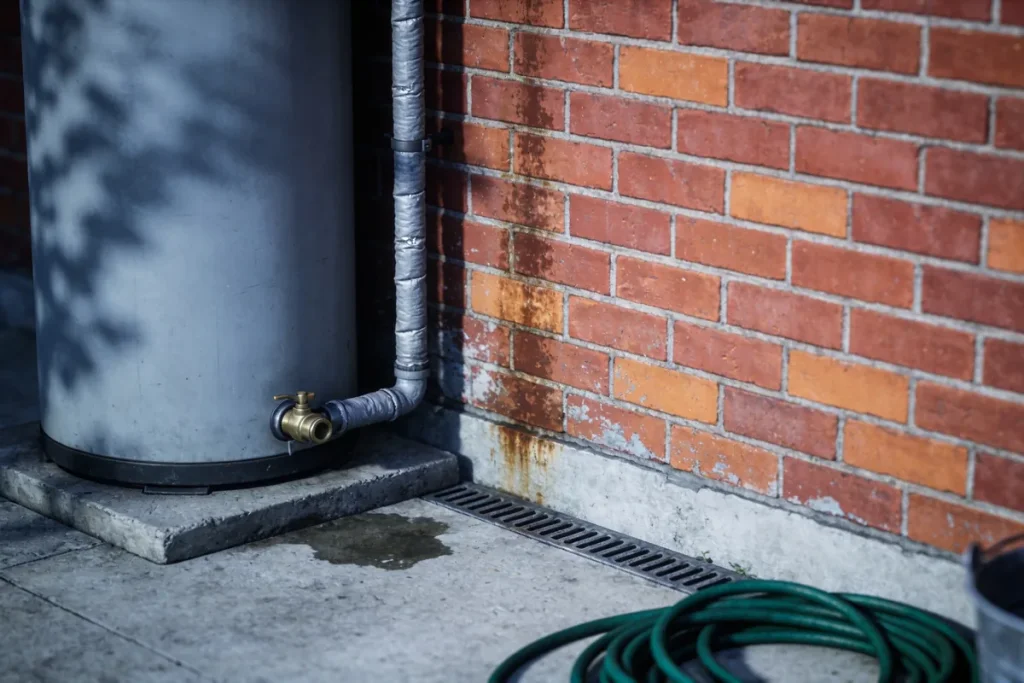
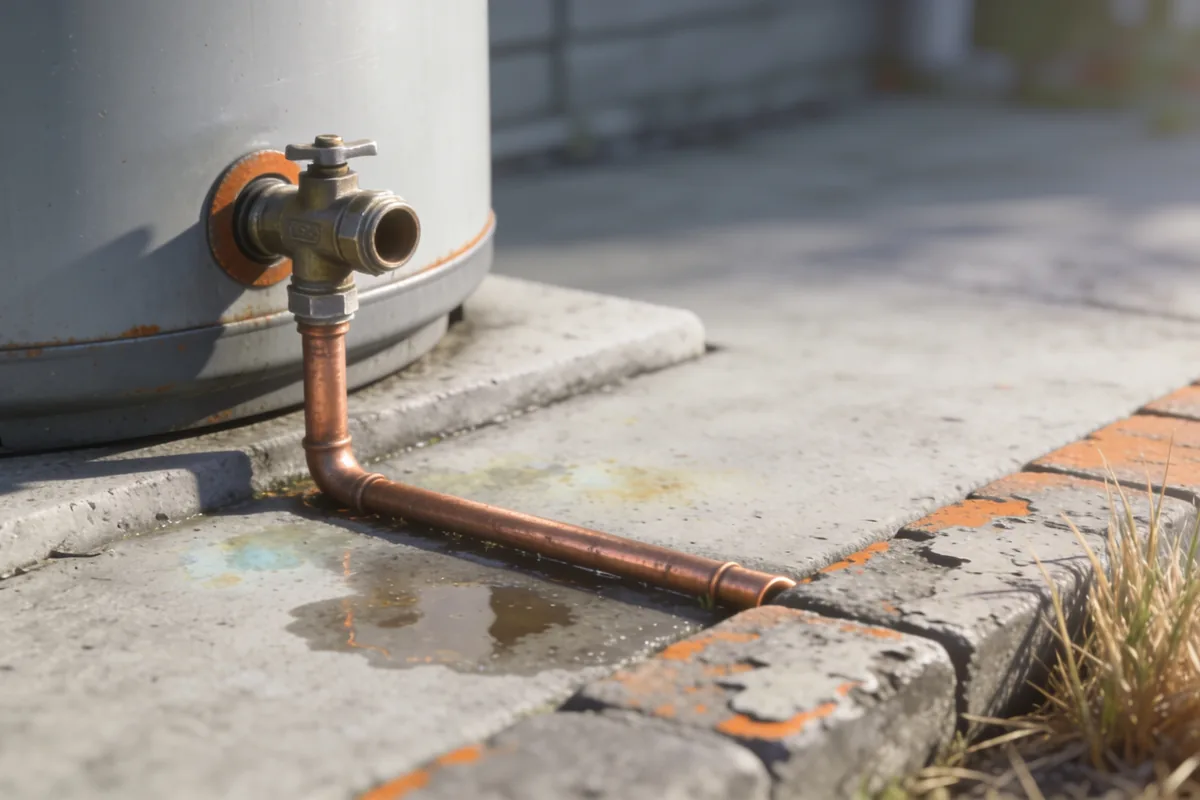
For any system, look at the unit itself and the ground around it. Pooled water underneath, rust staining on the concrete, water running from the pressure relief valve or its drain line, or a unit making a noise it did not use to make. You are gathering evidence, not diagnosing.
One check is not about the unit at all. Hot water systems are often on a controlled or off-peak circuit, which means the power to them is deliberately cut for part of the day. If the unit has simply not recharged since its window, nothing is broken and waiting is the whole fix. If you do not know whether your system is on that kind of circuit, the answer is a question for your electricity provider rather than a guess.
And the blunt one, which is not about fault-finding at all. If you can smell gas, stop. Do not flick a switch, do not light anything, and treat it as a gas safety matter rather than a plumbing job. Every utility publishes its own route for this and it is not the plumber’s number.

What each fault usually means
Every line in this section starts with “usually” on purpose. Nobody can diagnose a house they cannot see, and this article is not going to try.
A breaker that trips and then holds when it is reset usually points to an element or a thermostat. That is a repair, and an ordinary one.
A breaker that trips again immediately points to an electrical fault inside the unit. That is a job for someone licensed for that work, and it is not improved by resetting it again and again.
A pilot light that will not stay lit is often a thermocouple or a gas valve rather than the whole unit. It is a repair, and a familiar one.
Water pooling under the unit, or a relief valve that weeps permanently, puts the tank or its fittings in the picture, and this is where the conversation changes shape from a part to the unit itself.
Hot water that runs out faster than it used to is the one to watch. Sediment, a failing element, or a unit that simply never recovers fully are the usual explanations, and it is the symptom most likely to be the beginning of a replacement conversation rather than the end of one. The site’s 8 plumbing warning signs you should never ignore puts symptoms like this one into a wider context around the house.
The three that are a repair every time
This is the list to hold on to when a quote arrives, because it decides whether a repair is genuinely on offer. A failed heating element or thermostat. A thermocouple or a pilot assembly. A leaking valve, a failed fitting or a perished hose at the unit.
All three are parts rather than units, and all three are ordinary work. The honest qualifier sits beside them, because it is where the trade knowledge actually lives: the part is a repair, and the age of the tank is what decides whether the repair is worth doing. A repair on a unit that is near the end of its life is money that gets spent twice, and a good plumber will say so rather than quietly take the job. Hold the part and the age in mind together, and a quote stops being a gamble and starts being a decision.
The two that are a replacement
A tank that is leaking from its body, meaning the steel rather than a fitting, is the one fault that does not get repaired. It also does not wait. When the shell has gone, the water is coming through the tank itself, and no amount of tightening addresses that.
The second is the slow one. A unit failing in small ways over a stretch of time: a rise in the power or gas it uses, water that is lukewarm, hot that is not as hot, a recovery time that keeps stretching. That pattern is a unit on its way out, and the sensible response is about timing rather than price. This is the advice that runs through the forum threads from people who have been through it, and it holds up: replacing the unit on a planned morning is a far better experience than replacing it on the morning it finally goes, in winter, with a house full of people. That is advice about when to act, not an instruction to buy. The site’s heat pump hot water: is it worth the upgrade in Australia? covers the what-to-replace-it-with question properly, and the site’s is your plumbing system supporting or stressing your home? is useful if you suspect the whole system rather than one unit.
What to do while you wait
A cold morning is survivable, and a few ordinary things make it much better. Kettle water does most of what you need for washing. A kettle and a barbecue turn into a temporary kitchen with less drama than it sounds. Wash clothes cold rather than hot, which is a good habit anyway. And a shower at a neighbour’s place, a gym or a pool is a normal thing to arrange rather than an embarrassing one.
The question everyone asks at this point is how long it is reasonable to be without hot water, and the honest answer depends on who is in the house. A healthy adult can manage through a stretch of ordinary days without it. A household with an infant, an older person, someone unwell or someone with a disability is a different situation, and it belongs in the urgent pile rather than the patient one. That is a judgement about people, not a rule, and it is the one place in this article where the answer really does change depending on the house.
Choosing someone, and what to ask before it starts
The questions worth asking protect you, and all of them are reasonable. What is the fault in plain words, and will that be written on the invoice? Is the call-out charge a fixed one, agreed before anyone arrives? Is the work that involves gas or electrical parts being done by someone licensed for it, and does the compliance paperwork follow? Is the old unit being removed, and what happens to it? What is the warranty on the part and on the labour, in writing?
Then the one that matters most when a big quote is on the table. If the answer is a new unit, ask what the old one is doing wrong that cannot be fixed, and ask them to say it while you write it down. A straight answer to that question, given without irritation, tells you more about who you are dealing with than any advertising does. Gas parts, electrical parts and the unit itself are different skill sets and different licences in Australia, and the work belongs with a plumbing business covering Altona and Melbourne’s west, which is the kind of operation where these questions are routine rather than awkward. The site’s what sets a professional plumber apart in a plumbing emergency goes through the rest of what to look for.
The reading that tells you repair or replace
Four observations decide almost every one of these cases, and you can gather all four yourself.
Where the water is coming from: a fitting or a valve, or the tank shell itself.
What happens when the breaker is reset: it holds, or it does not.
What the flame is doing: it relights, or it will not stay lit.
How old the unit is, and how many times the household has already rearranged a day around it.
The point of all of this is not to make you your own plumber. It is so that when somebody tells you what to do about the unit, you already know which of the four questions they are answering.
Sources consulted: AGL hot water problems guidance.