


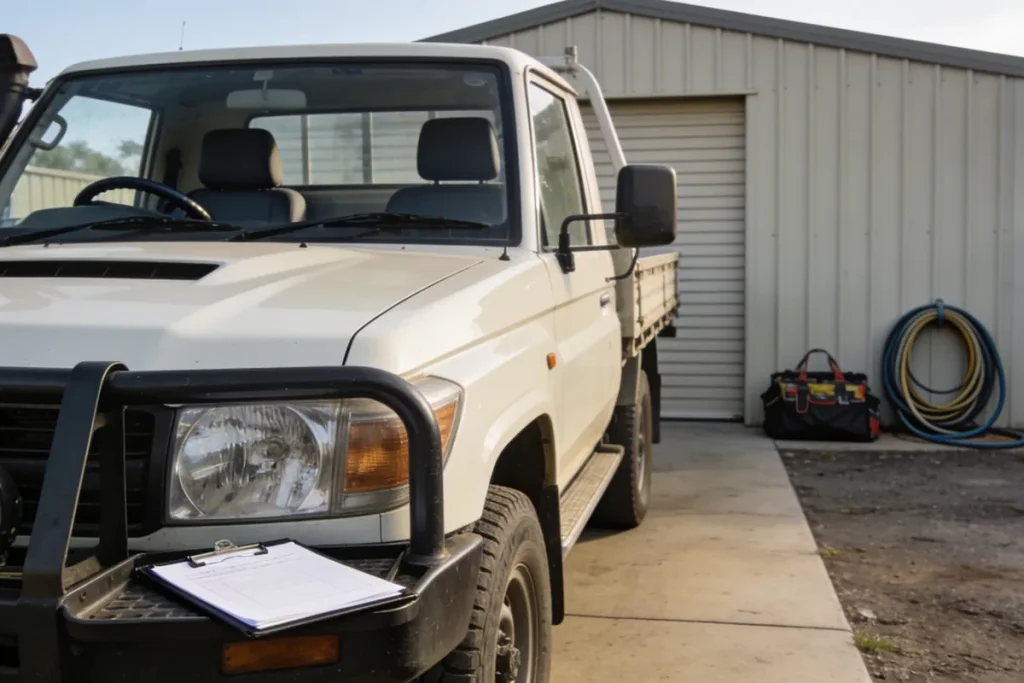
- Three structures, one asset: a chattel mortgage, a finance lease and hire purchase. They differ most in who owns the asset, and when.
- The rate is where the comparison usually starts, and it is rarely where the difference sits. Ownership, accounting and the end of the term decide more.
- A chattel mortgage means the business owns the asset from day one, with the lender holding a registered security interest over it.
- A finance lease means fixed use of an asset the financier owns, and the end-of-term position set by the agreement.
- The right answer depends on facts only you and your accountant have, which is why this article compares structures rather than recommending one.
The first question most buyers ask is which option is cheaper. It is the wrong first question, because the rate is one number inside a comparison that has several, and the numbers that change outcomes are the ones about ownership and timing. The three structures below all fund the same asset. What they do differently is decide who owns it, how it sits in the accounts, and what happens when the term ends. This article sets out those differences, and stops where advice would begin.
One note before anything else, because search results blur the two markets: in Australia, a chattel mortgage is a business loan secured against a movable asset. In the United States, the same phrase describes something else entirely, a loan on a manufactured home. If a result reads as though it belongs to a different country, it does.
Which structure should you be asking about?
Five questions, one plain answer. This does not decide anything for you, and it should not: it tells you which structure to put to a broker and an accountant, and what to ask them.
1. What are you buying?
2. How will the asset be used?
3. Do you want to own it at the end of the term?
4. How long will you keep it?
5. How will you show your income?
Answer the questions above and the structure to ask about will appear here.
The two questions that decide more than the rate: who owns the asset at the end, and how the GST and tax treatment lands in your business. Ask your accountant both.
General information, not financial, tax or credit advice. Every structure depends on your circumstances, the lender's terms and your accountant's view.
What a chattel mortgage actually is
A chattel mortgage is a business loan for a movable asset: a car, a ute or a van, a truck, machinery, or the equipment a business runs on. The structure has one defining feature. The business takes ownership of the asset from day one, and the lender holds a security interest over it until the loan is repaid.
That combination is what makes the structure distinctive. The asset appears on the business’s balance sheet while it is still being paid off, and it is also the security for the finance, which is why the lender registers its interest over the asset on the Personal Property Securities Register, or PPSR. That register is public, and a borrower can check what is recorded against an asset. It is a reasonable thing to do before financing anything.
The term and the repayment shape are set in the agreement. Within that, one option comes up often: a residual or balloon payment, which lowers the regular instalments and leaves a lump sum owing at the end. The trade is straightforward. Smaller payments now, a larger obligation later, and an obligation whose size should be planned for from the first month rather than met with re-financing at the finish.
The kind of asset matters as well. Chattel finance suits things that can be identified, valued and, if the worst happens, recovered: vehicles, machines, equipment. It does not fund the intangible side of a business. It shapes the paperwork too, because a clear description of the asset, with its identifiers and its value, is the backbone of the loan document.
The asset itself changes the deal as much as the structure does. The site’s buying a new car vs used car: finance differences you should know covers that side of the comparison, and it is worth reading alongside this one.
What a finance lease actually is
A finance lease works differently from the first step. The financier owns the asset, and the business pays for the use of it. The business does not take ownership at the end by default.
What happens at the end is set by the agreement, and the common paths are consistent: hand the asset back, extend the arrangement, or pay a final figure agreed in the terms to take ownership. Which of those paths your agreement offers, and at what figure, is a question for the lessor and for the document, not for a general article.
The lease tends to suit a particular kind of business: one that wants a predictable use-cost for the asset, and that does not want to carry the asset on its balance sheet. There is one more structural point worth knowing, offered as structure rather than as advice. A business that is not registered for GST is often steered towards a lease by the numbers themselves, because the GST position sits differently across the structures. That is a question for an accountant before it is a question for a lender. For a business that wants the asset to be a predictable line in the budget rather than a capital purchase, that is the attraction of the lease: the payments are known, and the ownership question never lands on the business’s side of the table.
The third option readers forget: hire purchase
Hire purchase sits between the other two. The business ends up owning the asset, but the financier holds the title until the final payment is made. Ownership arrives at the end, not at the start.
It still exists for a reason: it can work for borrowers the other structures do not suit, and it remains part of the Australian market. The honest trade-off is the title delay, and usually a higher effective cost across the term. If the asset might be sold early, the fact that the financier still holds title until the last payment is worth weighing.
What actually differs, once you strip out the rate
Compare the three on the things that do not move with the cash rate.
First, ownership. Who owns the asset on day one, and who owns it at the end. This single question separates all three structures from each other.
Second, the accounts. Whether the asset sits on the balance sheet while it is financed, and how the payments are characterised, follow from the ownership answer.
Third, the GST and tax position, and when it lands. This is where the structures differ in a way that borrowers often only discover later, and it is a matter of structure and timing rather than a single figure. How the treatment lands depends on the business’s registration and use of the asset, and the answer belongs to the ATO and to an accountant. The direction to look is clear: the GST position is dealt with differently in a purchase structure than in a rental structure, and the difference appears early rather than at the end.
Fourth, what happens if circumstances change mid-term. Selling the asset, ceasing to use it, or paying the finance out early are all possible, and each structure treats them differently. The exit position is worth reading in the agreement before signing, not after deciding to sell.
The accounts point is the one non-accountants find hardest to follow. In a purchase structure, the business records the asset and the finance on its books: something owned, something owed. In a rental structure, the payments are a cost of using the asset rather than the acquisition of one, and nothing is owned at the end. Neither version is better in the abstract; they are different shapes of the same money, and each interacts with how a lender reads the business.
None of these are rates, and each one changes outcomes. That is the case for comparing structures before comparing rates.
The downsides, stated plainly
A chattel mortgage means a fixed repayment obligation on a secured asset. If business slows, the payments do not, and the security for the loan is the vehicle the business still needs. That is not a reason to avoid the structure; it is a reason to size the obligation honestly.
A balloon leaves a lump sum at the end. Borrowers who have planned for it treat it as a decision point. Borrowers who have not are re-financing under pressure, which is the expensive way to arrive at the same place.
A lease means the business never owns the asset. The end-of-term position is a conversation with the lessor, and the value at that point is set by the agreement.
Hire purchase delays title until the final payment, which can hurt if the asset is sold before then.
One pattern connects those downsides: every structure is a different answer to the question of who carries the risk when something changes. The honest comparison is not which one is safe, because none of them is. It is which risks you can carry comfortably for the life of the term.
Two conditions apply across all three. The asset has to be used for business purposes to qualify for business finance, and the documentation decides who will lend at all: the ABN, the GST registration, the financials, or the low doc alternative. Neither point is negotiable with a lender, and both are better understood before the application than during it.
If you are self-employed
Self-employed borrowers are assessed on different evidence, and the structures above do not change that. Lenders want to see evidence of trading and cash flow, and the common documentation routes involve the records a business already produces: business activity statements, bank statements, or full financials through an accountant. What each lender wants varies, and the variation is the reason a placement across several lenders is worth more than a single application.
Two caveats, stated plainly. Alternative documentation is priced for the risk it carries, so it usually is not the cheapest money in the market. And the advertised rate is not the only cost: fees, the structure and the end-of-term position all land in the same comparison.
This is also where the credit file matters, because it is the first thing a lender reads. The site’s credit scores in Australia: what they are, how to build one and why it matters explains what sits in that file. Beyond it, the practical question is placement: which lender will actually settle this deal, on this asset, with this documentation. That is the work a finance broker that arranges vehicle, truck and machinery finance across Australia exists to do, and one question sorts brokers quickly: how many lenders can you actually write for?
The questions to put to your broker and your accountant
Two short lists. The first goes to the broker.
- Which structures can you write, and which one do you recommend for this asset, and why?
- What is the total cost of each option across the term, not only the rate?
- What happens if I need to sell the asset or exit early?
- Is there a balloon or residual, and what does the end of the term look like if I choose it?
- What documentation do you need from me, and which lenders will accept it?
The site’s before you sign: key questions to ask about truck finance in Geelong covers the same ground for a specific asset.
The second list goes to the accountant, and it is the shorter one. How will each structure be treated for GST and tax in my business? Which one fits my cash flow and my entity? And what happens at the end of the term in each case?
That is the whole method. Compare the structures on ownership, accounting, timing and exit before comparing rates, then put the two lists to the two professionals who can see your numbers.
General information, not financial, tax or credit advice. Every structure depends on your circumstances, the lender’s terms and your accountant’s view.
Sources consulted: Australian Taxation Office business vehicle and equipment guidance; Australian Financial Security Authority Personal Property Securities Register information; ASIC Moneysmart credit guidance.