


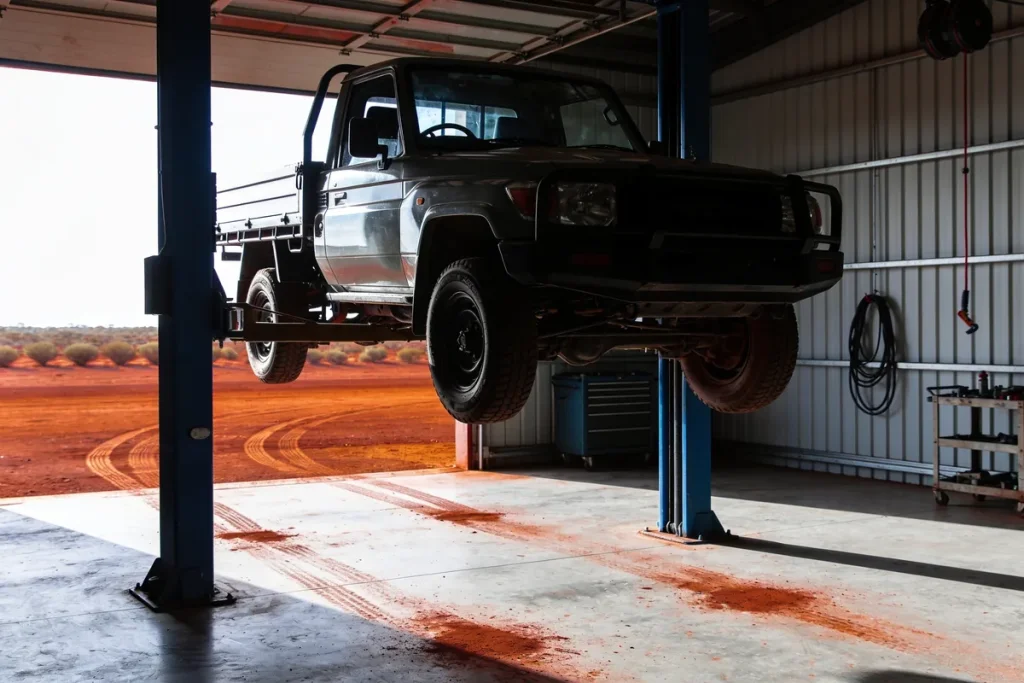
- The service book in the glovebox was written for average conditions, and there is nothing average about the Pilbara.
- A logbook service is the manufacturer’s schedule, carried out and recorded. It exists mostly so an owner can show the vehicle has been looked after, and it is the floor rather than the ceiling.
- Heat, dust, corrugation and distance all ask more of a vehicle than the schedule assumes, and none of them announce themselves before they cost money.
- Four things decide your own interval, and none of them is the odometer alone: how the vehicle is driven, what it carries, where it goes, and how long it sits.
- Before a long drive out of town, the checks that matter are the unglamorous ones: the battery, the spare, the cooling system and the fluids. Done the week before, not the morning of.
There is nothing average about the Pilbara, and the maintenance schedule in the glovebox was not written for it. The book is not wrong. It is calibrated for temperate conditions, ordinary loads, average journey lengths and an owner who lives near a dealer. None of that describes a vehicle that spends its life in hard heat, on red dirt and corrugated gravel, sometimes towing, sometimes parked for a fortnight and then driven hard for a day. The schedule in the book is the floor rather than the ceiling, and how far above the floor your own vehicle sits is decided by four things.
The book is a starting point, not a promise
A logbook service is the manufacturer’s own maintenance schedule, carried out at the interval the schedule sets and recorded in the book itself. That record is the point of it. A stamped book is the record an owner relies on at resale and in a warranty conversation, and neither of those cares about the conditions the vehicle actually lived in. The book records that the schedule was kept. It says nothing about whether the schedule was enough.
What the schedule assumes is worth listing, because a Pilbara vehicle violates most of it. Temperate conditions: no. Ordinary loads: sometimes a tray full of tools and a trailer, which is not ordinary. Average trip lengths: the pattern here runs from short town hops to long empty runs, with little in between. And an owner who can drop the vehicle at a dealer without losing a week: rarely true out here, which is exactly why the question of who services the car matters. That question, of dealer against independent, is set out properly in the site’s VW servicing in Melbourne: dealership or independent specialist?, and its logic travels well: what matters is that the schedule is followed and recorded, not which sign is above the door.
So hold two things at once. The logbook record is worth keeping, because paperwork protects value and a warranty conversation. And the logbook record is the minimum, because the schedule was never asked to account for this climate. Those two facts together are the whole subject of this article.
What the heat does
Heat is a year-round engineering condition up here, and it works on four parts of a vehicle at once. Each one is a check rather than a repair.
The battery comes first. Batteries fail faster in sustained heat than in cold, and the failure usually arrives without warning, on a morning when the vehicle is needed most. A battery that has never been looked at is the single most common reason a perfectly maintained vehicle does not start, and it is checked in seconds at a service.
The cooling system is the next check. In a hard climate, coolant condition, hoses and the radiator’s ability to shed heat stop being background items and become the things standing between the vehicle and a very long wait. The check covers the lot: the level and condition of the coolant, the state of the hoses, and the radiator’s fins, which quietly collect the dust that everything else does.
Then the air conditioning. Here it is not a luxury; it is the difference between a comfortable drive and a punishing one. The system is at its most loaded exactly when the vehicle is hottest, so a system that feels “a bit weak” in the cooler months is a problem by the first hot week, and one that will not be fixed at a roadhouse. Check it before the season turns, not during it.
Finally, the fluids and the belts. Heat ages oil, coolant and rubber, and both are cheap to check and expensive to ignore. No seal, hose or belt lasts as long in these conditions as the schedule pretends, which is why they get looked at rather than assumed.
None of these is a do-it-yourself repair, and none of this article is instructing anybody to open anything hot or pressurised. They are checks, carried out at a service, and the value of them is that they happen before the failure rather than after it.
What the dust and the roads do
Dust is patient, which is what makes it dangerous. It gets into air filters, cabin filters, sensors and moving parts, and it does its damage gradually, in a way a driver cannot feel from behind the wheel. That is why it gets caught at a service, by someone looking at the filter rather than by the driver noticing a symptom. By the time dust announces itself, it has usually been expensive for a while.
Corrugation and gravel are the second condition, and they work on a different list: suspension, bushes, mounts, wheel bearings and alignment. A vehicle that spends its weekends on gravel is not living the same life as one that never leaves the bitumen, and the honest version of that sentence is that the two should not be on the same schedule. What rough roads do to a vehicle over time is covered from the driving side in the site’s how suspension impacts your driving experience, so this section will only add the maintenance half: suspension and steering components deserve an inspection on a vehicle that uses gravel regularly, because the wear is invisible until it affects the way the vehicle tracks.
The third condition is the one people forget, and it is the sea. Vehicles living near the water corrode differently, and salt air does its work in places a casual look never reaches. A coastal vehicle and an inland vehicle of the same age are not the same vehicle underneath.
Put the three together and the point ties off neatly. Dust, corrugation and salt do not fail dramatically. They arrive, eventually, as a breakdown, and the worst possible distance from help is the one this region specialises in.
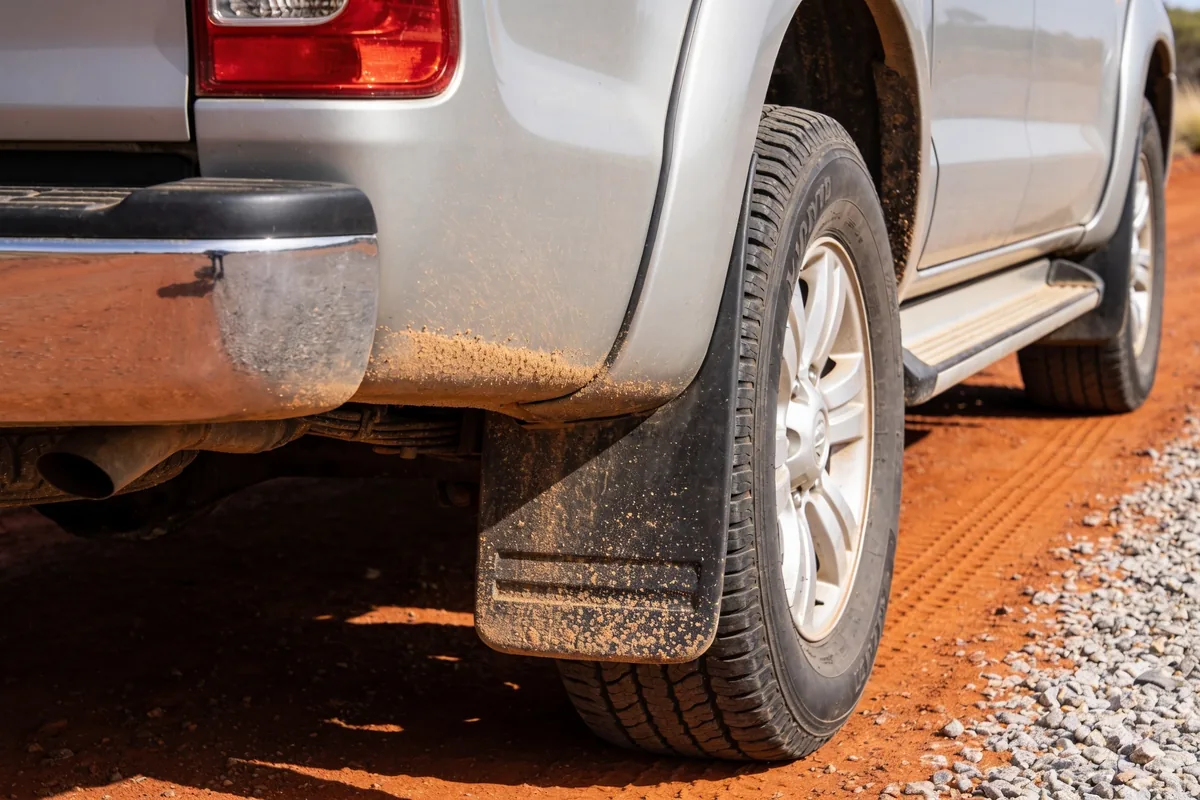

The four things that decide your own interval
The analytical core comes down to four questions a driver can answer without any equipment at all.
What kind of driving. Many short trips and fewer long ones are both hard on a vehicle, in different ways. Short trips never let the engine reach its working range; long hot runs work everything continuously. A town vehicle doing school runs and a station vehicle doing long hauls are on different clocks even at the same odometer reading.
What it carries. A ute with a tray full of tools and a trailer behind it is living a different life from an empty sedan, and the difference shows up in brakes, suspension, cooling and tyres before it shows up anywhere else.
Where it goes. A vehicle on sealed roads only, and a vehicle on gravel and dirt every week, should not be serviced on the same assumption. The dust alone changes what needs checking and how often.
How long it sits. A vehicle parked for a fortnight and then driven hard is the roster pattern, and it is the one most likely to be on the wrong schedule, because the calendar and the odometer both under-report what the vehicle actually does. Batteries flatten, seals dry, and everything the standing period degraded gets discovered on the first hard day.
Put the four answers together and the conclusion is uncomfortable but useful: two identical vehicles on the same street can be on different schedules, and both owners can be right. That is why the useful conversation at a workshop is about use rather than about the odometer alone, and it is the conversation a locally owned Karratha workshop that services petrol, diesel, hybrid and electric vehicles has with owners every week: not what the book says, but what the vehicle has been doing since the last stamp.
Tyres and alignment deserve their own section
Tyres are the failure that ends trips, and in this region they are also the item a driver can check without a workshop. That combination is why they get their own section rather than a mention.
What heat and distance do to them is straightforward. Pressures behave differently on a hot day and after a long run, which is why they are checked cold and checked often. Sidewalls take the punishment on gravel, where a sharp edge can end a day’s drive. And uneven wear is the inscription that tells you about alignment before you feel anything through the steering, which is why the wear pattern is worth reading rather than the tread depth alone.
The practical version: check the spare as carefully as the tyres, look at how the tyres are wearing rather than only how much is left, and treat alignment as a maintenance item rather than a repair that follows an accident. A vehicle can be perfectly serviced and still fail on a road for a tyre, and no schedule in a glovebox changes that. The one advantage a driver has is that a tyre is checkable in a car park.
Before you drive out of town
The pre-trip check for the reader planning a long drive out of town is a short list, and it is honest about what actually strands people.
The battery that has never been looked at. The spare that has never been checked, often since the vehicle was bought. The cooling system on a hot day in a loaded vehicle, which is where a marginal system finally fails. The air conditioning that will not be fixed at a roadhouse, which matters when the drive is hours long and the passengers are children. And the fluids, topped and checked rather than hoped about.
Two planning points sit alongside the list. Fuel and water are carried, not found, on long stretches out here, so the first rule of a remote drive is that the vehicle leaves town provisioned rather than optimistic. And the check happens the week before rather than the morning of, because the morning of is when you discover the spare is flat and every option has closed. The site’s No Boat Required: the Perth to Exmouth road trip ends at a reef you can walk into covers the long-drive side of this properly, including the parts that are about the trip rather than the vehicle, so this article will stay with the vehicle.
The one thing nobody checks for you
This part catches people who have recently moved for work, and the rules differ and change.
Not every state inspects private vehicles on a schedule as a condition of registration. Some do, some do not. If you have moved here for a roster or a trade and you are used to a rule that caught problems for you, do not assume the rule is still there. Check what your own state and your own registration actually ask of you, rather than relying on the habit you brought with you.
The wider point survives whatever the rules say, and it is the one to take away. In a place where regular inspections are not doing the watching, and where the nearest workshop is a long drive away, nothing catches a tired vehicle except its owner. That is the reason the checks in this article are worth doing on a normal weekend rather than waiting for a symptom.
The four things that decide your interval
The compressed version, for the glovebox.
How it is driven. What it carries. Where it goes. How long it sits. Those four answers, more than the odometer and more than the calendar, decide how much looking after your vehicle actually needs, and any workshop conversation that starts with them is starting in the right place.
The book tells you the minimum. The conditions tell you the truth. The only person who knows both is the one who is going to drive it.
Sources consulted: manufacturer service schedules and owner’s manuals; Western Australian vehicle registration information.